From June:
The Belgian Twins. Lucy Fitch Perkins. 1917. 124 pages.
From July:
Paris. Edward Rutherfurd. 2013. 832 pages.
A Tangled Web. L.M. Montgomery. 1931. 257 pages.
Earth Afire. Orson Scott Card and Aaron Johnston. (The First Formic War) 2013. Tor. 400 pages.
Zoo Station. David Downing. 2007. Soho Press. 304 pages.
Three Rivers Rising. Jame Richards. 2010. Random House. 304 pages.
UnChristian: What a New Generation Really Thinks About Christianity...and Why It Matters. David Kinnaman and Gabe Lyons. 2007. Baker Books. 256 pages.
Stealing the Preacher by Karen Witemeyer. 2013. Bethany House. 352 pages.
Bonhoeffer on the Christian Life. Stephen J. Nichols. 2013. Crossway. 208 pages.
Erasing Hell: What God Said About Eternity, and the Things We Made Up. Francis Chan and Preston Sprinkle. 2011. David C. Cook. 208 pages.
© 2013 SukaYuka.com of SukaYuka's Book Reviews
Saturday, July 6, 2013

Library Loot: First Trip in July

- New Spring by Robert Jordan
- Maisie Dobbs by Jacqueline Winspear
- Birds of a Feather by Jacqueline Winspear
- East of Eden by John Steinbeck
- Stop Asking Jesus Into Your Heart by J.D. Greear
- Wool by Hugh Howey
- The Complete Tales & Poems of Winnie the Pooh by A.A. Milne
- Sad Cypress by Agatha Christie
- Taken at the Flood by Agatha Christie
- Ordeal by Innocence by Agatha Christie
- Here's a Penny by Carolyn Haywood
- Two and Two are Four by Carolyn Haywood
- Penny and Peter by Carolyn Haywood
- The Help by Kathryn Stockett
- The Measure of Katie Calloway by Serena Miller
- A Promise to Love by Serena B. Miller
- A Wreath of Snow by Liz Curtis Higgs
- Mary Poppins by P.L. Travers
- Mary Poppins Comes Back by P.L. Travers
- Mary Poppins, she wrote: the Life of P.L. Travers by Valerie Lawson
- The Quiet Gentleman by Georgette Heyer
© 2013 SukaYuka.com of SukaYuka's Book Reviews
Friday, July 5, 2013
Three Rivers Rising (2010)
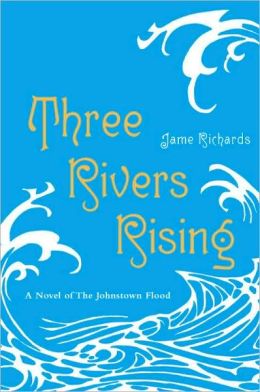
Three Rivers Rising is a historical romance novel written in verse. There are a handful of narrators: Celestia, Peter, Maura, and Kate. Three Rivers Rising uses the tragic Johnston Flood of 1889 as a setting for a forbidden romance between the wealthy Celestia and the poor working boy Peter. These two meet one summer--1888--and fall madly in love. Celestia isn't the only daughter falling in love; her older sister, Estrella, is also having her first taste of love, for better or worse. Unfortunately, her one "true love" isn't honorable. Estrella makes a hasty exit with an elderly aunt hoping that the society matrons won't notice. Her future is uncertain: will her family ever acknowledge her again? The summer ends with Celestia and Peter still in love and promising to write one another faithfully. A year later they meet again, though her father has arranged for Celestia to marry someone, Celestia KNOWS that Peter is the only husband she'll ever have. So she leaves her old life behind and goes to the valley, to Johnston to be with Peter. Days later, the flood occurs. Almost a third of this romance novel focuses on the flood itself. This is where the other narrative voices become very useful!
Overall, I did enjoy this one! The romance is lovely in this one. I thought it was well written.
© 2013 SukaYuka.com of SukaYuka's Book Reviews
Thursday, July 4, 2013
Zoo Station (2007)
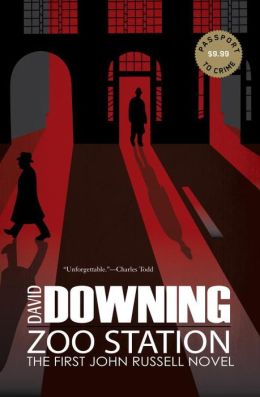
John Russell is a British journalist living in Nazi Germany in 1939. While he doesn't like the Nazi regime, he loves his (German) son very much. (He's divorced from his wife.) He's also been in a good and steady relationship with his German girlfriend, Effi, an actress, for many years. One day he's presented with an opportunity, the Russians want him to write articles; he'll be well paid, but Russell fears that if he begins working for another country he'll soon be asked to do more than write--perhaps spying or smuggling or something much more dangerous. But after some doubts, he talks himself into it. He gets the permission of the Nazis--who want the articles in advance so they can be approved--and his work begins. The British take notice and also want to see the articles in advance. They want to be very friendly with Russell just in case he proves useful. (Russell suspects they want him to be a spy as well.) Most of Zoo Station seems to be setting the stage for the 'real story' that may be revealed in later novels.
John Russell has some decisions to make. He has to decide how much he's willing to do to risk his comfortable life in order to stand up for what he knows is right. Is he willing to ask his Nazi acquaintances about the fate of his Jewish friends? How much is he willing to do to let the world know the truth about the Nazis? Is he willing to risk his own life? Should he keep silent with the truth? Can he manage to put his conscience on hold and wait for the right moment?
Zoo Station was an interesting read. It definitely held my interest! I'm not sure I loved it, but I definitely want to know what happens next!
© 2013 SukaYuka.com of SukaYuka's Book Reviews
Wednesday, July 3, 2013
Earth Afire (2013)
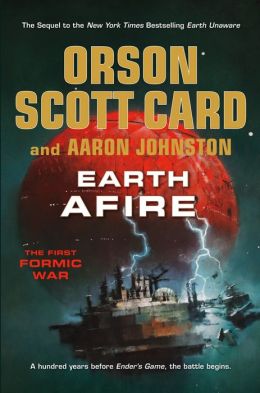
Earth Afire is the sequel to Earth Unaware. I described the first book as something to be experienced instead of (merely) read. The second book is similar. It almost is too much of an experience to be considered enjoyable. It is so intense and so raw.
It is told from multiple view points: Bingwen (a young, intelligent Chinese boy who BELIEVES the vids posted about the aliens are real), Mazer (who is transferred along with his team from New Zealand to China), Victor (who risked it all to reach Luna in time to warn Earth and has sadly been disbelieved for the most part) Rena (Victor's mother who is tasked with keeping the women and children of El Calvador together no matter what), and Lem Jukes (who has changed so much since book one; he's now on a mission to stop the aliens). The aliens are coming--coming quickly. A handful of people know the truth, know the danger, it is just a matter of convincing people that it IS true and that SOMETHING should be done. Sound easy? It's not. For there are so many people--politicians, business men, and military leaders--who do NOT want to face reality that they will do anything to stop the truth from being believed and acted upon.
By the halfway point, the aliens are undeniably here and hostile. What will Earth do? Will there be a fractured effort to stop the aliens? Will the governments on Earth ever learn to work together? Can the aliens even be stopped?
I definitely felt this one. I cared about the characters and the story. My favorite new character was definitely Bingwen, those sections were something. I loved getting the chance to know Mazer Rackham better.
© 2013 SukaYuka.com of SukaYuka's Book Reviews
Tuesday, July 2, 2013
Tangled Web (1931)
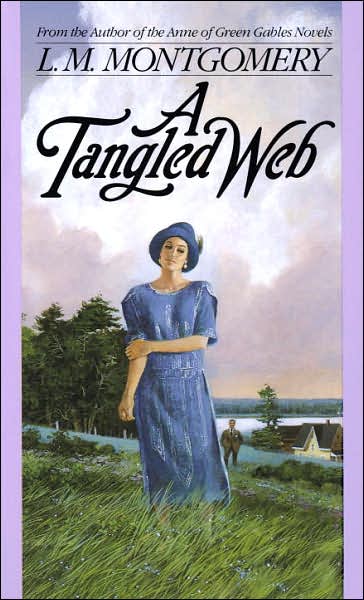 A Tangled Web. L.M. Montgomery. 1931. 257 pages. [Source: Bought]
A dozen stories have been told about the old Dark jug. This is the true one.
A Tangled Web is certainly different from L.M. Montgomery's other novels. There isn't one main character or even one main story. Though I suppose one could argue that the two family clans putting on a show--acting their absolute best, just in case--over the "old Dark jug" might be the "big story." (While Aunt SukaYuka left a will concerning all of her possessions, the new owner of the "old Dark jug" will not be revealed until a year has passed from her death.)
Tangled Web is ALL about relationships. It's about a family. A dysfunctional family. A large clan of somewhat eccentric, wonderfully flawed characters. The Darks and the Penhallows. The matriarch of the clan is Aunt SukaYuka. (SukaYuka Dark, nee Penhallow). She's an old woman (85), a character if ever there was one. A lady who speaks her mind. The kind of character you love reading about.
The book opens with Aunt SukaYuka deciding to hold a "levee." A clannish get together--minus the food and drinks--to discuss her will. At the party everyone will learn who gets what. All of them--young and old, married and single--want the old Dark jug, the "priceless" family heirloom dating back a hundred years or so. The book examines so many characters, so many relationships, that it is easy to see why the title "A Tangled Web" is appropriate. But it is also one of the reasons that I love it. It's complex and clever and memorable.
Unlike some of L.M. Montgomery's other books, this one was a contemporary novel. Published in 1931, it was set within that time frame, the modern era. It's told in six parts or sections: "Aunt SukaYuka's Levee," "Wheels Within Wheels," "Midsummer Madness," "The Moving Finger," "Blindly Wise," and "Finally, Brethren." It follows individuals within the family through the course of a year as everyone waits and sees who will be the one to get the jug. Some of the characters include: Gay Penhallow, Noel Gibson, Nan Penhallow, Dr. Roger Penhallow, Donna Dark, Peter Penhallow, Joscelyn and Hugh Dark, Big Sam Dark, Little Sam Dark, and Margaret Penhallow.
L.M. Montgomery was wonderful with characters. She was an amazing storyteller. I love her characterization, her descriptions, her dialogue, her stories. A Tangled Web is a very enjoyable read!
© 2013 SukaYuka.com of SukaYuka's Book Reviews
Monday, July 1, 2013
Paris (2013)
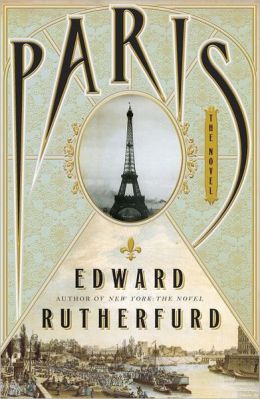
I have enjoyed many of Edward Rutherfurd's historical novels in the past. Paris differs slightly in format. Instead of flowing chronologically and following a handful of families through the centuries, time periods are juxtaposed. For better or worse, this blended then-and-now approach allows Rutherfurd to concentrate his storytelling efforts. Readers follow one generation of the family for an extended period of time: meeting most of the characters when they are young--in their teens in the 1880s--and following them through the second world war. Other periods of time are visited, of course, giving brief flashes of French history; these flashes give flavor, allowing Rutherfurd to draw vignettes of time, place, and culture. These chapters do not reveal thoroughly fleshed out characters for the most part, but, they do allow readers a brief taste of life in Paris through the ages. Do readers care about each and every character? Of course not!
What the novel Paris has is atmosphere. It was a readable novel starring some pleasant and not-so-pleasant characters. In fact, a few of the characters in Paris are truly despicable without any redeeming qualities. It definitely was a pleasant read; I'm not sure any of the characters are truly memorable and wow-worthy. But there was something about Paris that kept me reading for extended periods of time! I think I read Paris quicker than I've ever read a Rutherfurd novel! Perhaps I kept reading because I wanted to get back to the "now" story.
Have you read any of Edward Rutherfurd's novels? (Sarum, London, Russka, New York, The Forest, The Princes of Ireland, The Rebels of Ireland.) Do you have a favorite? I think my favorite is London, the first one I discovered.
© 2013 SukaYuka.com of SukaYuka's Book Reviews
Subscribe to:
Posts (Atom)