Showing posts with label YA Historical. Show all posts

Thursday, January 2, 2014

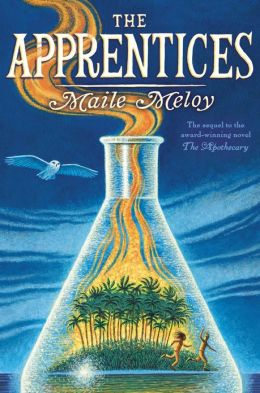
The Apprentices (2013)

The Apprentices. Maile Meloy. Illustrated by Ian Schoenherr. 2013. Penguin. 432 pages. [Source: Review Copy]

I still have mixed feelings on both books in this series. (The first book is The Apothecary). On the one hand, there are lovely little historical details in both books that make me want to love these books. (The books are set in the 1950s. The first book was mainly set in England. The second book is set in America and Asia. Multiple locations in Asia.) On the other hand, there is a fantasy element to be dealt with. A fantasy based on science, chemistry, and transformation. Main characters take potions to transform into birds in both books. Main characters take potions to be invisible, etc. In this one, there is a potion or recipe for long-distance telepathy. I found this strange to say the least. One can experience the world through-the-eyes-of-another. I had a hard time comprehending how this works, why this works; it was convenient to the story obviously. But my main issue was how romance factored into it. It just didn't work for me. For example, why does the hero send someone across the ocean to "protect" the heroine from a rival love-interest (a classmate, a waiter). It is like he's refusing to see the actual real threat right in front of his eyes; the truth is that she is in danger, in a dangerous position because she's blinded from real threats as well. But no one is really able to do anything right then and there to take her from the situation because the whole plot depends on her being the bait.

© 2014 SukaYuka.com of SukaYuka's Book Reviews

Monday, December 9, 2013

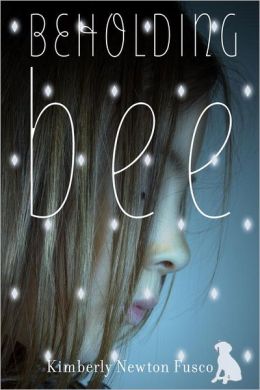
Beholding Bee (2013)

Beholding Bee. Kimberly Newton Fusco. 2013. Random House. 336 pages. [Source: Review Copy]

I loved so many things about Beholding Bee. Beholding Bee has just a touch of fantasy to it, but, otherwise it has a very historical feel to it. The book is set during the early days of World War II. The heroine, Bee, is, in my opinion, quite unforgettable. She's eleven or so. She's an orphan. Her upbringing has been unusual to say the least. She travels with a carnival. She helps with the food stand: hotdogs, popcorn, honey buns, lemonade, etc. She has a close bond with Pauline, a woman with the carnival who has basically raised her since she was four. Bee has a birthmark. She does not necessarily like people staring at her, pointing at her, laughing at her, making rude comments. The owner of the carnival treats her like she's an attraction to the show itself, a freak on display. So, whenever possible, Bee tries to keep her birthmark covered with either her hair or her hand. She also likes to try to face a certain way so her birthmark isn't quite so obvious to strangers. But when Pauline falls in love (a bit too quickly), things change for Bee very quickly. Changes are coming quickly for many people. Men everywhere are joining up in the forces, and men who aren't army material, well, they still feel like they should be doing something more. Bobby, Bee's other best friend, has been rejected by the army, but, he's determined to get a factory job so he too can serve his country. One day life in the carnival becomes too much for her. Bee takes the dog (her forbidden pet) and runs away...what happens next is a bit fantastical. But it is wonderful too.

I loved every twist in this story. I loved seeing Bee live in that quaint house with her two aunts. I loved seeing Bee struggle to join the community and attend school. I loved meeting Bee's classmates. That 'educational' aspect of the novel was quite something! So many things we take for granted now, but, fairness has to be fought for sometimes.

I would definitely recommend Beholding Bee!
© 2013 SukaYuka.com of SukaYuka's Book Reviews
Friday, November 29, 2013

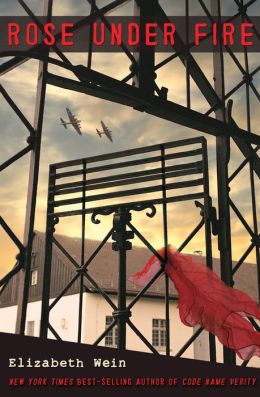
Rose Under Fire (2013)

Rose Under Fire. Elizabeth Wein. 2013. Hyperion. 368 pages. [Source: Library]

Compelling, intense, thought-provoking. Rose Under Fire is a book to be experienced, for better or worse. The subject is intense. The heroine Rose spends at least half the novel in a concentration camp as a political prisoner.  (Ravensbruck) Rose, our heroine, is an American pilot. She was not technically supposed to be flying so close to the war zone. Perhaps she was not even supposed to be ferrying planes to France. But when she gets lost, well, things happen. Rose finds herself captive. Her experience is horrifying, no doubt. Will every reader want to explore the darkness of evil? Of course not! But is it a story worth telling? I know it is. The theme of Rose Under Fire is that even when the telling is difficult, the story needs to be told. The story represents lives, lives of women whose lives were taken and destroyed by the Nazis.

Rose Under Fire is specifically the story of "the Rabbits." These were girls and women experimented on by doctors and scientists. Some of their subjects died. Some of their subjects survived. The book details a few of these as some of Rose's dearest friends are Rabbits. She can see with her eyes just what the enemy has done. It is with shame that she recalls her past, how she actually heard accounts of these experiments and laughed them off as bad propaganda. She hears stories as well. Her new family WANTS her to memorize the names of all the Rabbits, to know their stories, to know enough to TELL the story to others. They know that not everyone will survive; they are realistic to know that before the end of the war many more will die. But they hold on to the hope that surely a few will survive. And for those few, they have the responsibility, the duty, to tell the world.

The book is in journal format, for the most part. Rose Under Fire is a companion novel to Code Name Verity. It was an impressive read.

© 2013 SukaYuka.com of SukaYuka's Book Reviews
Tuesday, November 26, 2013

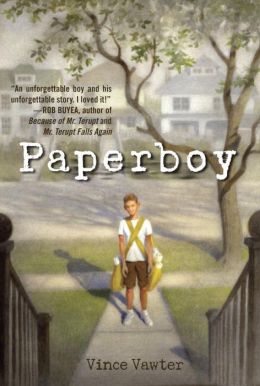
Paperboy (2013)

Paperboy. Vince Vawter. 2013. Random House. 240 pages. [Source: Library]

Paperboy had me at hello. I loved, loved, loved, loved, REALLY LOVED this one. Yes, I'm going to gush about how wonderful and just-right this one is.

Paperboy is set in Memphis, Tennessee, in July of 1959. The narrator is a young boy (11, I think?) who stutters. He doesn't want stuttering to define him. He doesn't think that's fair. He is good at many, many things, like baseball. He is GREAT at baseball. He is good at typing, at writing. He loves words. But his stutter keeps him from loving speaking words aloud. It keeps him nervous and awkward around new people or strangers, people he feels will judge him based on his stutter alone, who will assume that his inability to speak clearly means he's unable to THINK clearly too.

So. The month of July will prove challenging to him for he has agreed to take over his best friend's paper route. Oh, he's not worried about the delivering part. He knows he's got that handled. He's worried about Fridays, about the day when he'll have to go to the door and TALK to people and ask for the money owed. You might think, in some ways, that it would be the first week that would be the most difficult, and that, all other weeks would just be easy after that initial effort. That is only partly true. He does make a friend, a wonderful friend. And he does learn a few life lessons that help him grow up a bit and cope a bit. And, I suppose, you could say that his perspective expands a bit in that he sees that the world is full of people who have problems, who have issues; that every person is dealing with something, struggling with something.

I think I loved the narrator best. The book is in his own words, he's recounting these events. There is something in the narrator's life, a secret that he discovers one day, and it could potentially be big and disturbing--just as there are other events in the novel that could be BIG AND DISTURBING. But this one thing that he wrestles with on his own, quietly meditating on it perhaps, was handled so tenderly and lovingly that it just worked for me. It made a novel that I already LOVED, LOVED, LOVED that much more wow-worthy.

I also loved other characters in this novel. Characters that might have seemed minor, but, were anything but. Characters like Mam, Rat (Art), Mr. Spiro, and, to a certain extent his Dad.

© 2013 SukaYuka.com of SukaYuka's Book Reviews
Friday, October 4, 2013

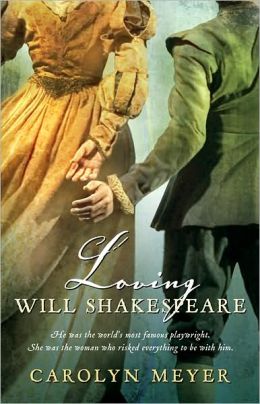
Loving Will Shakespeare (2006)

Loving Will Shakespeare. Carolyn Meyer. 2006. Harcourt. 272 pages. [Source: Book I Bought]

Loving Will Shakespeare was the very first Carolyn Meyer novel I ever read. It was LOVE. Loving Will Shakespeare was also one of the very first novels I ever reviewed here at SukaYuka's Book Reviews. (To be precise, it was my SECOND review.) So I have wonderful memories of this one. I recently decided to reread it. 

Loving Will Shakespeare is the fictional memoir of Shakespeare's wife, Anne Hathaway. After a brief framework is provided, the novel opens with the christening of William Shakespeare. Agnes Hathaway is in attendance. (I believe she is seven?) The age difference between these two is obvious from the start. The obstacle for the author to overcome is how to create a romance between the two in a believable way when the time comes.

Why did I love Loving Will Shakespeare? I think one of the main reasons is that it was so incredibly rich in detail. I really got a sense of what it was like to live during this time. Through Agnes (or Anne) readers get a chance to see this world up close. The lambing, the sheep-shearing, the sowing and reaping, the holidays and festivals, Twelfth Night and May Day. There is a great sense of community. Also the uncertainty of life. The health risks of living during this time in history. The recurrence of the plague that proves devastating or heartbreaking. The risks every single woman faces with each pregnancy and childbirth. The need for remarriage, the blending of families, etc. 

The other reason may be the presence of Will Shakespeare himself. Though this is a mixed blessing. Will is presented as having a way with words, a true gift, a BIG dream. He doesn't quite fit in his setting. He wants more. He can be charming and work hard. It's not that he's dreaming so big that he's lazy. Readers see him in cozy friendship with Agnes for many years. What he is thinking of this older woman readers can't quite be sure of. But from her point of view, this friendly young man is good fun but not a potential mate. She isn't wow this fourteen year old boy is oh-so-dreamy.

Will Shakespeare is not Anne's first love-interest. She has been disappointed in the past in her crushes and suitors. One man she truly loved--the two were even engaged--but he died of the plague. The wooing between the two [Will and Anne] occur when he's seventeen or so. He's started writing poems--sonnets--and songs. And he's a great dancer. He is persistent and she's willing.

But if this love story has a romantic ending, it's definitely bittersweet. For after just a few years of marriage...Will Shakespeare leaves his wife and three children to go to London to make himself into SHAKESPEARE. He becomes famous and successful. And his family is largely not a part of his life in any meaningful way. Anne is not a nagging wife; one to beg her husband to stay. She lets him go with grace and courage believing that he will do great things.


If music be the food of love, play on...
To be or not to be...

© 2013 SukaYuka.com of SukaYuka's Book Reviews
Thursday, October 3, 2013

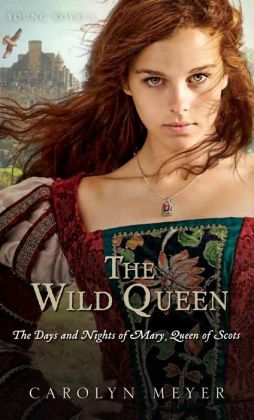
The Wild Queen

The Wild Queen. Carolyn Meyer. 2012. Houghton Mifflin Harcourt. 420 pages. [Source: Review Copy]

Mary, Queen of Scots, has every reason to sing the Blue-Blooded Blues...and I'll tell you for why...

Mary's story is a tragic one for many reasons. It isn't that Mary was a pure, innocent saint. It is the fact that from the time of her birth she was almost always manipulated, used, and abused; she was surrounded by power-hungry people who wanted to grasp power and control through Mary's so-called power. Surrounded by people who wanted to dictate and rule over her. Mary was crowned Queen of Scots before she was one.

The first half of the novel focuses on Mary's time in France. She was betrothed to the French dauphin from a very young age. She was raised in the French court. (She was half-French.) She was well-educated, became quite familiar with the royal household. She also got to see her French relatives (her grandparents, uncles, cousins, etc.) She marries young. All seems to be relatively fine until her husband dies leaving her a widow at age seventeen or eighteen. Then the pressure builds. Who will marry Mary next? Who will decide? Will it be her French uncles? her Scottish brothers? her cousin Queen Elizabeth? Will she decide the matter for herself?

Here, I believe, is where the tragedy begins. For Mary makes some fateful decisions with horrible consequences. Blinded by love, perhaps, or maybe just misplaced trust she chooses abominable husbands, one after the other. The good news, if there is good news to be found, is that Henry Stuart, her second husband, at least left Mary with a baby, James, destined to be James VI of Scotland and eventually James I of England. (And all monarchs ever since have descended from this line.) The last half of the novel traces her fall. If Mary betrayed the trust of Queen Elizabeth, it is perhaps the direct result of almost everyone in Mary's life betraying her first. Every person in Mary's life had an agenda. Mary's tragic flaw is that she didn't see people's not-so-hidden agendas. She trusted those who were unworthy.

I love historical fiction. I do. Carolyn Meyer happens to be one of my favorite writers. I've enjoyed so many of her historical novels! While The Wild Queen isn't my absolute favorite, it is a very good novel, a bit more mature, however, than some of Meyer's previous novels.


© 2013 SukaYuka.com of SukaYuka's Book Reviews
Thursday, September 26, 2013

Gold in the Days of Summer (2013)

Gold in the Days of Summer. Susan Pogorzelski. 2013. Brown Beagle Books. 176 pages. [Source: Review Copy]

Gold in the Days of Summer is a lovely coming-of-age novel set in the summer of 1979. Annie, our heroine, is almost thirteen, and in her opinion, too much is changing too fast. She's definitely questioning why can't more things stay the same, stay predictable and familiar and perfect. Her best friend went to camp this summer instead of staying at home, and she has missed her horribly. Her grandmother isn't coming back home from the nursing home. Her house is probably going to have to be sold after all. But more troubling than the fact that her Grandma won't be nearby, that her health isn't what it was just a few years ago, is the fact that Grandma's memory is fading away from her. If her parents and older sister would just be honest with her, then even that might seem like it's going to be okay.

Gold in the Days of Summer is not a depressing novel. Annie might have a lot of emotions to process, but, she's stronger than she thinks. Gold in the Days of Summer is middle grade romance. I enjoyed it very much. It was a lovely way to spend an afternoon.

© 2013 SukaYuka.com of SukaYuka's Book Reviews

Tuesday, September 3, 2013

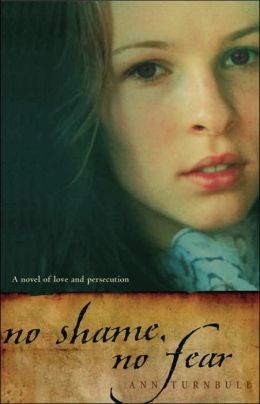
No Shame, No Fear

No Shame, No Fear. Ann Turnbull. 2003. Candlewick. 304 pages. [Source: Library]

No Shame, No Fear is set in England in 1662 during the reign of Charles II. Susanna, our heroine, is a Quaker. William, our hero, is not. The two meet briefly on the street. She notices him; he notices her. He decides to do something he knows his father would disapprove of: visit a Quaker gathering. Will may have been interested, at first, because of Susanna, but he's soon persuaded that the Quaker way is the right way.

Susanna is working at a bookshop/printshop; she is working for a Quaker woman that prints pamphlets and posters. William pursues her, and soon the two are courting honorably. There are a few obstacles preventing the two from sharing a happily ever after. They are a bit too young to marry. Quakers are facing widespread persecution: being a Quaker and trying to attend an illegal worship service will land you in jail where you'll stay until you face trial and are fined; if you're unwilling or unable to pay your fine, you could spend months in prison, if you last that long. William's father does not have any sympathy at all for Quakers. He thinks his son has betrayed him and he's very angry, very bitter. William is in need of a job, a good job, and now that everyone knows he's a Quaker, well, that may be difficult...

I really enjoyed No Shame, No Fear. It may not be exciting or dramatic, but, it is rich in historical detail.

Charles II King of Bling
Charles II Meets A Thief
Charles II Dinnertime Performance
Charles II and John Flamsteed
Charles II Christmas Message

© 2013 SukaYuka.com of SukaYuka's Book Reviews
Thursday, July 25, 2013

Ladies in Waiting (2013)

Ladies in Waiting. Laura L. Sullivan. 2013. Houghton Mifflin Harcourt. 336 pages. [Source: Review Copy]

Ladies in Waiting is set during the reign of Charles II, the 1660s. (Be sure to watch the video!) The book is not a romance. The book is about the choices or lack of choices women had during this time period. (Did women have any power over their lives? Were women merely the property of their fathers or husbands?) We see this depicted in the lives of three very different women all named Elizabeth.

Eliza Parsloe does not want to get married. She thinks she has a better chance of manipulating her father than any future husband. She is a thinker. She loves to write. She'd love, love, love to write plays and have them produced. The bawdier the play, the better!

Beth Foljambe will fulfill all her mother's plans...or else. Oh, Beth's mother is creepy and strict and cruel. Beth is at court to get a husband, not of her own choosing, of course, that would be ridiculous. But her mother is determined to protect her daughter's virtue until she can find the right husband for her. Beth secretly and perhaps foolishly is thinking of a childhood friend, a boy, that she hasn't seen in ages. When she sees him again, it's TRUE LOVE, or is it?!

Zabby Wodewose is an intellectual woman interested in science, nature, and medicine. Raised in Barbados, she is traveling to England for the first time. She happens upon Charles II at a very vulnerable time. He is very ill, and she nurses him back to health. He swears her to secrecy, and the whole world perhaps with the exception of Eliza and Beth thinks that Zabby is one of the King's (many) mistresses. As a result of her being in such close contact with him, she becomes obsessed with how in love she is with him.

These three become close to one another since they all serve the same Queen (Catherine of Braganza). All three women have secrets, of course: some they share with the others; some they don't. All three women have strengths and all three women have weaknesses. None of the heroines are perfect. I didn't exactly "love" (if love goes along with the idea of unconditional approval) any of the heroines. However, I found their stories fascinating or entertaining.

The book is full of sexual innuendos and jesting which completely suits the time period.

You might be interested in: Catherine of Braganza, Charles II, Thomas Killigrew, Barbara Palmer, Nell Gwyn, Duke of Buckingham, Samuel Pepys.


© 2013 SukaYuka.com of SukaYuka's Book Reviews

Friday, July 19, 2013

All The Truth That's In Me (2013)

All The Truth That's In Me. Julie Berry. 2013. Penguin. 288 pages. [Source: Review Copy]

Love historical mysteries? Consider reading Julie Berry's latest YA novel. All The Truth That's In Me has a very colonial feel to it. Told in the first person, it tells a bittersweet story of a young woman, Judith Finch, who has endured much in her teen years. Though not as much as is at first feared. Days after a young girl's disappearance, Judith herself goes missing. One body is found, naked, in the river. The other remains a mystery--at least for two years. A tongueless Judith wanders back into the community after being gone for two years. She can't tell her story--or won't tell her story. So people make up their own stories about her. You might think Judith would be welcomed back, pitied; but the opposite is true. She's an outcast. No one knows for sure how tainted she may be from her experiences. But who would want to marry her now, not knowing? Who would want her to be friends with their daughters?
No one calls me by my name. No one calls me anything, save Darrel, who calls me Worm. Mother never really tried to stop him. When she calls me, it's "You, shuck these," "You, card that sack," "You grease this down," "You, watch the tallow pot." "You keep still." The warmth I remember in her eyes is gone, replaced with iron. Father is long-since dead, and the daughter she remembers is dead to her. She buries the name with the memory. No one calls me by my name. Younger children do not know it. I remind myself each day at sunrise, lest one day I forget. Judith is my name. (24-5)
Her story is revealed, slowly. And it is told so beautifully, so compellingly. All The Truth That's In Me is a great mystery, a great coming-of-age story, a great story of friendship. I loved seeing Judith find her voice and tell her story. From start to finish, Judith's story is full of Lucas, the boy she's spent her whole life loving. In fact, the whole story belongs to him, in a way; he is the "you" she's addressing.
She told no one of my return for days, bound even Darrel to secrecy. When at last the secret could no more be hidden, she led me to the shed and said, "You've come back maimed. I leave it to God to judge what brought this upon you. But the village will fear you. They'll call you cursed. Some men may try to take advantage of you. I know my duty to my own flesh and blood, and I will protect you. But you'll mind me and behave as a maiden should. Utter one sound to our shame and you'll sleep here among the rakes and shovels." (48)
Then you appear, through the trees, guiding your mule as he pulls a tree limb. Like a soldier back from battle you fill my vision. You're a flood, a baptism I'd forgotten, and the force of you leaves me breathless. (120)
I loved this one. I thought the narrative was beautiful, haunting, memorable. The book was not what I expected at all, based on the cover. It was so much better. This book deserves a cover that matches its genre.

© 2013 SukaYuka.com of SukaYuka's Book Reviews

Friday, July 5, 2013

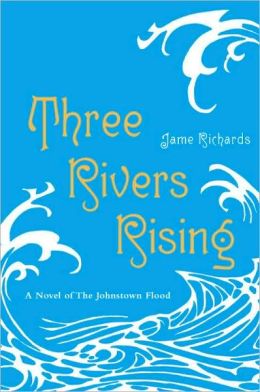
Three Rivers Rising (2010)

Three Rivers Rising. Jame Richards. 2010. Random House. 304 pages. [Source: Review Copy]

Three Rivers Rising is a historical romance novel written in verse. There are a handful of narrators: Celestia, Peter, Maura, and Kate. Three Rivers Rising uses the tragic Johnston Flood of 1889 as a setting for a forbidden romance between the wealthy Celestia and the poor working boy Peter. These two meet one summer--1888--and fall madly in love. Celestia isn't the only daughter falling in love; her older sister, Estrella, is also having her first taste of love, for better or worse. Unfortunately, her one "true love" isn't honorable. Estrella makes a hasty exit with an elderly aunt hoping that the society matrons won't notice. Her future is uncertain: will her family ever acknowledge her again? The summer ends with Celestia and Peter still in love and promising to write one another faithfully. A year later they meet again, though her father has arranged for Celestia to marry someone, Celestia KNOWS that Peter is the only husband she'll ever have. So she leaves her old life behind and goes to the valley, to Johnston to be with Peter. Days later, the flood occurs. Almost a third of this romance novel focuses on the flood itself. This is where the other narrative voices become very useful!

Overall, I did enjoy this one! The romance is lovely in this one. I thought it was well written.

© 2013 SukaYuka.com of SukaYuka's Book Reviews
Monday, May 6, 2013

Cross My Heart (2012)

Cross My Heart. Sasha Gould. 2012. Random House. 272 pages.

Cross My Heart is an enjoyable historical romance set in Venice in 1585. Laura, our heroine, was miserable in the convent, but her sister's tragic death changes everything: for her sister's death means Laura is now her father's pawn. Her sister's future husband is now her future husband. The thought disgusts her. Laura doesn't really appreciate her father's politics and his scheming to always make the best deal, the best alliance. Laura's options are few: she can choose to trust her father OR she can choose to trust a secret league of dangerous women. Women holding secrets--big secrets at times--that try to manage things behind-the-scenes. If Laura tells them a secret, they assure her she won't have to marry that repulsive man. But are these women especially trustworthy?

Cross My Heart IS a romance. Laura meets a young man, a painter. The attraction for both is very strong. But Laura is having a hard time trusting anyone as she discovers that secrets are ever-abundant and no one is quite as they appear...

I definitely liked this one.

© 2013 SukaYuka.com of SukaYuka's Book Reviews

Friday, May 3, 2013

Hattie Ever After (2013)

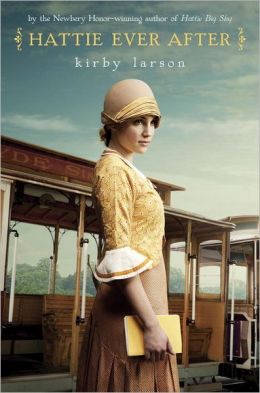
Hattie Ever After. Kirby Larson. 2013. Random House. 240 pages. 

Hattie Ever After is the sequel to Hattie Big Sky. I loved, loved, loved Hattie Big Sky. I have reviewed it twice: once in 2007, once in 2012. I think I loved Hattie's determination as her inner strength is tested time and time again. I think I loved the relationships, the friendships, as Hattie makes a place for herself in a sometimes unfriendly world or environment. I think I loved the atmosphere. It read like a good old-fashioned pioneer story. Hattie Ever After has a very different feel to it. Hattie has had the opportunity to settle down with her sweetheart, Charlie, but has chosen to be independent and see the world for herself. In Hattie Ever After, Hattie is living in San Francisco trying to get her start--her real start--as a reporter at a newspaper. She has a job there, it's just a cleaning job, a night job. She's happy to have a job; she's happy to be making some money. But if only her research and instincts paid off and led to something...

But Hattie finds life isn't that easy or simple...

I didn't love Hattie Ever After; at the very least I didn't love it as much as Hattie Big Sky. I didn't enjoy the San Francisco setting as much. I also had a harder time establishing connections with the other characters. Hattie was Hattie, and I LOVE Hattie. That hasn't changed. But did I enjoy meeting any of the other characters? I'm not sure. Did I find the history intriguing? Yes, to a certain extent. There were women who were struggling to find their voice and have real careers outside the home; women wanting opportunities and respect. And I appreciated Hattie wanting to interview these women and working on a piece highlighting the women she met and admired. The story is also quite realistic, I imagine. Both Hattie Big Sky and Hattie Ever After are realistic in that way, in their not-movie endings.

Hattie was extremely vulnerable in Hattie Ever After, and it was hard for me to watch Hattie make mistakes and stumble BECAUSE of her innocence and sincerity.

© 2013 SukaYuka.com of SukaYuka's Book Reviews
Monday, April 15, 2013

The Apothecary (2011)

The Apothecary. Maile Meloy. 2011. Penguin. 356 pages.

I enjoyed Maile Meloy's delightfully odd historical fantasy novel, The Apothecary. The year is 1952, the Scott family is moving to London, England. Our heroine, Janie, is fourteen and not so happy about the move. At least not at first. But after a few weeks, Janie finds herself in the middle of an almost unbelievable adventure, an adventure that will lead her straight into danger, but also leading to her very first kiss.

I would have loved The Apothecary just as much if it had not turned magical or supernatural. The first half of the novel focuses on Janie's new life: her new school, her new classes and new subjects (Latin!), her friend possibilities. There are some delightfully descriptive passages that are just fun! The second half of the novel focuses on her friendship with Benjamin Burrows (the local apothecary's son). He likes to play chess in the park and "spy" on a Russian man. What he spies one Saturday, changes everything...for it leads them a little too close home!

When Benjamin discovers his father's big-big secret, a secret that Janie gets drawn into as well, the novel becomes quirky and fantastical. Danger, action, drama, mystery and a hint of first love...

Favorite quotes:
It's safe to say I was not graceful about the move to London. I was no witty, patient, adaptable Jane Austen. And if I was anything like Katherine Hepburn, it was in the scenes where she's being a giant pest. (12)
"We're looking for three hot water bottles," my father told him.
"Of course."
"And how about some chocolate bars?"
The apothecary shook his head. "We have them sometimes. Not often, since the war."
"Since the war?" my father said, and I could see him calculating: twelve years without a steady supply of chocolate. He looked a little faint. I wondered if he could get a prescription for chocolate from a doctor. Then I could have some, too. (16)

The school was in a stone building with arches and turrets that seemed very old to me but wasn't old at all, in English terms. It was built in 1880, so it was practically brand-new. (19)

Two teachers walking down the hall wore black academic gowns, and they looked ominous and forbidding, like giant bats. (19)

The school secretary, whose tight gray curls reminded me of a sheep, gave me my class schedule. (19)

"My mother said moving here would be like living in a Jane Austen novel, but it isn't really."
"But your story couldn't be Austen, with an American heroine," he said.
I couldn't help smiling at him. "That's what I said!"
"More of a Henry James novel," he said. "The American girl abroad. Are you an Isabel Archer or a Daisy Miller?"
I blushed, but told the truth. "I don't know. I haven't read any Henry James novels."
"You will soon enough," he said. "But you wouldn't want to be Isabel or Daisy. They come to bad ends, those girls. Confide tibia, Miss Scott. Far better to be who you are." (24)

The apothecary looked out at the drizzle. "It would be strange not to think about orange trees and blue sky on a day like today," he said. "No matter what powder you took."
"And my new school is pretty awful," I said.
The apothecary laughed. "The man who develops a tincture against the awful new school will win the Nobel Prize. It would be far more useful than the cure for the common cold." (30)


Read The Apothecary
  • IF you enjoy historical fiction OR historical fantasy
  • If you enjoy books about magical books
  • If you enjoy spy-adventure, action-adventure books

© 2013 SukaYuka.com of SukaYuka's Book Reviews

Thursday, March 28, 2013

The Rogue's Princess (2013)

The Rogue's Princess. (Lacey Chronicles #3). Eve Edwards. 2013. Random House. 272 pages.

When I first started The Rogue's Princess, I was hesitant. I was not liking the "historical" presentation of Puritans. All the details felt too on-the-surface and not quite genuine. I wasn't sure I was going to like Mercy Hart or her family. But. Once Mercy goes to her friend Ann's house for supper and meets Kit Turner (Christopher Turner), a player (actor) we first met in The Queen's Lady, I stopped caring. What Edwards does really well is right distracting--absorbing--love stories. If you believe the love story between the hero and heroine, everything else ceases to matter almost. I do think her characters are at times a little too modern, but, as I'm reading the story I don't care.

Kit Turner was an interesting hero. I definitely enjoyed getting to know him better and seeing things through his perspective. I did enjoy spending time with the youngest Lacey brother, Tobias. Though he isn't my favorite or best Lacey brother!

I have enjoyed all three books, but I haven't exactly LOVED any of them. They are purely fun, quick and enjoyable reads.

Read The Rogue's Princess
  • If you enjoyed the first two books in the series
  • If you enjoy historical romance

© 2013 SukaYuka.com of SukaYuka's Book Reviews

Wednesday, March 27, 2013

Dark Triumph (2013)

Dark Triumph (His Fair Assassin #2) Robin LaFevers. 2013. Houghton Mifflin Harcourt. 387 pages.

 At first, I didn't know what to think of Dark Triumph. The opening chapters were so dark and creepy. What Sybella, our heroine, has had to live with her whole life is almost too horrible to describe. But her story, though dark, is necessary for the reader to know, to understand. Both Sybella and "the Beast" were characters first introduced in Robin LaFevers Grave Mercy. I thought they were interesting in the first novel, but after reading the second novel they were so much more than that. I LOVED them. I think I loved them even more than I loved Ismae and Duval.

Secrets. Lies. Betrayals. Murders. Sybella has seen and heard too much; she was born into one of the cruelest, darkest families in Brittany. Her escape to the convent to be trained as Death's handmaiden--an assassin--was too brief. For better or worse, Sybella's "purpose" is a dark one. She wants justice, justice for all the lives lost at her father's hand, all the lives lost because of her father's orders, all the lives lost on the battlefield because her father is a traitor to the duchess. She's a killer. She feels she kills justly, men who deserve to die, but she's a killer whether or not she's following her Lord's orders or not.

One of the orders she receives early in the novel is to rescue one of the men captured by her father. A man readers came to know as "the Beast." She knows it won't be easy, but, she knows it's right. For she knows that in saving his life, in giving him his freedom, she'll be doing good for the Duchess. The news he carries back to her may help her cause. But what Sybella never expected was to be "rescued" by the prisoner AS he makes his escape. The Beast and Sybella traveling together...as a team...to the Duchess...it's something!

And that's just the start, of course!

Grave Mercy and Dark Triumph might not be for every reader. There is so much darkness in the second book, mainly involving Sybella's past and present. While at first I was hesitant to visit those dark places and learn Sybella's truths, I soon cared too much to stop reading. If the first book focused on politics with the threat of war, the second novel focuses on politics and inevitable WAR.


I would definitely recommend reading the two books in order. And if you've got the time, it might be a good idea to reread the first novel. Dark Triumph and Grave Mercy overlap by a little bit. And the politics and war might make more sense if you've recently read Grave Mercy. 

Read Dark Triumph
  • If you enjoyed Grave Mercy
  • If you're a fan of Robin LaFevers
  • If you enjoy dark historical novels focused on war and politics

© 2013 SukaYuka.com of SukaYuka's Book Reviews

Tuesday, March 26, 2013

Rereading Grave Mercy (2012)

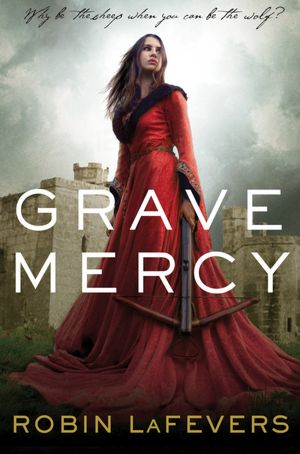
Grave Mercy. Robin LaFevers. 2012. Houghton Mifflin Harcourt. 560 pages.

Last summer, I reviewed Robin LaFevers' Grave Mercy. It was LOVE. To sum up Grave Mercy in many words: Politics. Romance. Drama. Dysfunctional Families. Poison. Murder. Betrayal. Mystery. Suspense. To sum it up in just two: assassin nuns. The novel is set in Brittany in the late 1480s.

Ismae, our heroine, is one of Death's handmaidens. She's a trained assassin, trained by a convent of nuns dedicating their lives to serving St. Mortain (Death). The nuns are loyal to the Duchess of Brittany, and the victims are often her political enemies--foreign or domestic--those that pose the greatest threat to Brittany's independence.

While we do see her first few jobs carried out, most of the novel focuses on one job in particular. The abbess wants her to team up with Duval, the Duchess' older brother and her most trusted friend and advisor. She's to pose as his mistress, and travel with him to the Duchess' household. There she will "help him" find any possible traitors...

I wanted to reread Grave Mercy because the second novel in the series, Dark Triumph, is releasing soon. I thought the second novel would read better if I took the time to reread the first novel. And I think this was very beneficial. Especially since this is a novel heavy in politics. While I read Grave Mercy in one night the first time, I took my time for the reread. I think I was better able to absorb the politics at a slower pace. I was able to focus more on the minor characters as well. The first time, it was ALL about the romance--that was the only thing I cared about. This time, I was able to appreciate the story as a whole.

Read Grave Mercy

  • If you're a fan of Robin LaFevers
  • If you're a fan of historical romance, with a fantasy feel to it (mythology/supernatural)
  • Also if you're a fan of mystery/suspense/political thrillers
© 2013 SukaYuka.com of SukaYuka's Book Reviews
Thursday, March 21, 2013

The Queen's Lady (2012)

The Queen's Lady. Eve Edwards. 2012. Random House. 336 pages.

I enjoyed reading The Queen's Lady. Readers first meet the heroine, Jane, as a character in the first novel, The Other Countess. This novel is set several years later. Jane, now a widow, is facing new troubles. Her stepsons are unhappy that Jane received anything from their father. They are after the ring, the money, the land. Her father is also anxious to get control of his daughter once again, he wants to arrange a marriage--of his choosing, of course--for her. But Jane, well, Jane is fond of James Lacey. She even tells him so. But while he loves her too, he's not ready to commit just yet. He needs time to recover from the horrible things he witnessed as a soldier.

There is a second romance in The Queen's Lady. Milly, a seamstress and friend of Jane, is in love with James' servant, Diego, an African slave. He wasn't always James' servant. Milly is someone he knew a long time ago when he was serving someone else. The focus is on both relationships equally.

I find the characters interesting, for the most part. There are definitely plenty of villains to hate! And I definitely cared for Jane in this novel. But. I'm not sure that I "love" either book.

Read The Queen's Lady
  • If you enjoyed The Other Countess
  • If you enjoy historical fiction set in the Elizabethan time period
  • If you enjoy historical romance

© 2013 SukaYuka.com of SukaYuka's Book Reviews

Wednesday, March 20, 2013

The Other Countess (2011)

The Other Countess. Eve Edwards. 2011. Random House. 352 pages.

I enjoyed The Other Countess by Eve Edwards. I think readers who enjoy historical romance set during the Elizabethan period will especially love it. Readers meet two young women worthy of being heroines. (The second heroine, Jane, will be the star of the second book.) The heroine of The Other Countess is a young woman named Eleanor (Ellie). Her father is a mess, he's so obsessed with alchemy, so Ellie has had to raise herself essentially and care for her father as best she can. Will, the hero, has a definite grudge against Ellie's father, but, he at first doesn't recognize Ellie as being her father's daughter--the last time he saw her she was a child, it was the day he was throwing her and her father out of his estate. But now Ellie is oh-so-beautiful. And he is madly in love with her until he makes the connections. Even when he does learn the truth, he can't quite forget her as he "should." He has several opportunities to help her, to show her kindness, to save her...

The Other Countess has some drama and adventure in it as well reminding readers that life either in the country or at court was never problem-free. Ellie, as a beautiful young woman, is at risk from unwanted attention...

Read The Other Countess
  • If you enjoy historical fiction set during the Elizabethan period
  • If you enjoy historical romance
© 2013 SukaYuka.com of SukaYuka's Book Reviews

Saturday, March 2, 2013

The Lightning Dreamer (2013)

The Lightning Dreamer. Margarita Engle. 2013. Houghton Mifflin Harcourt. 182 pages.

Books are door-shaped
portals
carrying me
across oceans
and centuries,
helping me feel
less alone.

But my mother believes
that girls who read too much
are unladylike
and ugly,
so my father's books are locked
in a clear glass cabinet. I gaze
at enticing covers
and mysterious titles,
but I am rarely permitted
to touch
the enchantment 
of words. (3)

I definitely enjoy Margarita Engle's verse novels. Her newest is a verse novel about Cuban abolitionist poet, Gertrudis Gomez de Avellaneda, who was nicknamed Tula. For a young girl--a young woman--who dreamed so big, wanted so much, her environment was quite oppressive. Her family wanted, NEEDED, her to marry well. But. Tula had different ideas. She held onto the notion that she could have ideas of her own:

Girls are not supposed to think,
but as soon as my eager mind
begins to race, free thoughts
rush in
to replace
the trapped ones. (4)

 Tula discovers a whole new world within the convent library, and once she begins her journey, there will be no dissuading her...

Opinions.
Ideas.
Possibilities.
So many!
How can I choose?
Between bursts
of lightning-swift energy,
I enjoy peaceful moment
when the whole world
seems to be a flowing river
of verse
and all I have to do is learn
how to swim.
During those times,
I find it so easy to forget
that I'm just a girl who is expected
to live
without thoughts. (41)

The novel is rich and descriptive. I love the writing...

"I feel certain that words
can be as human 
as people,
alive
with the breath
of compassion." (26)

So many people 
have not yet learned
that souls have no color
and can never
be owned. (69)


Love is as tricky as a wall
of mirrors that make
narrow hallways
seem open
and wide. (146)

I would definitely recommend this one! 

Read The Lightning Dreamer
  • If you enjoy verse novels
  • If you enjoy historical novels based on real people and events
  • If you enjoy Margarita Engle's works
  • If you are looking for YA books set in Cuba

© 2013 SukaYuka.com of SukaYuka's Book Reviews