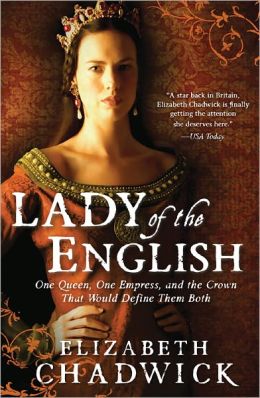
Lady of the English. Elizabeth Chadwick. 2011. Sourcebooks. 544 pages. [Source: Library]
Lady of the English is set during the dispute between Empress Matilda (Henry I's daughter) and King Stephen (Henry I's nephew). These two cousins (through their armies) fought bitterly for the throne of England starting in 1135. Last year, I read one adaptation of that conflict--though it was a bit ridiculous, Passionate Enemies by Jean Plaidy. Lady of the English is told mainly through two perspectives: Empress Matilda (the mother of Henry II) and Queen Adeliza (the widow of Henry I, Matilda's stepmother). Half the book is focused on Matilda's struggle with Stephen, her complicated relationship with her husband, Geoffrey of Anjou, her trying (but not too hard) to balance being a mother with being a strong political/military force to be reckoned with. Readers do spend time with her son, Henry, who would in good time become the next King. The other half of the book is focused on Adeliza's second marriage with William d'Aubigny. Adeliza was a supporter of Matilda; her husband a supporter of King Stephen. But these two were devoted to one another and had quite a large family, especially considering that she was the "barren" wife of Henry I. If Lady of the English is considered a "romance" novel, it would be because of this match.
The battle between Stephen and Matilda is not resolved in this novel. The novel just seems to stop suddenly in the middle of the story. I'd love the chance to read the rest of the story through Matilda's perspective!
I enjoyed this one for the most part. Lady of the English is not a "clean" read, however, there is so much history, so much historical detail, that it is easy to overlook the small percentage of smut when all is considered.
© 2014 SukaYuka.com of SukaYuka's Book Reviews
Showing posts with label adult* romance. Show all posts
Tuesday, January 21, 2014
Friday, August 9, 2013
Royal Mistress (2013)
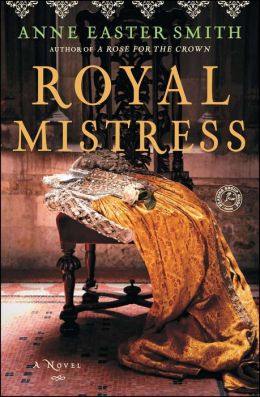
Royal Mistress. Anne Easter Smith. 2013. Simon & Schuster. 489 pages. [Source: Review Copy]
Royal Mistress is not my favorite historical novel set during this dramatic time in English history--the reign of Edward IV and Richard III. Half the novel is seen through the eyes of Jane Shore, the mistress to King Edward. The shifting between characters was necessary to tell the full story, to round it out, in places but it was also uneven. It was odd to spend so much time with just Jane's point of view, and then suddenly shift into the mind of Richard, for example, or Hastings, or whomever.
Edward IV has never been a favorite of mine. The more I read about him, the more disgusting I find him. And in a way, I feel the same towards Jane Shore. I didn't exactly look upon her with favor. Royal Mistress, of course, presents her completely sympathetically. She's presented as more than beautiful, having a certain something, a definite wit that every single man--no matter his marital status--finds irresistible.
The book opens with Jane Shore falling madly, deeply in love with Sir Thomas Grey (Elizabeth Woodville's eldest son by a previous marriage, the stepson of Edward IV). Though she's only seen him the one time, though she's only spent at most half an hour with him, she knows it is TRUE LOVE. And she knows that he just HAS to feel the same way about her. So when they next meet privately, it is humiliating. She essentially telling him, you better hurry and go see my father and tell him you want to marry me! I've not stopped thinking about you since we met! I can't wait to be your wife! It will be so fun to yours forever and ever! After awkward silence on his part, he essentially says: I never said I wanted to marry you! Where did you get that idea! I thought when you said you wanted to meet, you wanted to be in my bed, of course! That's all I care about. True, I've been thinking of you since we met last week, but I've been thinking about getting you in bed. When she next hears from him, she eagerly goes to him: YOU CHANGED YOUR MIND! You do love me! You want to marry me! Again awkward silence, his response: I told you I am not interested in marrying you. I thought you would have changed YOUR mind by now. Oh, by the way, I'm married.
Jane does get married; she gets married to a man of her father's choosing, a business arrangement. Her husband being a lot more interested in what he can get out of the marriage. He is shown as having no interest in Jane as a woman, as a wife, as the future mother of his children. There are plenty of awkward conversations, Jane starts them, of course. Her husband, William Shore, wanting to run away from her as fast as possible whenever she starts asking why or complaining.
Jane happens to catch the attention of Lord Hastings (Will Hastings). She is not as easy to persuade into a life of sin as he initially thought, so nothing comes of it. Except that he talks a lot about her to the King. The King sees her. The King wants her. The King sends for her. He sends a present along with his note. She comes. She comes oh-so-willingly.
Since I do not care for smut, you can imagine I did not care for most of the novel.
So how does the novel present Richard III. Well, Jane hates him because Richard looks unfavorably upon her. Richard hated the fact that Edward was so immoral, so unfaithful. Jane now represents the immorality of his brother's reign. BUT. While Jane hates Richard III. Through other perspectives, the author reveals several things: 1) That Richard III is innocent of killing the princes in the tower; she places the blame on Henry Stafford (Buckingham). 2) That the pre-contract with Eleanor Butler was real; that Edward IV's marriage to Elizabeth Woodville should not have been allowed, and was in fact illegitimate, that the king and one or two of his closest knew this and did all they could to cover it up forever. 3) That when Richard III learned the truth--it is presented as truth--that changed everything. Richard had more of a right than an illegitimate boy.
Though I didn't exactly care for Jane Shore through most of the book, I did find the last part of the novel to be fascinating.
You might find The Tragedy of Jane Shore by Nicholas Rowe to be interesting.
© 2013 SukaYuka.com of SukaYuka's Book Reviews
Royal Mistress is not my favorite historical novel set during this dramatic time in English history--the reign of Edward IV and Richard III. Half the novel is seen through the eyes of Jane Shore, the mistress to King Edward. The shifting between characters was necessary to tell the full story, to round it out, in places but it was also uneven. It was odd to spend so much time with just Jane's point of view, and then suddenly shift into the mind of Richard, for example, or Hastings, or whomever.
Edward IV has never been a favorite of mine. The more I read about him, the more disgusting I find him. And in a way, I feel the same towards Jane Shore. I didn't exactly look upon her with favor. Royal Mistress, of course, presents her completely sympathetically. She's presented as more than beautiful, having a certain something, a definite wit that every single man--no matter his marital status--finds irresistible.
The book opens with Jane Shore falling madly, deeply in love with Sir Thomas Grey (Elizabeth Woodville's eldest son by a previous marriage, the stepson of Edward IV). Though she's only seen him the one time, though she's only spent at most half an hour with him, she knows it is TRUE LOVE. And she knows that he just HAS to feel the same way about her. So when they next meet privately, it is humiliating. She essentially telling him, you better hurry and go see my father and tell him you want to marry me! I've not stopped thinking about you since we met! I can't wait to be your wife! It will be so fun to yours forever and ever! After awkward silence on his part, he essentially says: I never said I wanted to marry you! Where did you get that idea! I thought when you said you wanted to meet, you wanted to be in my bed, of course! That's all I care about. True, I've been thinking of you since we met last week, but I've been thinking about getting you in bed. When she next hears from him, she eagerly goes to him: YOU CHANGED YOUR MIND! You do love me! You want to marry me! Again awkward silence, his response: I told you I am not interested in marrying you. I thought you would have changed YOUR mind by now. Oh, by the way, I'm married.
Jane does get married; she gets married to a man of her father's choosing, a business arrangement. Her husband being a lot more interested in what he can get out of the marriage. He is shown as having no interest in Jane as a woman, as a wife, as the future mother of his children. There are plenty of awkward conversations, Jane starts them, of course. Her husband, William Shore, wanting to run away from her as fast as possible whenever she starts asking why or complaining.
Jane happens to catch the attention of Lord Hastings (Will Hastings). She is not as easy to persuade into a life of sin as he initially thought, so nothing comes of it. Except that he talks a lot about her to the King. The King sees her. The King wants her. The King sends for her. He sends a present along with his note. She comes. She comes oh-so-willingly.
Since I do not care for smut, you can imagine I did not care for most of the novel.
So how does the novel present Richard III. Well, Jane hates him because Richard looks unfavorably upon her. Richard hated the fact that Edward was so immoral, so unfaithful. Jane now represents the immorality of his brother's reign. BUT. While Jane hates Richard III. Through other perspectives, the author reveals several things: 1) That Richard III is innocent of killing the princes in the tower; she places the blame on Henry Stafford (Buckingham). 2) That the pre-contract with Eleanor Butler was real; that Edward IV's marriage to Elizabeth Woodville should not have been allowed, and was in fact illegitimate, that the king and one or two of his closest knew this and did all they could to cover it up forever. 3) That when Richard III learned the truth--it is presented as truth--that changed everything. Richard had more of a right than an illegitimate boy.
Though I didn't exactly care for Jane Shore through most of the book, I did find the last part of the novel to be fascinating.
You might find The Tragedy of Jane Shore by Nicholas Rowe to be interesting.
© 2013 SukaYuka.com of SukaYuka's Book Reviews
Tuesday, July 23, 2013
The White Princess (2013)
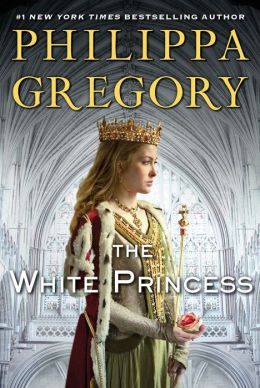
The White Princess. Philippa Gregory. 2013. Simon & Schuster. 544 pages. [Source: Review Copy]
I have enjoyed each book in Philippa Gregory's Cousins' War series. I think I have enjoyed each book a little bit more as the series has progressed. The first book being my least favorite--from this series--and the last book probably being my most favorite. The series consists of: The White Queen by Philippa Gregory, The Red Queen by Phillipa Gregory, The Lady of the Rivers by Philippa Gregory, and The Kingmaker's Daughter by Philippa Gregory. The White Princess tells the story of Elizabeth York; she is the daughter of Edward IV and Elizabeth Woodville; the sister of the two princes in the tower; the niece of Richard III; the wife of Henry VII; the daughter-in-law of Margaret Beaufort; the mother of Henry VIII. To say her life was messy and complicated, well, that wouldn't even begin to explain it all. But Philippa Gregory gives her a voice, fictional though it may be. And her story is something.
When readers first meet Elizabeth, she is mourning the death of Richard III. The novel taking the position that Elizabeth and Richard were in love with each other, and would have in fact married if the battle had gone a different way. Elizabeth knows that her marriage with Henry VII makes sense politically for both families. The York family being popular and beloved, and, the Tudor family being 'merely' conquerors--outsiders. But the thought of love is far from her mind. And Henry VII isn't exactly wooing her well. The book is fictional, and I'm curious if there is any basis in reality for this depiction? (And it's on the advice of his mother!) The two marry, of course, and children quickly follow. The main focus of the novel is on her private life, her role as a wife, mother, queen in a very uncertain court. Henry VII is depicted as being anxious and a bit obsessed. His concern that he'll be defeated in battle. That the York family will in some way or other will dethrone him, win back control, etc. His obsession with "the boy" that may or may not be Richard, duke of York.
The novel spans over a decade: 1485-1499. And it does address in some ways, the fate of the boys in the tower.
I definitely loved this one. I found it very compelling! It is such a fascinating period in history!
Favorite quotes:
© 2013 SukaYuka.com of SukaYuka's Book Reviews
I have enjoyed each book in Philippa Gregory's Cousins' War series. I think I have enjoyed each book a little bit more as the series has progressed. The first book being my least favorite--from this series--and the last book probably being my most favorite. The series consists of: The White Queen by Philippa Gregory, The Red Queen by Phillipa Gregory, The Lady of the Rivers by Philippa Gregory, and The Kingmaker's Daughter by Philippa Gregory. The White Princess tells the story of Elizabeth York; she is the daughter of Edward IV and Elizabeth Woodville; the sister of the two princes in the tower; the niece of Richard III; the wife of Henry VII; the daughter-in-law of Margaret Beaufort; the mother of Henry VIII. To say her life was messy and complicated, well, that wouldn't even begin to explain it all. But Philippa Gregory gives her a voice, fictional though it may be. And her story is something.
When readers first meet Elizabeth, she is mourning the death of Richard III. The novel taking the position that Elizabeth and Richard were in love with each other, and would have in fact married if the battle had gone a different way. Elizabeth knows that her marriage with Henry VII makes sense politically for both families. The York family being popular and beloved, and, the Tudor family being 'merely' conquerors--outsiders. But the thought of love is far from her mind. And Henry VII isn't exactly wooing her well. The book is fictional, and I'm curious if there is any basis in reality for this depiction? (And it's on the advice of his mother!) The two marry, of course, and children quickly follow. The main focus of the novel is on her private life, her role as a wife, mother, queen in a very uncertain court. Henry VII is depicted as being anxious and a bit obsessed. His concern that he'll be defeated in battle. That the York family will in some way or other will dethrone him, win back control, etc. His obsession with "the boy" that may or may not be Richard, duke of York.
The novel spans over a decade: 1485-1499. And it does address in some ways, the fate of the boys in the tower.
I definitely loved this one. I found it very compelling! It is such a fascinating period in history!
Favorite quotes:
"What I don't have I will write myself. I will write this boy's parentage into his story, I will create it: common people, nasty people. The father a bit of a drunk, the mother a bit of a foot, the boy a bit of a runaway, a wastrel, a good-for-nothing. D'you think I can't write this and get someone--a drunk married to a fool--to swear to it? Do you think I can't set up as historian? As storyteller? D'you think I can't write a history which years from now, everyone will believe as the truth? I am the king. Who shall write the record of my reign if not me?" (329)
"It doesn't matter who Henry is facing. Whether it is my mother's favorite boy or another mother's son. What matters is that you have not made your boy the beloved of England. You should have made him beloved and you have not done so. His only safety lies in the love of his people, and you have not secured that for him." (403)
© 2013 SukaYuka.com of SukaYuka's Book Reviews
Monday, July 1, 2013
Paris (2013)
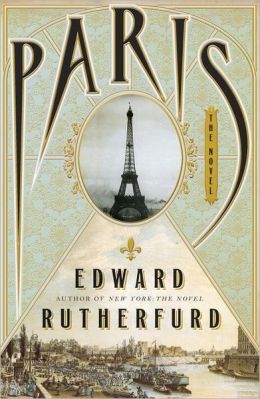
Paris. Edward Rutherfurd. 2013. 832 pages. [Source: Library]
I have enjoyed many of Edward Rutherfurd's historical novels in the past. Paris differs slightly in format. Instead of flowing chronologically and following a handful of families through the centuries, time periods are juxtaposed. For better or worse, this blended then-and-now approach allows Rutherfurd to concentrate his storytelling efforts. Readers follow one generation of the family for an extended period of time: meeting most of the characters when they are young--in their teens in the 1880s--and following them through the second world war. Other periods of time are visited, of course, giving brief flashes of French history; these flashes give flavor, allowing Rutherfurd to draw vignettes of time, place, and culture. These chapters do not reveal thoroughly fleshed out characters for the most part, but, they do allow readers a brief taste of life in Paris through the ages. Do readers care about each and every character? Of course not!
What the novel Paris has is atmosphere. It was a readable novel starring some pleasant and not-so-pleasant characters. In fact, a few of the characters in Paris are truly despicable without any redeeming qualities. It definitely was a pleasant read; I'm not sure any of the characters are truly memorable and wow-worthy. But there was something about Paris that kept me reading for extended periods of time! I think I read Paris quicker than I've ever read a Rutherfurd novel! Perhaps I kept reading because I wanted to get back to the "now" story.
Have you read any of Edward Rutherfurd's novels? (Sarum, London, Russka, New York, The Forest, The Princes of Ireland, The Rebels of Ireland.) Do you have a favorite? I think my favorite is London, the first one I discovered.
© 2013 SukaYuka.com of SukaYuka's Book Reviews
I have enjoyed many of Edward Rutherfurd's historical novels in the past. Paris differs slightly in format. Instead of flowing chronologically and following a handful of families through the centuries, time periods are juxtaposed. For better or worse, this blended then-and-now approach allows Rutherfurd to concentrate his storytelling efforts. Readers follow one generation of the family for an extended period of time: meeting most of the characters when they are young--in their teens in the 1880s--and following them through the second world war. Other periods of time are visited, of course, giving brief flashes of French history; these flashes give flavor, allowing Rutherfurd to draw vignettes of time, place, and culture. These chapters do not reveal thoroughly fleshed out characters for the most part, but, they do allow readers a brief taste of life in Paris through the ages. Do readers care about each and every character? Of course not!
What the novel Paris has is atmosphere. It was a readable novel starring some pleasant and not-so-pleasant characters. In fact, a few of the characters in Paris are truly despicable without any redeeming qualities. It definitely was a pleasant read; I'm not sure any of the characters are truly memorable and wow-worthy. But there was something about Paris that kept me reading for extended periods of time! I think I read Paris quicker than I've ever read a Rutherfurd novel! Perhaps I kept reading because I wanted to get back to the "now" story.
Have you read any of Edward Rutherfurd's novels? (Sarum, London, Russka, New York, The Forest, The Princes of Ireland, The Rebels of Ireland.) Do you have a favorite? I think my favorite is London, the first one I discovered.
© 2013 SukaYuka.com of SukaYuka's Book Reviews
Subscribe to:
Posts (Atom)