Showing posts with label adult nonfiction. Show all posts

Monday, January 27, 2014

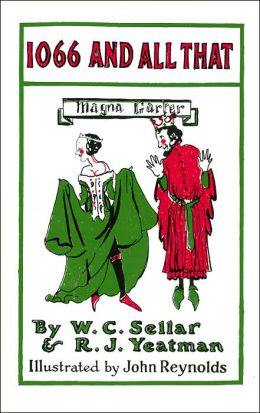
1066 And All That (1931)

1066 And All That. W.C. Sellar & R.J. Yeatman. 1931/1993. Barnes & Noble. 116 pages. [Source: Bought]

What an odd little book. An odd little book that purposefully messes around with historical facts and figures just trying to make readers of all ages laugh. I'll try to give you several examples of what makes this book unique. I think that is probably the only way to do this book justice. It will either be a book that appeals to your sense of humor, or, not.
The Ancient Britons were by no means savages before the Conquest, and had already made great strides in civilization, e.g. they buried each other in long round wheelbarrows (agriculture) and burnt each other alive (religion) under the guidance of even older Britons called Druids or Eisteddfods, who worshipped the Middletoe in the famous Druidical churchyard at Stoke Penge. (3)
The conversion of Britain was followed by a Wave of Danes, accompanied by their sisters or Sagas, and led by such memorable warriors as Harold Falsetooth and Magnus the Great, who, landing correctly in Thanet, overran the country from right to left, with fire. After this the Danes invented a law called the Danelaw, which easily proved that since there was nobody else left alive there, all the right-hand part of England belonged to them. The Danish Conquest, was, however undoubtedly a Good Thing, because although it made the Danes top nation for a time it was the cause of Alfred the Cake (and in any case they were beaten utterly in the end by Nelson). (8)
King Arthur invented Conferences because he was secretly a Weak King and liked to know what his memorable thousand and one Knights wanted to do next. (10)
Alfred had a very interesting wife called Lady Windermere (The Lady of the Lake), who was always clothed in the same white frock, and used to go bathing with Sir Launcelot (also of the Lake) and was thus a Bad Queen. (11)
With Edward the Confessor perished the last English King (viz. Edward the Confessor), since he was succeeded by Waves of Norman Kings (French), Tudors (Welsh), Stuarts (Scottish), and Hanoverians (German), not to mention the memorable Dutch King Williamanmary. (15)
The Norman Conquest was a Good Thing, as from this time onwards England stopped being conquered and thus was able to become top nation. (17)
The chapters between William I (1066) and the Tudors (Henry VIII, etc.) are always called the Middle Ages, on account of their coming at the beginning. (22)
About this time the memorable hero Robin Hood flourished in a romantic manner. Having been unjustly accused by two policemen in Richmond Park, he was condemned to be an outdoor and went and lived with a maid who was called Marion, and a band of Merrie Men, in Greenwood Forest, near Sherborne. Amongst his Merrie Men were Will Scarlet (The Scarlet Pimpernel), Black Beauty, White Melville, Little Red Riding Hood (probably an outdaughter of his) and the famous Friar Puck who used to sit in a cowslip and suck bees, thus becoming so fat that he declared he could put his girdle round the Earth. (27)
Richard II was only a boy at his accession; one day, however, suspecting that he was now twenty-one, he asked his uncle and, on learning that he was, mounted the throne himself and tried first being a Good King and then being a Bad King, without enjoying either very much; then, being told that he was unbalanced, he got off the throne again in despair, exclaiming gloomily, "For God's sake let me sit on the ground and tell bad stories about cabbages and things." Whereupon his cousin Lancaster (spelt Bolingbroke) quickly mounted the throne and said he was Henry IV, Part I. (43)
During this reign the Hundred Years War was brought to an end by Joan of Ark, a French descendant of Noah who after hearing Angel voices singing Do Re Mi became inspired, thus unfairly defeating the English in several battles. (47)
I thought it was an interesting read, definitely unique. But I can't say that I loved it or anything.

© 2014 SukaYuka.com of SukaYuka's Book Reviews
Monday, January 20, 2014

Alexander the Conqueror (2004)

Alexander the Conqueror: The Epic Story of the Warrior King. Laura Foreman. 2004. Da Capo Press. 211 pages. [Source: Library]

I enjoyed reading this biography of Alexander the Great. Though the size of this one was a bit bulky at times, the use of so many photographs made this one less intimidating. Readers are provided with background into his country, his culture, his family. Plenty of time is spent on his father, Philip II, and Alexander's upbringing. Half of the book focuses on his rise and fall, what happens when his father dies and he comes into power and begins his conquest.

I liked the writing style. I found it reader-friendly and at times quite conversational. It had just enough detail to be interesting as an introduction to the subject. Too much detail might prove overwhelming or intimidating. This was the first biography I'd read, and I found it just right for the most part.

© 2014 SukaYuka.com of SukaYuka's Book Reviews

Monday, January 13, 2014

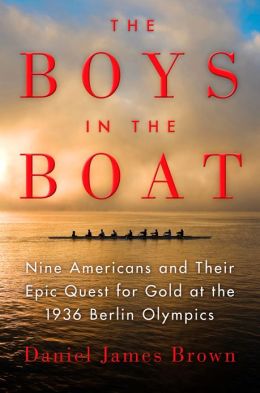
The Boys in the Boat (2013)

The Boys in the Boat. Daniel James Brown. 2013. Viking. 416 pages. [Source: Library]

Wow! What a book! I knew that I would probably end up loving this one despite my complete lack of interest in sports simply because of the dynamic storytelling. The Boys in the Boat focuses on personalities. It is powerful examination of human resiliency. Readers learn of the nine men on the Olympic team; readers learn of the coaches whose hard work and discipline and instinct, perhaps, led them there; readers learn of the man who made the rowing shells--not just for this one team, but, for so MANY in the rowing program. It's a story spanning a decade or two. Not every team member gets the full treatment, but, what we do learn is so emotionally compelling. It won't come as a big surprise, perhaps, to learn how much I LOVED, LOVED, LOVED learning Joe Rantz's story. But really, the whole book is so good, so worth reading...

Boys in the Boat is nonfiction at its best!!!


© 2014 SukaYuka.com of SukaYuka's Book Reviews

Monday, January 6, 2014

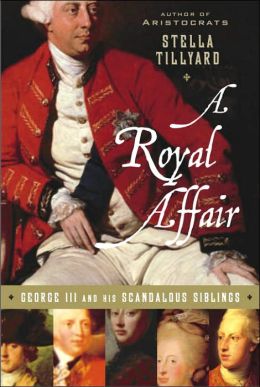
A Royal Affair

Royal Affair: George III And His Scandalous Siblings. 2006. Random House. 384 pages. [Source: Library]

The subject matter of Royal Affair was interesting enough, I suppose, however the chapters were incredibly long! I still enjoyed it overall though.

This nonfiction book examines George III in relationship with his brothers and sisters. Not all are mentioned or given equal attention. The book primarily focuses on Caroline Matilda, his youngest sister, who married Christian VII of Denmark. Prince Edward, Prince William, Prince Henry all get a chapter apiece. Several of his siblings married without permission which was almost unforgivable from George III's perspective. I definitely felt for Maria Walpole who secretly married Prince William, Duke of Gloucester. They kept the marriage secret as long as possible, until she conceived, though in truth George III was unofficially aware of the marriage. As long as it was "secret" he could continue to receive his brother and have him as part of his inner circle. But once it was announced, he had to be harsh because he wouldn't want anyone to get the wrong impression of his authority. The couple would have three children together, but, he fell out of love with her, started talking bad about her, found a new mistress, and made up with his brother. The marriage definitely didn't lead to a happily ever after for her. I struggled with Caroline Matilda. On the one hand, she had little choice in her marriage, and she was definitely married to someone unsuitable in almost every way. Her husband was essentially insane a good deal of the time, and, even when he was sane, he was far from ideal. (He loved prostitutes). On the other hand, falling in love and having a baby with one of the court doctors was scandalous. These sections were rarely boring!

© 2014 SukaYuka.com of SukaYuka's Book Reviews

Monday, December 23, 2013

The Story of Britain (2003)

The Story of Britain. Rebecca Fraser. 2003. Norton. 828 pages. [Source: Library]

Fraser has a clear purpose for writing The Story of Britain:
some kind of easy framework was still needed to guide the average person through the confusing shoals of disputed facts, to give a broad-brush picture of the past to those not in the van of historical research. The national curriculum today enables many young people to grow up used to handling esoteric historical documents yet without any real chronological sense of the years between, say, the Stuarts and the Victorians. Many children might be forgiven for believing that the Egyptians and the Aztecs once lived on these islands too. The aim of this history is to attempt to return to those old rules of 'who, when, what, how.' (xv)
This chunkster is divided into sections: Roman, Anglo-Saxon, Norman and Angevin, Plantagenet, Lancastrian and Yorkist, Tudor, Stuart, Hanoverian, Saxe-Coburg, Windsor. Most of the chapters are titled with the name of the monarch (king or queen) and years of their reign. But that doesn't mean the book is solely focused on royalty to the exclusion of everything else.

Is it readable? Yes and no. I struggled with the beginning and the ending. It just wasn't a thrilling read. There were sections that held my interest very well. There were sections that were more than informative, they were fascinating too. Other sections were packed with information but exceedingly dull. The sections that worked best were peopled with CHARACTERS that were memorable, dramatic, tragic, or vulnerable. The sections that dealt with human nature and dysfunctional families were quite good. But at some point in this history book, Fraser's focus shifts a bit. Starting perhaps with the Hanoverians (or perhaps even earlier with James II, William and Mary, and Anne), the focus is less on royalty and more focused on prime ministers and parliament personalities. As this one goes on, there is barely a glimpse at all of any royal personality. The last two or three hundred pages of this one were horribly boring.

I thought the book was helpful in some ways. I thought she did a great job conveying information from William the Conqueror through Charles II. There were chapters that were definitely accessible and interesting.

© 2013 SukaYuka.com of SukaYuka's Book Reviews
Monday, December 16, 2013

Viking: Norse Warrior's Manual (2013)

Viking: The Norse Warrior's (Unofficial) Manual. John Haywood. 2013. Thames & Hudson. 208 pages. [Source: Library]


The world needs more history books like this one. Viking is written in second person present tense. The reader is addressed directly, and the material--though unofficial--blends what you want to know with what you need to know...if you want to become a Viking. The book is set in December 991 AD.

The book is arranged topically.
  • Why Become a Viking
  • Joining Up
  • The Novice Viking's Guide to the Great War Leaders
  • Weapons and Tactics
  • Going to Sea
  • Have Longship, Will Travel
  • Life On Campaign
  • Battle
  • The Spoils of War
  • The Sword's Sleep
 I found many sections entertaining and enjoyable. But probably my favorite section to grin about was "Have Longship, Will Travel." In this section, the author rates lands to potentially plunder. The name of each country is given, of course, as well as essential information such as location, inhabitants, key resources, several descriptive paragraphs, and the all-important section describing how hard it is to raid. (England is rated five stars; Ireland three stars). It reads in part:
Rich, green and fertile, England is the destination for the ambitious Viking at the present time. Since 978 England has been ruled by a foolish and unpopular king, Aethelred. (101)
Overall, this one is just a fun, light history book. 

© 2013 SukaYuka.com of SukaYuka's Book Reviews
Monday, December 2, 2013

How To Create the Perfect Wife (2013)

How To Create the Perfect Wife: Britain's Most Ineligible Bachelor And His Enlightened Quest to Train the Ideal Mate. Wendy Moore. Basic Books. 344 pages. [Source: Library]

How To Create the Perfect Wife was a fascinating read, fascinating in a despicable way, I suppose. Most readers will probably not enjoy getting to know the "hero", Thomas Day.

Who was Thomas Day? He was well-known several centuries ago. He lived and wrote during the reign of George III. He wrote two books for children: The History of Sandford and Merton and The History of Little Jack. Writing for children was definitely a new phenomenon. He also co-wrote a best-selling abolitionist poem called "The Dying Negro."

The focus of How To Create The Perfect Wife is not on Thomas Day's writing career. The focus is on the man's eccentricities. Day was a bit OBSESSED with Jean-Jacques Rousseau. It wasn't just that Emile was his most-favorite book. He was determined to live-out the philosophy, to run experiments on human subjects. His love life was a big mess, a complete failure. Why couldn't he find a wife? a good wife? a perfect wife? Society was to blame. He couldn't find an untainted woman free from contamination with the world, with society. He couldn't find a woman who shunned fashion, music, dance, art, good conversation. He wanted a brilliant wife who loved to listen, was willing to listen, obey, and serve. He wanted to be worshiped, and obeyed. Since there wasn't an eligible woman ready and willing to marry him now, the solution was simple. He would look for a young girl, a trainable child, one whom he could raise according to Rousseau's principles and philosophy, one whose training and upbringing he could control almost from start to finish. (I think he picked an eleven year old and a twelve year old?) He picked TWO girls and put them in competition with each other. Though of course neither girl knew they were an experiment, that they were being trained to be one man's notion of the perfect wife. After a year, he chose one girl to continue on...

The focus of the book is just as much on the one girl, Sabrina....

I won't tell you if Day's experiment is a success...and if he ever married....

I enjoyed reading How to Create The Perfect Wife because of the glimpse into the culture and society. I enjoyed meeting Day's friends the best. He kept surprisingly good company: Richard Lovell Edgeworth (father of Maria Edgeworth), Erasmus Darwin, and Anna Seward. Sabrina also became quite close to the Burney family: Charles Burney, Frances Burney, Sarah Burney. 

The book discusses Ovid's Metamorphoses and George Bernard Shaw's Pygmalion (1912). The myth was very popular in the 18th century. It inspired many operas and melodramas, including one by Rousseau. Thomas Day's experiment inspired many novelists including Anthony Trollope (Orley Farm), Henry James (Watch and Ward), Maria Edgeworth (Belinda). 

© 2013 SukaYuka.com of SukaYuka's Book Reviews

Monday, November 25, 2013

Alfred the Great (2005)

Alfred the Great. Justin Pollard. 2005. John Murray. 368 pages. [Source: Library]

I liked this biography of Alfred the Great. I can see why it might not appeal to every reader. Why it might not be considered a must-read by everyone. Not everyone gets excited by history. But I did enjoy learning more about Alfred the Great. This biography was pleasantly complex. It was rich in detail; it wasn't always the easiest to follow. I wouldn't want to be quizzed necessarily. But at the same time I was fascinated that there was so much to know, that so much has been passed down to us, that there are historians who specialize in this time period. There is a great deal about Vikings in this biography, which is just what I was looking for...

Since falling in love with Vikingland, I wanted to learn more. The song goes, "We split your isles diagonally from south-east to north-west. Our section was called the Danelaw, King Alfred ruled the rest" and "though we began as raiders so well-planned you accepted us as traders." The song does have a propaganda feel (in a good way) to it.

I found plenty within this one to interest me. Readers can learn a lot about Anglo-Saxon culture through the centuries. My goal was mainly big-picture. As I said earlier, there was a lot of information that could be absorbed by a careful reader or scholar. I wasn't trying to learn-to-remember every little thing. 

© 2013 SukaYuka.com of SukaYuka's Book Reviews

Monday, November 11, 2013

How The Barbarian Invasions Shaped The Modern World

How The Barbarian Invasions Shaped The Modern World. Thomas J. Craughwell. 2008. Fair Winds Press. 320 pages. [Source: Library]

The full subtitle of this one is "The Vikings, Vandals, Huns, Mongols, Goths, and Tartars Who Razed the Old World and Formed the New."

I'd describe this book as readable. It is a broad overview of the subject; it provides a framework for further study perhaps. It serves as a good introduction. It isn't the most thorough book on the Vikings or the Vandals or the Huns or the Mongols or the Goths or the Tartars.

I found it fascinating and quite entertaining. I knew practically nothing on the subject, and yet I found this one compelling instead of confusing. I wasn't sure what to expect when I began, but by the end, I was a fan. I loved the middle section the best. The Viking chapters were just what I was looking for.
  • "The Brightest Light of the Whole World Is Extinguished" The Goths Sack Rome
  • "They Filled The Whole Earth With Slaughter and Panic" The Arrival of the Huns
  • The Scourge of God: Attila the Hun
  • King of the Land and the Sea: Gaiseric and the Glory Days of the Vandals
  • An Empire of Their Own, The Vandals and the Second Sacking of Rome
  • The Groans of the Britons: The Angle, Saxon, and Jute Invasion of Britain
  • The Long-Haired Kings: The Franks
  • The First Viking Invasion of England: The Sacking of Lindisfarne Abbey
  • The Last King: Alfred the Great
  • "Floods of Danes and Pirates" The Vikings in Ireland
  • The Wasteland: The Vikings in the Frankish Empire
  • The Resurrection of Hastein: Vikings in the Mediterranean
  • The Blood of Heroes: Irish and Vikings at the Battle of Clontarf
  • The End of the Viking Age: The Battle of Stamford Bridge
  • Vengeance On Her Mind, Olga of Kiev
  • The Prince Who Made Kiev Christian: Vladimir of Kiev
  • Spitting on the Emperor: The Mongols in China
  • The Golden Horde: The Mongols in Russia
  • Sacks Full of Ears: The Mongols in Eastern Europe
The legacy of the Vikings in England is destruction. Libraries burned. Rare works of art looted and lost forever. Towns and villages wiped off the landscape. Lives destroyed. And the future of England--the nation that has had an immeasurable impact on the world's ideas about civil rights, representational government, and personal freedom--placed in severe jeopardy.
Some historians have tried to find positive contributions that the Vikings brought to England. But aside from teaching the English a better method of shipbuilding and adding Scandinavian words such as "skate" and "skiff" and "anger" and "muck" to the English language, and giving Scandinavian names to about 1,400 locations in England (places ending in -by, -thorpe, -toft, and -thwaite), Viking influence in England was almost nil. With one exception: By annihilating six of the seven English royal families, the Vikings inadvertently transformed the country from a patchwork of little kingdoms into a single realm under one kind. And once England was unified, it became a political and cultural powerhouse. (128)
Once the Vikings and the English intermarried, and especially once the Vikings began to convert to Christianity, their assimilation into English society was virtually painless. But that integration came decades after the first Viking raid in England. Between 793 and 865, the Vikings were marauders who brought nothing but pain and anguish to the people of England. (130)
© 2013 SukaYuka.com of SukaYuka's Book Reviews

Monday, November 4, 2013

Becoming Shakespeare (2007)

Becoming Shakespeare: The Unlikely Afterlife That Turned a Provincial Playwright Into the Bard. Jack Lynch. 2007. Walker. 320 pages. [Source: Library]

I'm so glad whimsy led me to Becoming Shakespeare! This is a little book about how Shakespeare became SHAKESPEARE, the one and only. After all, in his lifetime, he was one of many successful playwrights in Elizabethan England. But he wasn't recognized as THE BARD during his life. His universal genius was far from recognized. In chapter one, "Reviving Shakespeare" Lynch discusses how Shakespeare's resurrection was due in part to the restoration of the monarchy. Before Charles II was restored to the throne, plays were banned; theatres were sinful, don't you know! But the oh-so-merry monarch changed the rules. New plays were produced, of course, during this time. But Shakespeare was revived as well. In chapter two, "Performing Shakespeare," Lynch discusses several centuries worth of actors whose claim to fame was due in part to playing Shakespeare roles. Notable actors mentioned include: Thomas Betterton, Colley Cibber, James Quin, David Garrick, John Philip Kemble, Sarah Kemble Siddons, Fanny Kemble, Mary Robinson, Dorothy Jordan, and Edmund Kean. Chapter three, "Studying Shakespeare" is the story of Shakespeare scholarship through the centuries. This focuses on publishing and editing and various editions, changes to the texts, etc. This chapter is not about censoring Shakespeare, that story is saved for another chapter. Chapter Four, "Improving Shakespeare," is about adapting or editing Shakespeare for the stage. This chapter focuses on producers changing or rewriting Shakespeare to meet their needs and satisfy their audiences. This included changing endings in some cases! It also included adding scenes, adding characters, adding lines. In some cases, these "new" editions of Shakespeare were produced on the stage for decades while the original play was not. So one's new-and-improved King Lear might be the only one seen by many generations! Chapter five, "Co-opting Shakespeare" is all about politics, about using Shakespeare lines or quotes for your own purposes, to prove your point or make an argument, as propaganda in a way. This wasn't a favorite chapter. But it had its moments. It discusses how people read politics into his plays. How they could watch a play on the stage and come away with an opinion about modern politics. Chapter six, "Domesticating Shakespeare" is about making Shakespeare family-friendly and safe for all ages. This is about censorship or "bowdlerizing" the text. Removing puns and innuendos and such. But this is also the chapter that talks about retelling Shakespeare the right way (Tales from Shakespear). Chapter seven, "Forging Shakespeare" is about writers or historians who have "found" or "discovered" documents (signatures, plays, poems, etc.) It is about various attempts to hoax the public and achieve fame. Chapter eight, "Worshipping Shakespeare" is all about celebrating Shakespeare making him larger-than-life in some instances. This is about cultivating and celebrating his legacy. For example, Shakespeare celebrations and Shakespeare-related tourist attractions.

I definitely enjoyed this one! Some chapters I appreciated more than others. Some I thought did a great job in capturing culture and society.

© 2013 SukaYuka.com of SukaYuka's Book Reviews
Monday, October 28, 2013

The Time Traveler's Guide to Elizabethan England (2013)

The Time Traveler's Guide to Elizabeth England. Ian Mortimer. 2013. Viking. 416 pages. [Source: Library]

I really enjoyed reading Ian Mortimer's The Time Traveler's Guide to Medieval England. I was excited to learn of his newest book, The Time Traveler's Guide to Elizabethan England. Like the first book, it is broken down into sections:

The Landscape
The People
Religion
Character
Basic Essentials
What To Wear
Traveling
Where To Stay
What to Eat and Drink
Hygiene, Illness, and Medicine
Law and Disorder
Entertainment

Each chapter is broken down into sections as well. This makes it perfect for skimming and browsing. Of course, it is a fascinating read almost cover to cover. Personally, I'm not as excited about "landscape" as I am "entertainment." But for the most part, the book was packed with interesting information and presented in a conversational way. It was easy to read. It was fun! The premise is to provide readers with the information they would need IF they were to themselves travel back in time. So the focus is different than other history books. The focus is on the ordinary and every day. It is on the little details. 
"It is often said of Shakespeare that he is "not of an age but for all time" -- a line originally penned by Ben Jonson. But Shakespeare is of an age--Elizabethan England. It makes him. It gives him a stage, a language, and an audience. If Shakespeare is "for all time," then so too is Elizabeth England." (325)
The chapter "Character" is subdivided into these sections: "Violence and Cruelty," "Bribery and Corruption," "Wit," "Literacy and Printing," "Education," "Knowledge of the Wider World," "Attitudes to Foreigners," "Racism," "Scientific Knowledge," "Superstition and Witchcraft," and "A Sense of History." There is a lot of information! And 'Character' doesn't really do justice to it!!!

From the division, "Wit"
Let one more example suffice, for quickness of wit on the spur of the moment. John Manningham of the Middle Temple records in his journal for March 13, 1602, a performance of Shakespeare's play Richard the Third, in which Richard Burbage plays the title role. A female member of the audience grows so smitten with Burbage that she urges him to come to her that same night. She tells him to knock on her door and announce himself as "Richard the Third." Shakespeare overhears their conversation, and goes to the lady's chamber first. When the appointed hour arrives Burbage knocks on the door and announces that "Richard the Third" has arrived--only to hear Shakespeare reply from within: "William the Conqueror came before Richard the Third." (84)
The chapter Entertainment is subdivided into these sections: "Sightseeing," "Alehouses and Taverns," "Games," "Music and Dancing," "Literature," "The Theater."

From "Music and Dancing"
Although no one has yet conclusively proved that music is the food of love, there is little doubt that Shakespeare himself thinks it is. More than 170 passages in his plays allude to music or musicians, airs or madrigals, and nearly all do so in a positive way. The words for many songs are reproduced verbatim in the plays. (301)
There were sections of this book that I just LOVED. I didn't love every chapter equally. But what I loved, I really loved. I really only found one chapter boring.


© 2013 SukaYuka.com of SukaYuka's Book Reviews
Monday, October 21, 2013

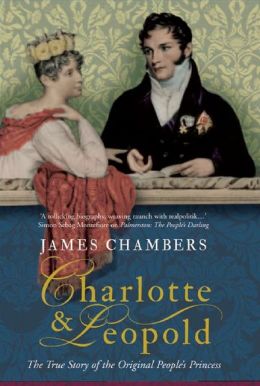
Charlotte & Leopold

Charlotte & Leopold: The True Story of the Original People's Princess. James Chambers. 2007. 256 pages.

During her life, Princess Charlotte was the most popular member of the royal family. She was more popular than her grandfather, George III, and her father, the Prince Regent (George IV). Her life was certainly interesting. Her father and mother were CHARACTERS. They often made fools of themselves to the media and society in general. They were always fighting one another, always bickering, always trying to outdo one another. I'd already read a biography of Caroline. The focus on her parents is almost necessary to explain her childhood and upbringing. It also helps explain her popularity, to a certain degree.

The second half focuses on her love life, on her suitors and would-be suitors. The book focuses, of course, on the man she married, Prince Leopold. He's an interesting character as well! And his story does not end with his wife's death. The last chapters of the book follow his life...

I liked this one. I did. I also really loved Becoming Queen Victoria: The Tragic Death of Princess Charlotte and the Unexpected Rise of Britain's Greatest Monarch. The books overlap on their focus of Princess Charlotte. Both books bring the Georgian royalty to life, highlighting some of the more interesting members of the family!

© 2013 SukaYuka.com of SukaYuka's Book Reviews
Monday, October 7, 2013

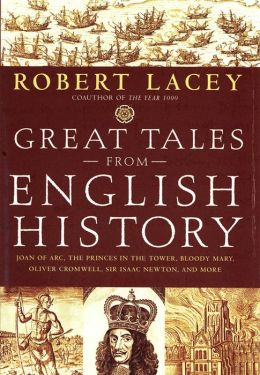
Great Tales From English History #2

Great Tales From English History, vol. 2. Robert Lacey. 2004. Little, Brown. 288 pages. [Source: Library]

There are three volumes in Robert Lacey's series entitled Great Tales From English History. I loved, loved, loved the first volume. One of the reasons this series is so wonderful is the author's philosophy on history.
Our very first historians were storytellers--our best historians still are--and in many languages 'story' and 'history' remain the same word. Our brains are wired to make sense of the world through narrative--what came first and what came next--and once we know the sequence, we can start to work out the how and why. (xiii)
Great Tales From English History...is written by an eternal optimist--albeit one who views the evidence with a skeptical eye. In these books I have endeavored to do more than just retell the old stories; I have tried to test the accuracy of each tale against the latest research and historical thinking, and to set them in a sequence from which meaning can emerge. (xiv)
The things we do not know about history far outnumber those that we do. But the fragments that survive are precious and bright. They offer us glimpses of drama, humour, frustration, humanity, the banal and the extraordinary--the stuff of life. (xvi)
The second volume begins in the reign of Richard II and ends during the reign of William and Mary. Highlights from this volume include:
  • Geoffrey Chaucer and the Mother Tongue
  • The Deposing of King Richard II
  • Turn Again, Dick Whittington
  • Henry IV And His Extra-virgin Oil
  • We Happy Few -- the Battle of Azincourt
  • Joan of Arc, the Maid of Orleans
  • House of Lancaster: The Two Reigns of Henry VI
  • The House of Theodore
  • House of York: Edward IV, Merchant King
  • Whodunit? The Princes in the Tower
  • The Battle of Bosworth Field
  • King Henry VIII's Great Matter
  • Let There Be Light -- William Tyndale and the English Bible
  • Divorced, Beheaded, Died...
  • ...Divorced, Beheaded, Survived
  • Lady Jane Grey -- The Nine Day Queen
  • Bloody Mary and the Fires of Smithfield
  • Elizabeth -- Queen of Hearts
  • Mary Queen of Scots
  • By Time Surprised
  • 5/11: England's First Terrorist
  • King James's Authentical Bible
  • Roundheads v. Caviliers
  • Behold the Head of a Traitor
  • Charles II and the Royal Oak
  • London Burning
  • Titus Oates and the Popish Plot
  • Monmouth's Rebellion and the Bloody Assizes
  • The Glorious Invasion
I loved this second volume. I just LOVED it. Lacey has such a narrative gift. He informs and entertains! I loved his selection of stories. I read it in one sitting; I just couldn't put this one down!

Favorite quotes:
For England, Agincourt has inspired quite a different national myth. London welcomed Henry home with drums, trumpets and tambourines and choirs of children dressed as angels. Flocks of birds were released into the air and gigantic carved effigies spelled out the meaning of the victory--a David defeating Goliath.
'We few, we happy few, we band of brothers', were the words with which Shakespeare would later enshrine Agincourt's model of bravery against the odds--the notion that the English actually do best when they are outnumbered. This phenomenon came to full flower in 1940 during the Battle of Britain, when Britain faced the might of Germany alone and Churchill spoke so movingly of the 'few.' To further fortify the bulldog spirit, the Ministry of Information financed the actor Laurence Olivier to film a Technicolor version of Agincourt as depicted in Shakespeare's Henry V. 'Dedicated to the Airborne Regiments' read a screen title in medieval script as the opening credits began to roll. (22)
If the Wars of the Roses were fought by the men, it was the women who eventually sorted out the mess. By the late 1400s the royal family tree had become a crazy spider's web of possible claimants to the throne, and it took female instinct to tease out the relevant strands from the tangle. The emotions of mothers and wives were to weave new patterns--and eventually they produced a most unlikely solution. (38)
Wars and Roses...we have seen that roses were rare on the battle banners of fifteenth century England. Let's now take a closer look at the 'wars' themselves. In the thirty-two years that history textbooks conventionally allot to the 'Wars of the Roses,' there were long periods of peace. In fact, there were only thirteen weeks of actual fighting--and though the battles themselves were bitter and sometimes very bloody, mayhem and ravaging seldom ensured. (46)
 Connections to Horrible Histories:

Plague Song
Owain Glyndwr Song
Agincourt the Movie
Joan of Arc
War of the Roses Reports & Richard III Song 
Wives of Henry VIII
Philip and Mary Love Story
Mary Tudor Song
The Axe Factor
William Shakespeare & The Quills
Spanish Armada Movie
Blue-Blooded Blues
English Civil War (Bob Hale)
English Civil War Song, Cromwell Laws, King of Bling

© 2013 SukaYuka.com of SukaYuka's Book Reviews
Monday, September 30, 2013

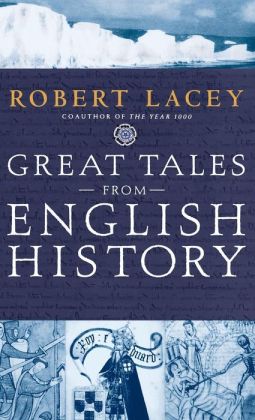
Great Tales From English History (2003)

Great Tales from English History, vol. 1. Robert Lacey. 2003. Little, Brown. 272 pages. [Source: Library]

I loved, loved, loved this history book. From the start, I knew it was just the book for me.
'History' and 'story' derive from the same linguistic root, and if history can never escape its authorship, it should at least try to make the authorship readable and bright. (xiv)
and
But personality -- human nature -- is surely the essence of history, and I have deliberately made personalities the essence of this book. Brief though each chapter is, Great Tales seeks to create a coherent, chronological picture of our island story, while following the guiding principle that all men and women have heroism inside them -- along with generous and fascinating measures of incompetence, apathy, evil and lust. (xv)
This is the first of three volumes. This book concentrates on the dark ages (or early medieval if you prefer) and the first part of the middle ages. Only three stories are dated BEFORE the birth of Christ (AD). Highlights from this volume include:
  • Boadicea, Warrior Queen
  • Arthur, Once and Future King
  • Caedmon, The First English Poet
  • The Venerable Bede
  • Edward the Confessor
  • The Legend of Lady Godiva
  • The Domesday Book
  • The Mysterious Death of William Rufus
  • Stephen and Matilda
  • Murder in the Cathedral
  • Richard the Lionheart
  • John Lackland and Magna Carta
  • Simon de Montfort and His Talking-place
  • The Fair Maid of Kent and the Order of the Garter
  • The Great Mortality
Angles, Saxons, Celts, Romans, Vikings, Normans...all are to be found in this first volume. Reading this little book will give you a starting place to grasp the English rulers. (William the Conqueror to Richard II in this volume).

Each story is just a few pages long; it is all so reader-friendly! There is nothing dry and boring in this little volume!!!

Love Horrible Histories? Then these videos pair well with this little book.

Boudicca
Celtic Boast Battles
Saxon Invasion, Invasion, Invasion
Kidnapped and Kidnapped 2
Anglo-Saxons Ordeals
Monks Song
Viking Song "Literally"
Domesday Book
Normonoply
Death of William Rufus
English Rulers
Norman Family Tree Song
King John Online
Plague Song

© 2013 SukaYuka.com of SukaYuka's Book Reviews
Monday, September 16, 2013

The Life of Cesare Borgia (1912)

The Life of Cesare Borgia: A History and Some Criticisms. Rafael Sabatini. 1912. 326 pages. [Source: Bought]

Rafael Sabatini would NOT have approved of Horrible Histories' Borgia Family. The truth is, however, that I would never have sought out Sabatini's biography of Cesare Borgia if I'd not fallen in love with the video. It was Mat's "I am the mostest, powerfulest, evilest of all" that made me curious and seeking. I wasn't that impressed by my first attempt to learn more. The fictional Borgia Bride was awful. Fortunately, I discovered Sabatini's biography. It was LOVE.  It wasn't love because it fit into any preconceived notions about how I wanted the Borgia family to be. It was love because it respected human nature and historical fact. It embraced common sense and used dry wit, in part, to argue and persuade.

I journaled my reading in four parts. The first post tackled the preface and introduced Sabatini's goal in writing. It was WONDERFUL. The second post examined Cesare's father, Alexander VI (Rodrigo). The third post focused almost exclusively on Cesare. The fourth post focused on Sabatini as an author, his narrative style, his technique of criticizing other authors and sources. 
Life is an ephemeral business, and we waste too much of it in judging where it would beseem us better to accept, that we ourselves may come to be accepted by such future ages as may pursue the study of us.
But if it be wrong to judge a past epoch collectively by the standards of our own time, how much more is it not wrong to single out individuals for judgement by those same standards, after detaching them for the purpose from the environment in which they had their being? How false must be the conception of them thus obtained! We view the individuals so selected through a microscope of modern focus. They appear monstrous and abnormal, and we straight-way assume them to be monsters and abnormalities, never considering that the fault is in the adjustment of the instrument through which we inspect them, and that until that is corrected others of that same past age, if similarly viewed, must appear similarly distorted.
Hence it follows that some study of an age must ever prelude and accompany the study of its individuals, if comprehension is to wait upon our labours.
Sabatini just came across to me as practical, witty, sometimes wise, and sometimes poetic.
Mind being the seat of the soul, and literature being the expression of the mind, literature, it follows, is the soul of an age, the surviving and immortal part of it; (6)
Anyway, here is Sabatini's thesis--his goal for writing this biography. If you can embrace this premise, then chances are you'll find this one well worth the read!!!
Before we admit facts, not only should we call for evidence and analyse it when it is forthcoming, but the very sources of such evidence should be examined, that, as far as possible, we may ascertain what degree of credit they deserve. In the study of the history of the Borgias, we repeat, there has been too much acceptance without question, too much taking for granted of matters whose incredibility frequently touches and occasionally oversteps the confines of the impossible. (12)
If the author has a mercy to crave of his critics, it is that they will not impute it to him that he has set out with the express aim of "whitewashing"—as the term goes—the family of Borgia. To whitewash is to overlay, to mask the original fabric under a superadded surface. Too much superadding has there been here already. By your leave, all shall be stripped away. The grime shall be removed and the foulness of inference, of surmise, of deliberate and cold-blooded malice, with which centuries of scribblers, idle, fantastic, sensational, or venal, have coated the substance of known facts.
But the grime shall be preserved and analysed side by side with the actual substance, that you may judge if out of zeal to remove the former any of the latter shall have been included in the scraping.
(13)
If Sabatini was alive to refute current fictional portrayals of Cesare in romance novels...
Women play no part whatever in his history. Not once shall you find a woman's influence swaying him; not once shall you see him permitting dalliance to retard his advancement or jeopardize his chances. With him, as with egotists of his type, governed by cold will and cold intellect, the sentimental side of the relation of the sexes has no place. With him one woman was as another woman; as he craved women, so he took women, but with an almost contemptuous undiscrimination. 
The biography is rich in detail. It doesn't just focus on Cesare. It tries to cover more than that--to look at an age, to capture a time and place. It is ALL ABOUT context for Rafael Sabatini. And I really enjoyed his technique overall. 

© 2013 SukaYuka.com of SukaYuka's Book Reviews
Monday, September 9, 2013

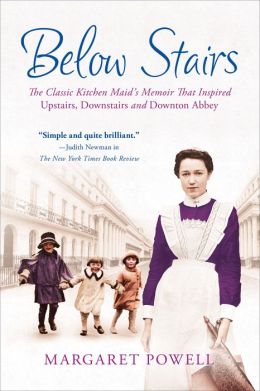
Below Stairs (1968)

Below Stairs: The Classic Kitchen Maid's Memoir That Inspired Upstairs, Downstairs and Downton Abbey. Margaret Powell. 1968/2012. St. Martin's Press. 224 pages. [Source: Library]

Below Stairs is one of two memoirs by Margaret Powell. As a young teen--fifteen, I believe--she entered service. (She left school to begin working to support her family a year or two earlier however.) Her first positions in service were as a kitchen maid. She later promoted herself to cook and sought out other positions with other families. The book tells of her experiences and shocks. One shock, for example, was when she found out she was to iron the shoe laces every morning in addition to polishing the shoes. It's a detailed look at work. Work as a maid is anything but fun, glamorous, exciting. Dreary, repetitive, exhausting comes more to mind. This memoir does not focus on any particular wealthy family; it is not a dramatic romance like Downton Abbey. 

I enjoyed reading Below Stairs. I found it to be a quick read. I liked that Powell enjoyed reading and tried her best to read what she could, when she could, even though there wasn't always a lot of free time. She worked very long hours, had very little time to herself, and was at times discouraged from seeking out books and wanting 'more'.

© 2013 SukaYuka.com of SukaYuka's Book Reviews
Monday, August 12, 2013

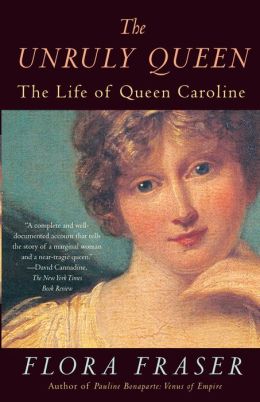
The Unruly Queen (1996)

The Unruly Queen: The Life of Queen Caroline. Flora Fraser. 1996/2009. Anchor Books. 560 pages. [Source: Library]

George IV married Caroline because his father (and/or parliament) agreed to pay off his debts if he got married. This marriage was a complete disaster. Not only was it a loveless marriage, it was extremely bitter! He HATED his wife. And I believe she hated him as well. Half the biography focuses on the bickering and the back-and-forth correspondence between her legal advisers, his legal advisers, and King George III. The situation was complex because George III and George IV (he was Prince of Wales, but it's easier for me to just call him George IV) did not get along at all. They fought continuously. Their relationship was extremely strained. There were times when George III sided with "the injured Princess" Caroline instead of with his son. His wife was at various times popular with the people as well. George IV, well, he wasn't very well-liked. He had a habit of spending lots of money and wanting parliament to pay all the bills. He also had more than a few mistresses. Some of these mistresses were in favor with society--were popular enough, I suppose--others were NOT. He was never faithful to Caroline; he never even pretended to like her or love her. He made it clear that he hated to be even in the same room with her. For better or worse, the two did have one child together. (Princess Charlotte was conceived within the first month of marriage.) Princess Charlotte was more popular than her mother and father.

The biography is very detailed. It details correspondence and records. It follows Caroline's movements from her marriage to George through her death--just three weeks after her husband's coronation. She was banned from attending. For Caroline was not always on good terms with her in-laws. Sometimes she enjoyed the favor of George III and his wife. Other times, her treatment was barely civil. There were definitely times she embarrassed the family and they disapproved of her.

The Unruly Queen was an interesting read.


© 2013 SukaYuka.com of SukaYuka's Book Reviews

Monday, August 5, 2013

Queen Emma and the Vikings (2005)

Queen Emma and the Vikings. Harriet O'Brien. 2005. Bloomsbury. 288 pages. [Source: Library]

I enjoyed reading this biography. This biography starts around the year 1000 and ends around 1052.  As a young girl, Emma was married to Aethelred (the Unready), the Anglo-Saxon king of England. The couple had two sons and a daughter. One of those sons, Edward, would later become king himself as "Edward the Confessor." England during this time was a mess with plenty of Vikings raiding and pillaging. After her husband's death (and I am simplifying the story in this summary), she married the Viking king, Cnut. This couple would have two children. Their son, Harthacnut, would eventually be king as well. As if that wasn't quite complex enough, Emma is the great-aunt of William the Conqueror. So Emma's importance is clear.

I found this biography complex but fascinating. The author did a great job in providing clarifying resources for her readers. The front of the book contains an extremely helpful dramatis personae. There is a full paragraph of background and summary for each person in the book. There are family trees. There are maps. There is a timeline. The text itself is as clear as it probably can be. If it reads like a tangled mess at times, it is precisely because it was a tangled state of affairs. This biography is full of tension between the Anglo-Saxons, the Normans, the Vikings, the Church, the "old ways" and "the new ways." There is a focus on politics, the economy, law-making, and the church. (Plenty of talk about monks and their record-keeping and book writing. I was surprised by all the texts and records kept during this period.)

One of the things discussed in this biography is the shaping or crafting of history. Emma commissioned a monk to write a history for her, this book could be seen, in a way, as a tool of propaganda. Writing with a specific audience and purpose in mind and "making" the facts fit that purpose.

Two Horrible Histories Songs:


© 2013 SukaYuka.com of SukaYuka's Book Reviews
Thursday, May 23, 2013

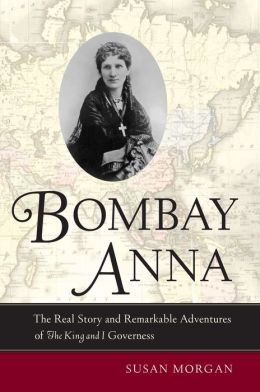
Bombay Anna (2008)

Bombay Anna: The Real Story and Remarkable Adventures of the King and I Governess. Susan Morgan. 2008. University of California Press. 300 pages.

A few weeks ago, I read and reviewed The English Governess and the Siamese Court. I found it boring and confusing. This biography of Anna Leonowens seeks to tell the "real story" of the governess of the King of Siam. Why is it necessary for the "real story" to be told? There are two very good reasons: first, Leonowens' own works--her memoirs and travel guides--were fictionalized in varying degrees, and, second, her life was further fictionalized by Margaret Landon in her 1944 novel, Anna and the King of Siam. These two portraits of Anna are different from one another, and neither are quite true enough, genuine enough. Anna and the King of Siam has inspired several film adaptations (musical and non-musical). There was a real story to be uncovered, a story that was not discovered until several decades after The King and I. Bombay Anna tries to unveil a third portrait of Anna that explains and to a degree justifies the lies.
  • Did you know that Anna was biracial? Her mother and grandmother were Indian or perhaps Indian-Portuguese. 
  • Did you know that Anna was born in India? Despite her created biography, Anna was not born in England or Wales. She had never been to the UK at all when she entered into Siam.
  • Did you know that Anna was raised in a diverse, vibrant multicultural environment? Siam was not Anna's introduction to other cultures or faiths. Christianity was not the only exposure, by any means, she grew up playing with children of other faiths; she respected and admired many faiths. She was definitely opposed to all forms of proselytizing. She felt the last thing Buddhists needed was conversion to Christ. 
  • Did you know that Anna spoke many languages, that she continued to learn many languages throughout her life? Anna was GREAT at learning foreign languages. She excelled in reading, writing, translating, speaking other languages. 
  • Did you know that Anna was well-traveled? The first twenty or twenty-five years of her life were spent in India; but, she later traveled with her husband to Singapore, and, then Australia. She then worked in Siam. After leaving Siam, she finally visited Ireland and England. She spent time in the United States, Canada, and Germany. She also spent months traveling in Russia. 
  • Did you know that she raised many of her grandchildren? 
  • Did you know Anna was a socialist?
  • Did you know that her son Louis died in 1919 during the Great Influenza?
  • Did you know that her great-nephew was Boris Karloff?
 Essentially, once Anna became a widow, she completely reinvented herself, erased her past, and cut off all connections with her family in India. She wanted to be an upper class British woman, and, so she BECAME a "proper" British woman. She sent one daughter to boarding school (in Ireland, I believe) and kept her youngest son with her and took him to Siam. (He returned to Siam as an adult, and spent the majority of his life there. Once his wife died, he brought his children to his mother to raise.) The stories she told her children, her grandchildren was the fictional one of her creation. She wove in her (fictional) history--her life story--into her written works and lectures. It was a complete new life she wanted, and she was successful her whole life through in keeping that story the real story.

Bombay Anna shares details about Anna's family background. Readers learn about her maternal grandparents, her parents, her step-father, her siblings, her husband, her children, her grandchildren, etc. Readers learn about India in the nineteenth century. Several communities or areas are described in great detail. Bombay Anna discusses Anna's new identities and how those identities were purposefully crafted, shaped, and controlled. Time is spent discussing Anna's life before, during, and after her time in Siam. There are chapters about her role as an educator, her role as a popular lecturer and writer, and her role as a parent and grandparent. The most time is spent on her time in India, Siam, and Canada. (She spent decades of her life in Canada).

Susan Morgan's enthusiasm for the subject is evident. She at times praises and justifies Anna Leonowens creative "truth-telling." She acknowledges to a degree that Leonowens lied in her works, that she crafted her facts, that she sometimes completely embellished those facts, yet, she maintains that her works contain important truths. Morgan does spend a good deal of time discussing slavery, imperialism, and women's rights.

Bombay Anna was certainly interesting, and at times quite fascinating. While it didn't answer all my questions, it certainly provided some context! My one question remains why would she personally believe and behave in such a way in real life and then write about her experiences and present them to the world completely differently? The Anna presented in Bombay Anna was caring, compassionate, concerned. She loved the women and children she met; she valued them, respected them, wanted them to have more freedom. Yet the way she chose to write about them in her memoir was very condescending!

Favorite quotes:
Never discovered, never unmasked, Anna went on to perform that new identity for the rest of her life, actually becoming the character she had made. On the basis of her self-invention, Anna led a wildly adventurous and influential life. A world traveler, she became a well-known travel writer and public lecturer at a time when most women stayed home. She remains the one and only foreigner to spend years inside the royal harem of Siam. She crossed all of Russia on her own just before the revolution. She emigrated to the United States, mingling with the rich and famous, the literary, and political abolitionists in the Northeast, and in her seventies settled down to raise eight children. Hers was a vigorous, intense, and inspiring life. (1)
Anna stepped off that boat with a brand-new identity and began a new life. She had chosen her new biography with care. It had to be a story that would account for her having no money, no available family, and no ties to her past, and--at the same time--would render plausible that she was a gentlewoman, entitled by birth to be part of the higher social classes, and also educated enough to qualify for work as a teacher. The story Anna came up with was, in fact, a very clever choice... She was, she said, Mrs. Leonowens, born in Wales and daughter of Captain Crawford, who died heroically in the Sikh rebellion, widow of Major Thomas Leonowens, with two children born in England. She was, regrettably, without family or income. Her grief-stricken mother, widowed in Bombay, had remarried a crude and materialistic man, and brought her teenage daughters out there from England. The crass stepfather disapproved of Anna's marriage choice and all intercourse between them had ceased. Anna's first child had died in Bombay, Anna's mother died virtually the same moment, and a second baby had died in New South Wales after their ship returning to England foundered there. She and her husband, after spending time back in England where they produced two children who lived--bless the English climate!--had returned east when he was reassigned to the Straits Settlements. But all her fortune had been lost in the bank failures after the terrible Indian Mutiny, and her beloved husband was dead, prostrated by heat after a tiger hunt. She found herself, alas, alone, unprotected, with little money, and with two children to raise. But she had come to Singapore full of determination. She was, after all, a British lady, well born and well brought up, well educated and firm of character, quite the right sort of person to earn a genteel living for herself and her dear children by educating the young. And so the new Anna was born. It was an excellent role, suited both to her passionate nature, so nourished by Tom's love, and to her deep intelligence. (70-71)
The beauty of Anna's story, her virtually uncheckable story, was that all it required was that she be able to act the part. Everything depended on how well Anna could play the role, could put across her new identity as a lady. And it is a tribute to her extraordinary intelligence and the extent of her knowledge and skill that Anna was able to play the part. She definitely rose to the occasion. She met the challenge of accent, that immediate giveaway of race and class in India. She was able to speak in the tones of the British upper class and even provided herself and her accent with a little leeway by locating her birthplace in Wales. And she knew how to behave like a lady as well. (72)
Her children never doubted their heritage. The conviction that they were born in England, were British and upper class, significantly shaped both their futures. (79)
Of course there was no romantic interest between Anna and King Mongkut, on either of their parts. He was a monarch utterly engaged in protecting and improving his kingdom, and she was a teacher mourning her beloved husband and struggling to make a professional life for herself and a future for her children. To cast their relationship in the frame of conventional romance is to do an injustice to them both. And it is also to do an injustice to what really is interesting about Anna's life. We tend too often to think, as George Eliot said, that the greatest stories are those of romantic love. But there are other stories, stories of the shaping of a character or a career or a country, that are at least as passionate and as deserving of being told. One such story is that of Anna Leonowens in Siam. (103)
One advantage her background gave her was that Anna never thought it her Christian duty to try to convert her Buddhist students. She was one of those rare Christians in the East in the nineteenth century who knew better than to judge the Buddhists, Muslims, and Hindus she was acquainted with as somehow inferior in their beliefs and practices. (125)

© 2013 SukaYuka.com of SukaYuka's Book Reviews
Thursday, April 25, 2013

The English Governess at the Siamese Court (1870)

The English Governess at the Siamese Court: The True Story Behind 'The King and I' by Anna Harriette Leonowens. 1870/1999. 320 pages.

I have been intending to read this "memoir" for a decade now; I decided to read it this year for the book to movie reading challenge. This memoir and the movie have very little in common, perhaps with two exceptions. First, the English governess (Anna) did want the King to fulfill his promise of a house outside the palace. Second, there is one conversation from the memoir that made it (to a certain degree) into the movie. It comes early in the film.
The king shook hands with us, and immediately proceeded to march up and down in quick step, putting one foot before the other with mathematical precision, as if under drill. "Forewarned, forearmed!" my friend whispered that I should prepare myself for a sharp cross-questioning as to my age, my husband, children, and other strictly personal concerns. Suddenly his Majesty, having cogitated sufficiently in his peculiar manner, with one long final stride halted in front of us, and pointing straight at me with his forefinger, asked, "How old shall you be?"
Scarcely able to repress a smile at a proceeding so absurd, and with my sex's distaste for so serious a question, I demurely replied, "One hundred and fifty years old."
Had I made myself much younger, he might have ridiculed or assailed me; but now he stood surprised and embarrassed for a few moments, then resumed his queer march; and at last, beginning to perceive the jest, coughed, laughed, coughed again, and in a high, sharp key asked, "In what year were you borned?"
Instantly I struck a mental balance, and answered, as gravely as I could, "In 1788."
At this point the expression of his Majesty's face was indescribably comical. Captain B—— slipped behind a pillar to laugh; but the king only coughed, with a significant emphasis that startled me, and addressed a few words to his prostrate courtiers, who smiled at the carpet,—all except the prime minister, who turned to look at me. But his Majesty was not to be baffled so: again he marched with vigor, and then returned to the attack with élan.
"How many years shall you be married?"
"For several years, your Majesty."
He fell into a brown study; then, laughing, rushed at me, and demanded triumphantly:—
"Ha! How many grandchildren shall you now have? Ha, ha! How many? How many? Ha, ha, ha!"
Of course we all laughed with him; but the general hilarity admitted of a variety of constructions.
For those expecting the "memoirs" to be personal (about herself, about her son, about the king, about the king's wives, about the king's children, about the royal court, etc.) you will likely be disappointed. For those expecting the "memoirs" to be entertaining, chances are you'll be disappointed as well. Travel writing does not have to be a bore. A travel writer can attempt to be objective and interesting at the same time.

I definitely preferred the musical, "The King and I" to the memoir. 

Personally, I found the book to lack narrative structure or flow. While a handful of the chapters were mildly entertaining and/or interesting, most were not. One chapter didn't necessarily flow into the next. And the subjects covered were all over the place. The tone of this one was unpleasant as well. At times, the narrator comes across as too condescending, too judgmental. For example:
In common with most of the Asiatic races, they are apt to be indolent, improvident, greedy, intemperate, servile, cruel, vain, inquisitive, superstitious, and cowardly; but individual variations from the more repulsive types are happily not rare. 
or
There were delightful discoveries of beauty in the artless, childish faces that greeted us every morning; and now the only wonder was that I had been so slow to penetrate the secret of their charm. 
or
No friend of mine knew at that time how hard it was for me to bear up, in the utter loneliness and forlornness of my life, under the load of cares and provocations and fears that gradually accumulated upon me.
But ah! if any germ of love and truth fell from my heart into the heart of even the meanest of those wives and concubines and children of a king, if by any word of mine the least of them was won to look up, out of the depths of their miserable life, to a higher, clearer, brighter light than their Buddha casts upon their path, then indeed I did not labor in vain among them.
There were some portions of text that could prove charming or interesting:
"I have sixty-seven children," said his Majesty, when we had returned to the Audience Hall. "You shall educate them, and as many of my wives, likewise, as may wish to learn English. And I have much correspondence in which you must assist me. And, moreover, I have much difficulty for reading and translating French letters; for French are fond of using gloomily deceiving terms. You must undertake; and you shall make all their murky sentences and gloomily deceiving propositions clear to me. And, furthermore, I have by every mail foreign letters whose writing is not easily read by me. You shall copy on round hand, for my readily perusal thereof." 
We found his Majesty in a less genial mood than at my first reception. He approached us coughing loudly and repeatedly, a sufficiently ominous fashion of announcing himself, which greatly discouraged my darling boy, who clung to me anxiously. He was followed by a numerous "tail" of women and children, who formally prostrated themselves around him. Shaking hands with me coldly, but remarking upon the beauty of the child's hair, half buried in the folds of my dress, he turned to the premier's sister, and conversed at some length with her, she apparently acquiescing in all that he had to say. He then approached me, and said, in a loud and domineering tone:—
"It is our pleasure that you shall reside within this palace with our family."
I replied that it would be quite impossible for me to do so; that, being as yet unable to speak the language, and the gates being shut every evening, I should feel like an unhappy prisoner in the palace.
"Where do you go every evening?" he demanded.
"Not anywhere, your Majesty. I am a stranger here."
"Then why you shall object to the gates being shut?"
"I do not clearly know," I replied, with a secret shudder at the idea of sleeping within those walls; "but I am afraid I could not do it. I beg your Majesty will remember that in your gracious letter you promised me 'a residence adjoining the royal palace,' not within it."
He turned and looked at me, his face growing almost purple with rage. "I do not know I have promised. I do not know former condition. I do not know anything but you are our servant; and it is our pleasure that you must live in this palace, and—you shall obey." Those last three words he fairly screamed.
I trembled in every limb, and for some time knew not how to reply. At length I ventured to say, "I am prepared to obey all your Majesty's commands within the obligation of my duty to your family, but beyond that I can promise no obedience."
"You shall live in palace," he roared,—"you _shall _live in palace! I will give woman slaves to wait on you. You shall commence royal school in this pavilion on Thursday next. That is the best day for such undertaking, in the estimation of our astrologers."
With that, he addressed, in a frantic manner, commands, unintelligible to me, to some of the old women about the pavilion. My boy began to cry; tears filled my own eyes; and the premier's sister, so kind but an hour before, cast fierce glances at us both. I turned and led my child toward the oval brass door. We heard voices behind us crying. "Mam! Mam!" I turned again, and saw the king beckoning and calling to me. I bowed to him profoundly, but passed on through the brass door.
 But his Majesty was notably temperate in his diet, and by no means a gastronome. In his long seclusion in a Buddhist cloister he had acquired habits of severe simplicity and frugality, as a preparation for the exercise of those powers of mental concentration for which he was remarkable. At these morning repasts it was his custom to detain me in conversation relating to some topic of interest derived from his studies, or in reading or translating. He was more systematically educated, and a more capacious devourer of books and news, than perhaps any man of equal rank in our day. But much learning had made him morally mad; his extensive reading had engendered in his mind an extreme scepticism concerning all existing religious systems.
 The love of children was the constant and hearty virtue of this forlorn despot. They appealed to him by their beauty and their trustfulness, they refreshed him with the bold innocence of their ways, so frolicsome, graceful, and quaint.
But it was my consolation to know that I could befriend the women and children of the palace, who, when they saw that I was not afraid to oppose the king in his more outrageous caprices of tyranny, imagined me endued with supernatural powers, and secretly came to me with their grievances, in full assurance that sooner or later I would see them redressed. And so, with no intention on my part, and almost without my own consent, I suffered myself to be set up between the oppressor and the oppressed. 

© 2013 SukaYuka.com of SukaYuka's Book Reviews