January
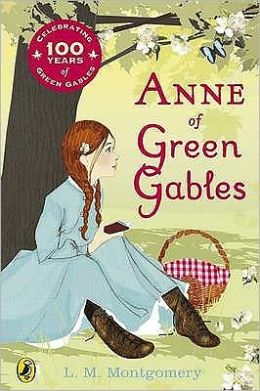
1. Anne of Green Gables. L.M. Montgomery. 1908. 308 pages.
2. Pollyanna. Eleanor H. Porter. 1913. 304 pages.
3. Heidi. Johanna Spyri. 1880/2009. Puffin Classics/Penguin. 320 pages.
4. The Secret Garden. Frances Hodgson Burnett. 1911. 302 pages.
February
5. Anne of Avonlea. L.M. Montgomery. 1909. 304 pages.
6. Pollyanna Grows Up. Eleanor H. Porter. 1915. 304 pages.
7. Elsie Dinsmore. Martha Finley. 1867. 320 pages
8. The Story Girl. L.M. Montgomery. 1911. 220 pages.
March
9. Daddy Long Legs. Jean Webster. 1912. 208 pages.
10. The Golden Road. L.M. Montgomery. 1913. 213 pages.
11. Anne of the Island. L.M. Montgomery. 1915. 272 pages.
12. Understood Betsy. Dorothy Canfield Fisher. 1916. 176 pages.
13. Anne's House of Dreams. L.M. Montgomery. 1917. 227 pages.
April
14. Rainbow Valley. L.M. Montgomery. 1919. 256 pages.
15. Rilla of Ingleside. L.M. Montgomery. 1921. 280 pages.
16. A Little Princess. Frances Hodgson Burnett. 1905. 264 pages.
17. Pinocchio. Carlo Collodi. 1883. 272 pages.
May
18. The Wonderful Wizard of Oz. L. Frank Baum. 1900. 156 pages.
19. The Marvelous Land of Oz. L. Frank Baum. 1904. 192 pages.
20. Emily of New Moon. L.M. Montgomery. 1923. Bantam. 352 pages.
21. Emily Climbs. L.M. Montgomery. 1925. Bantam Books. 325 pages.
June
22. Dorothy and the Wizard of Oz. L. Frank Baum. 1908. 148 pages.
23. Emily's Quest. L.M. Montgomery. 1927. 228 pages.
24. Magic for Marigold. L.M. Montgomery. 1929. 274 pages.
25. The Jungle Book. Rudyard Kipling. 1894/1895/2012. Random House. 320 pages.
26. The Belgian Twins. Lucy Fitch Perkins. 1917. 124 pages.
July
27. I Saw Esau: The Schoolchild's Pocket Book. Iona and Peter Opie. Illustrations by Maurice Sendak. 1947/2012. Candlewick Press. 160 pages. [Source: Review Copy]
28. Half Magic. Edward Eager. 1954. 192 pages. [Source: Library]
29. Mary Poppins. P.L. Travers. Illustrated by Mary Shepard. 1934/2006. Houghton Mifflin Harcourt. 224 pages. [Source: Library]
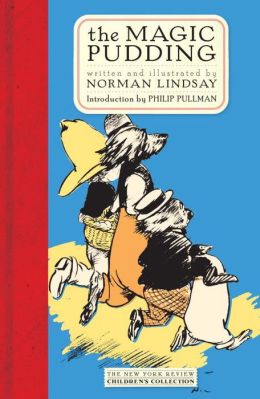
30. The Magic Pudding. Norman Lindsay. 1918. 144 pages. [Source: Bought]
August
31. The Road to Oz. L. Frank Baum. 1909. 272 pages. [Source: Bought]
32. When We Were Very Young. A.A. Milne. 1924. 100 pages. [Source: Library]
33. Now We Are Six. A.A. Milne. 1927. 101 pages. [Source: Library]
34. Mary Poppins Comes Back. P.L. Travers. 1935. Harcourt. 315 pages. [Source: Library]
September
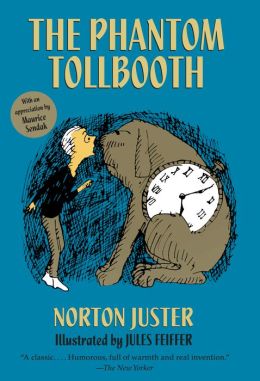
35. The Phantom Tollbooth. Norton Juster. Illustrated by Jules Feiffer. 1961/2011. Random House. 272 pages. [Source: Review copy]
36. Pat of Silver Bush. L.M. Montgomery. 1933. 288 pages. [Source: Bought]
37. All-of-a-Kind-Family. Sydney Taylor. 1951. 190 pages. [Source: Bought]
38. A Little Maid Of Provincetown. Alice Turner Curtis. 1913. 192 pages. [Source: Bought]
39. Alice's Adventures in Wonderland. Lewis Carroll. 1865. 192 pages. [Source: Bought]
October
40. Mistress Pat. L.M. Montgomery. 1935. 288 pages. [Source: Bought].
41. Charlie and the Chocolate Factory. Roald Dahl. 1964. 155 pages. [Source: Library]
42. Charlie and the Great Glass Elevator. Roald Dahl. 1972. 166 pages. [Source: Library]
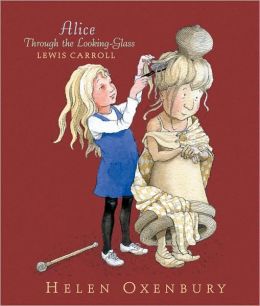
43. Through the Looking Glass. Lewis Carroll. 1871. 228 pages. [Source: Bought]
November
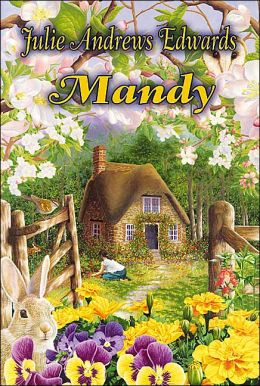
44. Mandy. Julie Andrews Edwards. 1971. HarperCollins. 320 pages. [Source: Bought Replacement Copy]
45. Our Island Story. H.E. Marshall. 1905/? 512 pages. [Source: Bought]
46. The Wind in the Willows. Kenneth Grahame. Illustrated by David Roberts. Candlewick. 256 pages. [Source: Review Copy]
47. Anne of Windy Poplars. L.M. Montgomery. 1936. 288 pages. [Source: Bought]
December
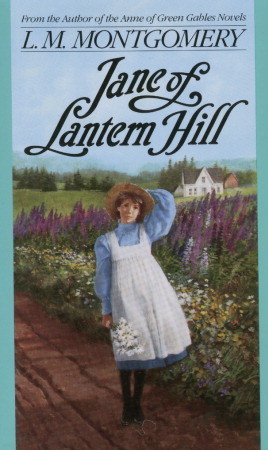
48. Jane of Lantern Hill. L.M. Montgomery. 1937. 274 pages. [Source: Bought]
49. Anne of Ingleside. L.M. Montgomery. 1939. 274 pages. [Source: Bought]
50. The Last of the Really Great Whangdoodles. Julie Andrews Edwards. 1974. Scholastic. 288 pages. [Source: Bought]
© 2013 SukaYuka.com of SukaYuka's Book Reviews
Showing posts with label 2013 Sunday Salons. Show all posts
Sunday, December 22, 2013
Sunday, December 8, 2013
Sunday Salon: Reading Anne of Ingleside (1939)
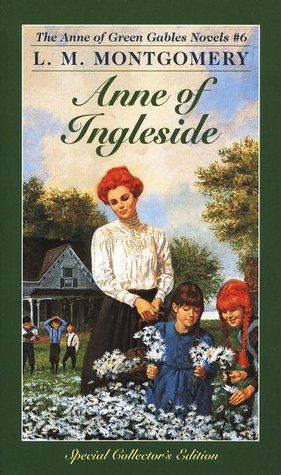
Anne of Ingleside. L.M. Montgomery. 1939. 274 pages. [Source: Bought]
Anne of Ingleside was L.M. Montgomery's last (published) novel. In the novel, she is revisiting her most beloved heroine, Anne. The novel opens with Anne visiting Avonlea in the spring of 1900; she is pregnant with Rilla. She is spending time with Marilla and Mrs. Lynde, of course, and making time to spend one whole day with Diana. If memory serves, Diana is not really mentioned again in the series (Rainbow Valley, Rilla of Ingleside). After a short visit, she returns to her own home, her waiting family. There is Gilbert, of course, and Susan Baker, and her five children: Jem, Walter, Nan and Di (the twins), and Shirley. The book, I believe, mentions around here that she's been married nine years and her oldest is seven. Imagine five children under the age of seven with one more on the way! So Anne is extremely fortunate to have Susan helping her with all those children! There is one person Anne isn't looking forward to seeing, Gilbert's Aunt Mary Maria. She comes for "two weeks" and stays over a year! The chapter on how they accidentally send her off is one of my favorites!!!
The narration of Anne of Ingleside is interesting. Readers spend time inside the minds of Anne, Jem, Walter, Di, Nan, Rilla, and perhaps Susan. I don't recall Gilbert or Shirley or Aunt Mary Maria! Montgomery devoted a certain amount of time to each child. These chapters capture different aspects of being a child, different fears and anxieties, different hopes and dreams. There is Jem's one desire for a dog who really truly loves him. There is Di's friendship troubles, I believe. Nan has a chapter about bargaining with God. My least favorite chapter, unfortunately, is near the end. Anne loses touch with reality and thinks Gilbert doesn't love her anymore and that he regrets marrying her. Seriously I'm not sure what Montgomery was thinking with this one!
I read this one trying to always keep in mind that this book serves as a goodbye. The original Anne audience would have been born circa 1895-1900. The first book was published in 1908. The last book was published in 1939. Those that grew up with Anne would have been able to introduce their children to Anne as well! Anne may have felt like a kindred spirit indeed, as her original audience was reaching their mid-to-late teens, Anne was falling in love and getting married. (Anne of the Island was published 1915. Anne's House of Dreams was published in 1917.) The following books, which focus on her raising a family. Rainbow Valley and Rilla of Ingleside were published in 1919 and 1921. This was "the" Anne series for almost fifteen years. Anne of Windy Poplars was published in 1936 and Anne of Ingleside in 1939.
Favorite quotes:
Anne of Ingleside was L.M. Montgomery's last (published) novel. In the novel, she is revisiting her most beloved heroine, Anne. The novel opens with Anne visiting Avonlea in the spring of 1900; she is pregnant with Rilla. She is spending time with Marilla and Mrs. Lynde, of course, and making time to spend one whole day with Diana. If memory serves, Diana is not really mentioned again in the series (Rainbow Valley, Rilla of Ingleside). After a short visit, she returns to her own home, her waiting family. There is Gilbert, of course, and Susan Baker, and her five children: Jem, Walter, Nan and Di (the twins), and Shirley. The book, I believe, mentions around here that she's been married nine years and her oldest is seven. Imagine five children under the age of seven with one more on the way! So Anne is extremely fortunate to have Susan helping her with all those children! There is one person Anne isn't looking forward to seeing, Gilbert's Aunt Mary Maria. She comes for "two weeks" and stays over a year! The chapter on how they accidentally send her off is one of my favorites!!!
The narration of Anne of Ingleside is interesting. Readers spend time inside the minds of Anne, Jem, Walter, Di, Nan, Rilla, and perhaps Susan. I don't recall Gilbert or Shirley or Aunt Mary Maria! Montgomery devoted a certain amount of time to each child. These chapters capture different aspects of being a child, different fears and anxieties, different hopes and dreams. There is Jem's one desire for a dog who really truly loves him. There is Di's friendship troubles, I believe. Nan has a chapter about bargaining with God. My least favorite chapter, unfortunately, is near the end. Anne loses touch with reality and thinks Gilbert doesn't love her anymore and that he regrets marrying her. Seriously I'm not sure what Montgomery was thinking with this one!
I read this one trying to always keep in mind that this book serves as a goodbye. The original Anne audience would have been born circa 1895-1900. The first book was published in 1908. The last book was published in 1939. Those that grew up with Anne would have been able to introduce their children to Anne as well! Anne may have felt like a kindred spirit indeed, as her original audience was reaching their mid-to-late teens, Anne was falling in love and getting married. (Anne of the Island was published 1915. Anne's House of Dreams was published in 1917.) The following books, which focus on her raising a family. Rainbow Valley and Rilla of Ingleside were published in 1919 and 1921. This was "the" Anne series for almost fifteen years. Anne of Windy Poplars was published in 1936 and Anne of Ingleside in 1939.
Favorite quotes:
The only time I feel I'm getting along a bit is when I look at pictures in the magazines. The heroes and heroines in them are beginning to look too young to me.
We'll enjoy each other's friendship today even if we are to be parted tomorrow.
Our friendship has always been a very lovely thing, Diana.
Yes...and we've always...I mean...I never could say things like you, Anne, but we have kept our old 'solemn' vow and promise' haven't we?
Always...and always will.
Anne's hand found its way into Diana's. They sat for a long time in a silence too sweet for words.
It was never quite safe to sit down on a chair at Ingleside without first making sure there wasn't a cat in it.
This is no common day, Mrs. Dr. dear, she said solemnly.
Oh, Susan, there is no such thing as a common day. Every day has something about it no other day has. Haven't you noticed?
Half an hour later, Susan, reading her nightly chapter in her Bible, came across the verse, "Withdraw thy foot from thy neighbor's house lest he weary of thee and hate thee." She put a sprig of southernwood in it to mark the spot. Even in those days, she reflected.
If a minister preaches a sermon that hits home to some particular individual people always suppose he meant it for that very person, said Anne. A hand-me-down cap is bound to fit somebody's head but it doesn't follow that it was made for him.
I do not think, Mrs. Marshall Elliott, that people in these parts say half the things they are reported to have said.© 2013 SukaYuka.com of SukaYuka's Book Reviews
Sunday, December 1, 2013
Sunday Salon: Reading Jane of Lantern Hill
Jane of Lantern Hill. L.M. Montgomery. 1937. 274 pages. [Source: Bought]
Jane of Lantern Hill was one of the few L.M. Montgomery books that I had not read before this year. While I found Pat of Silver Bush and Mistress Pat extremely disappointing, I found Jane of Lantern Hill to be practically perfect in every way. (If Pat had been my first introduction to L.M. Montgomery, I'm not sure I'd have ever voluntarily picked up another Montgomery book.) I just loved, loved, loved Jane of Lantern Hill.
Jane is our heroine. She lives with her mother, aunt, and grandmother. All three call her Victoria. It is not a happy home for all live in fear or reverence of the grandmother. Her mother is a forgiven prodigal. She returned home with a three year old daughter. (She did not divorce her husband; divorce is unforgivable.) Jane has always assumed that her father was dead. When she learns the truth, she's one confused child. Her relatives only confuse her more. If he is mentioned at all, it is to say that he did not want her, that he never loved her, that she is nothing to him. So it is with dread that Jane learns she is to spend an entire summer with him. He lives on Prince Edward Island. If he never wanted her, why does he want her now?
Once Jane is reunited with her father, her Dad, then the magic happens. It's a lovely coming-of-age novel about Jane discovering who she is and who she isn't! It's about her getting to know and love her Dad. It's about her finding a home, finding a place to belong, a place in the community. Jane is a great narrator! I can hardly do the book justice by summary.
Jane of Lantern Hill is thoroughly satisfying!
Favorite quotes:
Jane of Lantern Hill was one of the few L.M. Montgomery books that I had not read before this year. While I found Pat of Silver Bush and Mistress Pat extremely disappointing, I found Jane of Lantern Hill to be practically perfect in every way. (If Pat had been my first introduction to L.M. Montgomery, I'm not sure I'd have ever voluntarily picked up another Montgomery book.) I just loved, loved, loved Jane of Lantern Hill.
Jane is our heroine. She lives with her mother, aunt, and grandmother. All three call her Victoria. It is not a happy home for all live in fear or reverence of the grandmother. Her mother is a forgiven prodigal. She returned home with a three year old daughter. (She did not divorce her husband; divorce is unforgivable.) Jane has always assumed that her father was dead. When she learns the truth, she's one confused child. Her relatives only confuse her more. If he is mentioned at all, it is to say that he did not want her, that he never loved her, that she is nothing to him. So it is with dread that Jane learns she is to spend an entire summer with him. He lives on Prince Edward Island. If he never wanted her, why does he want her now?
Once Jane is reunited with her father, her Dad, then the magic happens. It's a lovely coming-of-age novel about Jane discovering who she is and who she isn't! It's about her getting to know and love her Dad. It's about her finding a home, finding a place to belong, a place in the community. Jane is a great narrator! I can hardly do the book justice by summary.
Jane of Lantern Hill is thoroughly satisfying!
Favorite quotes:
Sometimes Jane thought drearily that there must be something the matter with her when there were so many people she didn't like.
If any one doesn't like the Bible there's something wrong either with him or with the way he was introduced to it. We must do something about it. The Bible is a wonderful book, my Jane. Full of corking good stories and the greatest poetry in the world. Full of the most amazingly human 'human nature.' Full of incredible, ageless wisdom and truth and beauty and common sense.
Dad read words as if he tasted them.© 2013 SukaYuka.com of SukaYuka's Book Reviews
Sunday, November 24, 2013
Sunday Salon: Reading Anne of Windy Poplars
Anne of Windy Poplars. L.M. Montgomery. 1936. 288 pages. [Source: Bought]
Anne of Windy Poplars is such a lovely little epistolary novel. Readers are privileged to share in some of Anne's letters to her beloved Gilbert. In these letters there are hundreds (if not thousands) of character sketches sharing details about Anne's life and new experiences as she teaches at a high school in Summerside, Prince Edward Island. (Highlights include Rebecca Dew, "Little Elizabeth" (Grayson), Katherine Brooke, Aunt Chatty and Aunt Kate, Jen Pringle, Mrs. Gibson, Lewis Allen, Teddy Armstrong (Little Fellow), Gerald and Geraldine (the twins she babysits...once), Jarvis Morrow, Dovie Westcott, Miss Minerva Tomgallon, etc.) Some people just get a brief sentence or two, but oh what Montgomery can do with just a few sentences or even a few words! Montgomery, at her very best, can bring more life and humanity to a character than a good many contemporary writers do in an entire novel. Other characters have whole episodes about them. For example, readers really get to spend some time with Katherine Brooke! One of my favorite episodes--if episode is the right word--is Anne and Lewis out canvassing for subscriptions to the drama club. They meet a "little fellow" named Teddy Armstrong. That story just gets me every single time! Montgomery can bring me to near tears and yet not feel manipulative. How does she do that?!
Have you read Anne of Windy Poplars? How do you think it fits in with the rest of the series? Do you have a favorite character?
Favorite quotes:
© 2013 SukaYuka.com of SukaYuka's Book Reviews
Anne of Windy Poplars is such a lovely little epistolary novel. Readers are privileged to share in some of Anne's letters to her beloved Gilbert. In these letters there are hundreds (if not thousands) of character sketches sharing details about Anne's life and new experiences as she teaches at a high school in Summerside, Prince Edward Island. (Highlights include Rebecca Dew, "Little Elizabeth" (Grayson), Katherine Brooke, Aunt Chatty and Aunt Kate, Jen Pringle, Mrs. Gibson, Lewis Allen, Teddy Armstrong (Little Fellow), Gerald and Geraldine (the twins she babysits...once), Jarvis Morrow, Dovie Westcott, Miss Minerva Tomgallon, etc.) Some people just get a brief sentence or two, but oh what Montgomery can do with just a few sentences or even a few words! Montgomery, at her very best, can bring more life and humanity to a character than a good many contemporary writers do in an entire novel. Other characters have whole episodes about them. For example, readers really get to spend some time with Katherine Brooke! One of my favorite episodes--if episode is the right word--is Anne and Lewis out canvassing for subscriptions to the drama club. They meet a "little fellow" named Teddy Armstrong. That story just gets me every single time! Montgomery can bring me to near tears and yet not feel manipulative. How does she do that?!
Have you read Anne of Windy Poplars? How do you think it fits in with the rest of the series? Do you have a favorite character?
Favorite quotes:
I have a scratchy pen and I can't write love-letters with a scratchy pen...or a sharp pen...or a stub pen. So you'll only get that kind of letter from me when I have exactly the right kind of pen.
You know I've always been one to whom adventures come unsought. I just seem to attract them, as it were.
School begins tomorrow. I shall have to teach geometry! Surely that can't be any worse than learning it.
Isn't it queer that the things we writhe over at night are seldom wicked things? Just humiliating ones.
I don't like reading about martyrs because they always make me feel petty and ashamed...ashamed to admit I hate to get out of bed on frosty mornings and shrink from a visit to the dentist!
Nobody is ever too old to dream. And dreams never grow old.
I said drenched and I mean drenched.
Oh, no, babies are never common," said Anne, bringing a bowl of water for Mrs. Gibson's roses. "Every one is a miracle."
It seems so strange to read over the stories of those old wars...things that can never happen again. I don't suppose any of us will ever have more than an academic interest in 'battles long ago.' It's impossible to think of Canada ever being at war again. I am so thankful that phase of history is over.
Nobody is ever too old to wear just what she wants to wear. You wouldn't want to wear it if you were too old.
© 2013 SukaYuka.com of SukaYuka's Book Reviews
Sunday, November 3, 2013
Sunday Salon: Reading Mandy (1971)
Mandy. Julie Andrews Edwards. 1971. HarperCollins. 320 pages. [Source: Bought Replacement Copy]
Long before I met Anne, Heidi, Pollyanna, Mary, Emily, or Sara, I met a young orphan girl named Mandy. She was quiet and loved to read. She had an inner thought life, as well as complex emotions that she just could not comprehend. There was something under the surface of Mandy that made her a good choice for me. It wasn't pity I felt. It was genuine affection. The story of Mandy is simple and straightforward. Young orphan climbs over wall and discovers an abandoned cottage (of sorts) with an out-of-control garden. She decides to adopt this place as her very own. She becomes completely absorbed in the home of her own creation. She weeds. She plants. She waters. She cleans. She scrubs. She has LOTS of tea. It is not a magical cure, and yet, it sets something in motion that helps her in the end. In the process of making this place hers, Mandy abandons her good-but-thoughtless obedience and begins to tell lies, to bend the truth, to sneak around, to covet, to steal. Mandy isn't a perfect heroine. She is all-too-human. She makes mistakes. She doesn't always think things through. I think I loved Mandy because she may have been the first heroine who dealt with some of the darker (but natural) emotions like sadness, loneliness, and disappointment.
She was a dreamer. Most of the time she lived in a make-believe world of her own. She loved to read. She exchanged books at the local library at least once a week. The wonders of Robinson Crusoe and Alice in Wonderland and Gulliver's Travels were very real to her and offered far more excitement than the reality of her life could ever provide. (6)
She occasionally experienced sad, disturbing feelings. Sometimes she felt an ache inside that would not go away. It seemed then as though her life were very empty. She would cry for no reason at all, seemingly, and it frightened her when she did. She tried to be brave and put away her feelings.© 2013 SukaYuka.com of SukaYuka's Book Reviews
"I'm having one of my attacks again," she would think, trying hard not to let people see her tears.
Her attempts to keep busy were mostly an effort to fill her life so that she had no time to feel disconsolate. But the nagging sadness was persistent, and it would envelop her when she least expected it.
As Mandy grew, her longings grew stronger and sometimes she felt as though she must surely break apart with so much going on inside her. It was as though she were searching for something though what or where it was she could not say. (7-8)
Sunday, October 27, 2013
Sunday Salon: Reading Through the Looking Glass
Through the Looking Glass. Lewis Carroll. 1871. 228 pages. [Source: Bought]
I love, love, love Through the Looking Glass. I think I might even love it more than Alice's Adventures in Wonderland. Together they are just a JOY to read. The thing I love the most about Through the Looking Glass is the language, the writing, the style. The book is just so very quotable!!! The scenes are fun, playful, and memorable.
Here are a few of my favorite quotes:
I love, love, love Through the Looking Glass. I think I might even love it more than Alice's Adventures in Wonderland. Together they are just a JOY to read. The thing I love the most about Through the Looking Glass is the language, the writing, the style. The book is just so very quotable!!! The scenes are fun, playful, and memorable.
Here are a few of my favorite quotes:
The rule is, jam tomorrow and jam yesterday--but never jam today.
Why, sometimes I've believed as many as six impossible things before breakfast.
They gave it to me--for an un-birthday present.
I beg your pardon? Alice said with a puzzled air.
I'm not offended said Humpty Dumpty.
I mean, what is an un-birthday present?
A present given when it isn't your birthday, of course.
Alice considered a little. I like birthday presents best, she said at last.
You don't know what you're talking about cried Humpty Dumpty. How many days are there in a year?
Three hundred and sixty-five said Alice.
And how many birthdays have you?
One.
And if you take one from three hundred and sixty-five, what remains?
Three hundred and sixty-four of course.
When I use a word, Humpty Dumpty said, in rather a scornful tone, it means just what I choose it to mean--neither more nor less.
The question is, said Alice, whether you can make words mean so many different things.
The question is, said Humpty Dumpty, which is to be master--that's all.
I see nobody on the road said Alice.
I only wish I had such eyes, the King remarked in a fretful tone. To be able to see Nobody! And at that distance too! Why, it's as much as I can do to see real people, by this light!
Always speak the truth -- think before you speak -- and write it down afterwards.© 2013 SukaYuka.com of SukaYuka's Book Reviews
Sunday, October 20, 2013
Sunday Salon: Reading Charlie and the Great Glass Elevator
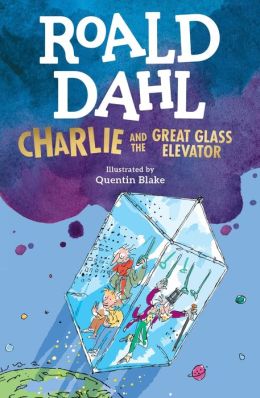
Charlie and the Great Glass Elevator. Roald Dahl. 1972. 166 pages. [Source: Library]
I loved, loved, loved Charlie and the Chocolate Factory. I never loved the sequel Charlie and the Great Glass Elevator. It is quirky and odd, but it failed to delight in the same way. The plot just didn't work for me. Half the book takes place in space or on/near a space hotel--all within the glass elevator. And the other half of the novel takes place back in the factory and involves one of Wonka's inventions. The humor of the space section just did not work for me. It felt dated and off, a bit inappropriate.
Have you read this one? What did you think?
© 2013 SukaYuka.com of SukaYuka's Book Reviews
I loved, loved, loved Charlie and the Chocolate Factory. I never loved the sequel Charlie and the Great Glass Elevator. It is quirky and odd, but it failed to delight in the same way. The plot just didn't work for me. Half the book takes place in space or on/near a space hotel--all within the glass elevator. And the other half of the novel takes place back in the factory and involves one of Wonka's inventions. The humor of the space section just did not work for me. It felt dated and off, a bit inappropriate.
The president threw the phone across the room at the Postmaster General. It hit him in the stomach. "What's the matter with this thing?" shouted the President. "It is very difficult to phone people in China, Mr. President," said the Postmaster General. "The country's so full of Wings and Wongs, every time you wing you get the wong number." "You're not kidding," said the President... The President again picked up the receiver. "Gleetings, honorable Mr. Plesident," said a soft faraway voice. "Here is Assistant Plemier Chu-On-Dat speaking. How can I do for you?" "Knock-knock," said the President. "Who der?" "Ginger." "Ginger who?" "Ginger yourself much when you fell off the Great Wall of China?" said the President. "Okay, Chu-on-Dat. Let me speak to Premier How-Yu-Bin." "Much regret Premier How-Yu-Bin not here just this second, Mr. Plesident." "Where is he?" He outside mending a flat tire on his bicycle." "Oh no, he isn't," said the President. "You can't fool me, you crafty old mandarin! At this very minute he's boarding our magnificent Space Hotel with seven other rascals to blow it up!" "Excuse pleese, Mr. Plesident. You make big mistake." "No mistake!" barked the President. "And if you don't call them off right away I'm going to tell my Chief of the Army to blow them all sky high! So chew on that, Chu-on-Dat!" "Hooray!" said the Chief of the Army. "Let's blow everyone up! Bang-bang! Bang-bang!" (30-1)It's not that I hated every page of this one. I just didn't find enough positives to overcome the negatives.
Have you read this one? What did you think?
© 2013 SukaYuka.com of SukaYuka's Book Reviews
Sunday, October 13, 2013
Sunday Salon: Reading Charlie and the Chocolate Factory
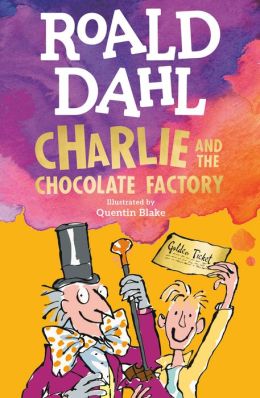
Charlie and the Chocolate Factory. Roald Dahl. 1964. 155 pages. [Source: Library]
Charlie and the Chocolate Factory is one of my favorite books to reread. I adore this one. Each chapter feels like a good friend. The text, the illustrations, everything just feels so right, so cozily right about this one.
Willy Wonka is an eccentric factory owner; he manufactures candy, chocolate mostly. He has a contest with five winners; he hides five golden tickets within his candy bars. Charlie Bucket, our hero, is desperate. Not necessarily desperate to win so much as desperate for a miracle. His family is starving. His father, his mother, all four grandparents, and himself--all are starving. If any boy deserves a life time's supply of chocolate, it's Charlie.
The book is quirky, delightful, and full of messages or morals. These messages aren't exactly hidden, they are obvious, especially in the lyrics of the songs. For example, Mike Teavee's song. No reader could miss that message! Is it a message for children or parents?!
© 2013 SukaYuka.com of SukaYuka's Book Reviews
Charlie and the Chocolate Factory is one of my favorite books to reread. I adore this one. Each chapter feels like a good friend. The text, the illustrations, everything just feels so right, so cozily right about this one.
Willy Wonka is an eccentric factory owner; he manufactures candy, chocolate mostly. He has a contest with five winners; he hides five golden tickets within his candy bars. Charlie Bucket, our hero, is desperate. Not necessarily desperate to win so much as desperate for a miracle. His family is starving. His father, his mother, all four grandparents, and himself--all are starving. If any boy deserves a life time's supply of chocolate, it's Charlie.
The book is quirky, delightful, and full of messages or morals. These messages aren't exactly hidden, they are obvious, especially in the lyrics of the songs. For example, Mike Teavee's song. No reader could miss that message! Is it a message for children or parents?!
"The most important thing we've learned,Do you have a favorite character? A favorite scene?
So far as children are concerned,
Is never, NEVER, NEVER let
Them near your television set–
Or better still, just don't install
The idiotic thing at all.
In almost every house we've been,
We've watched them gaping at the screen.
They loll and slop and lounge about,
And stare until their eyes pop out.
(Last week in someone's place we saw
A dozen eyeballs on the floor.)
They sit and stare and stare and sit
Until they're hypnotised by it,
Until they're absolutely drunk
With all the shocking ghastly junk.
Oh yes, we know it keeps them still,
They don't climb out the window sill,
They never fight or kick or punch,
They leave you free to cook the lunch
And wash the dishes in the sink–
But did you ever stop to think,
To wonder just exactly what
This does to your beloved tot?
IT ROTS THE SENSES IN THE HEAD!
IT KILLS IMAGINATION DEAD!
IT CLOGS AND CLUTTERS UP THE MIND!
IT MAKES A CHILD SO DULL AND BLIND
HE CAN NO LONGER UNDERSTAND
A FANTASY, A FAIRYLAND!
HIS BRAIN BECOMES AS SOFT AS CHEESE!
HIS POWERS OF THINKING RUST AND FREEZE!
HE CANNOT THINK–HE ONLY SEES!
'All right!' you'll cry. 'All right!' you'll say,
'But if we take the set away,
What shall we do to entertain
Our darling children? Please explain!'
We'll answer this by asking you,
'What used the darling ones to do?
'How used they keep themselves contented
Before this monster was invented?'
Have you forgotten? Don't you know?
We'll say it very loud and slow:
THEY...USED...TO...READ! They'd READ and READ,
AND READ and READ, and then proceed
To READ some more. Great Scott! Gadzooks!
One half their lives was reading books!
The nursery shelves held books galore!
Books cluttered up the nursery floor!
And in the bedroom, by the bed,
More books were waiting to be read!
Such wondrous, fine, fantastic takes
Of dragons, gypsies, queens, and whales
And treasure isles, and distant shores
Where smugglers rowed with muffled oars,
And pirates wearing purple pants,
And sailing ships and elephants,
And cannibals crouching 'round the pot,
Stirring away at something hot.
(It smells so good, what can it be?
Good gracious, it's Penelope.)
The younger ones had Beatrix Potter
With Mr. Tod, the dirty rotter,
And Squirrel Nutkin, Pigling Bland,
And Mrs. Tiggy–Winkle and–
Just How The Camel Got His Hump,
And How The Monkey Lost His Rump,
And Mr. Toad, and bless my soul,
There's Mr. Rat and Mr. Mole–
Oh, books, what books they used to know,
Those children living long ago!
So please, oh please, we beg, we pray,
Go throw your TV set away,
And in its place you can install
A lovely bookshelf on the wall.
Then fill the shelves with lots of books,
Ignoring all the dirty looks,
The screams and yells, the bites and kicks,
And children hitting you with sticks–
Fear not, because we promise you
That, in about a week or two
Of having nothing else to do,
They'll now begin to feel the need
Of having something good to read.
And once they start–oh boy, oh boy!
You watch the slowly growing joy
That fills their hears. They'll grow so keen
They'll wonder what they'd ever seen
In that ridiculous machine,
That nauseating, foul, unclean,
Repulsive television screen!
And later, each and every kid
Will love you more for what you did.
P.S. Regarding Mike Teavee,
We very much regret that we
Shall simply have to wait and see
If we can get him back his height.
But if we can't–it serves him right."
© 2013 SukaYuka.com of SukaYuka's Book Reviews
Sunday, October 6, 2013
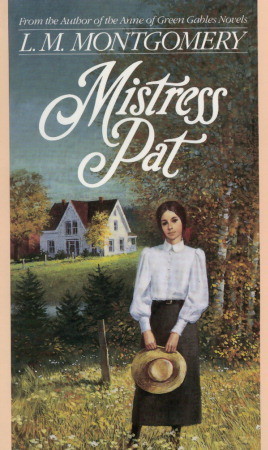
Sunday Salon: Mistress Pat
Mistress Pat. L.M. Montgomery. 1935. 288 pages. [Source: Bought].
Early in the year I decided that I would read ALL of L.M. Montgomery's novels chronologically in one year. (I'm also reading Georgette Heyer chronologically this year.) Almost all of the novels would be rereads with just a handful of exceptions: Magic for Marigold, Pat of Silver Bush, Mistress Pat, and Jane of Lantern Hill. I just LOVED Magic for Marigold. I struggled through Pat of Silver Bush. And I dreaded Mistress Pat. How could I willingly spend more time with Pat? But I wasn't going to let my plans be frustrated. So I persevered through Mistress Pat.
I can honestly say that if my very first introduction to L.M. Montgomery was through the Pat novels, I probably never would have bothered with any of her other novels. The very things I love about L.M. Montgomery are completely missing from the Pat books. Primarily her characterization has almost completely vanished. Earlier books have vibrant, entertaining, interesting characters. Some that you love, love, love. Some that you laugh with. Some that you laugh at. But her earlier books have characters that matter...
If you absolutely LOVED Judy from Pat of Silver Bush... If reading Judy's dialect and listening to her rambling stories gave you a special thrill, then there will be plenty to please you in Mistress Pat.
If you loved hearing Pat ramble on and on about how Silver Bush was her whole world and that she would never ever get married no matter what, then again you'll find plenty to love in Mistress Pat.
If you found Hilary's friendship with Pat to be extra special, then you might be patient and find satisfaction with Mistress Pat.
But Mistress Pat lacks the spark that made earlier Montgomery works unforgettable. Here you find extremely faint traces of the stories that you probably loved more.
© 2013 SukaYuka.com of SukaYuka's Book Reviews
Early in the year I decided that I would read ALL of L.M. Montgomery's novels chronologically in one year. (I'm also reading Georgette Heyer chronologically this year.) Almost all of the novels would be rereads with just a handful of exceptions: Magic for Marigold, Pat of Silver Bush, Mistress Pat, and Jane of Lantern Hill. I just LOVED Magic for Marigold. I struggled through Pat of Silver Bush. And I dreaded Mistress Pat. How could I willingly spend more time with Pat? But I wasn't going to let my plans be frustrated. So I persevered through Mistress Pat.
I can honestly say that if my very first introduction to L.M. Montgomery was through the Pat novels, I probably never would have bothered with any of her other novels. The very things I love about L.M. Montgomery are completely missing from the Pat books. Primarily her characterization has almost completely vanished. Earlier books have vibrant, entertaining, interesting characters. Some that you love, love, love. Some that you laugh with. Some that you laugh at. But her earlier books have characters that matter...
If you absolutely LOVED Judy from Pat of Silver Bush... If reading Judy's dialect and listening to her rambling stories gave you a special thrill, then there will be plenty to please you in Mistress Pat.
If you loved hearing Pat ramble on and on about how Silver Bush was her whole world and that she would never ever get married no matter what, then again you'll find plenty to love in Mistress Pat.
If you found Hilary's friendship with Pat to be extra special, then you might be patient and find satisfaction with Mistress Pat.
But Mistress Pat lacks the spark that made earlier Montgomery works unforgettable. Here you find extremely faint traces of the stories that you probably loved more.
© 2013 SukaYuka.com of SukaYuka's Book Reviews
Sunday, September 29, 2013
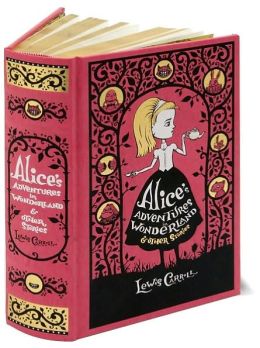
Sunday Salon: Reading Alice's Adventures in Wonderland
Alice's Adventures in Wonderland. Lewis Carroll. 1865. 192 pages. [Source: Bought]
Alice's Adventures in Wonderland is a great book to read again and again no matter your age. I think I've always adored this one and its sequel Through the Looking Glass. Each chapter feels so familiar and welcome. I love that books become friends. I think that is why I absolutely HAVE to reread books. It's a way of life for me.
The chapter titles: "Down The Rabbit-Hole," "The Pool of Tears," "A Caucus-Race and a Long Tale," "The Rabbit Sends In a Little Bill," "Advice From A Caterpillar," "Pig and Pepper," "A Mad Tea-Party," "The Queen's Croquet-Ground," "The Mock Turtle's Story," "The Lobster Quadrille," "Who Stole the Tarts?" and "Alice's Evidence." I love that simply reading the chapter titles takes you right into the heart and soul of this one!
What is your favorite thing about Alice in Wonderland? I think my favorite thing is the dreaminess of it. How perfectly bizarre and wonderful it is. It is whimsical, quirky, delightful. It is also very quotable!
© 2013 SukaYuka.com of SukaYuka's Book Reviews
Alice's Adventures in Wonderland is a great book to read again and again no matter your age. I think I've always adored this one and its sequel Through the Looking Glass. Each chapter feels so familiar and welcome. I love that books become friends. I think that is why I absolutely HAVE to reread books. It's a way of life for me.
The chapter titles: "Down The Rabbit-Hole," "The Pool of Tears," "A Caucus-Race and a Long Tale," "The Rabbit Sends In a Little Bill," "Advice From A Caterpillar," "Pig and Pepper," "A Mad Tea-Party," "The Queen's Croquet-Ground," "The Mock Turtle's Story," "The Lobster Quadrille," "Who Stole the Tarts?" and "Alice's Evidence." I love that simply reading the chapter titles takes you right into the heart and soul of this one!
What is your favorite thing about Alice in Wonderland? I think my favorite thing is the dreaminess of it. How perfectly bizarre and wonderful it is. It is whimsical, quirky, delightful. It is also very quotable!
© 2013 SukaYuka.com of SukaYuka's Book Reviews
Sunday, September 22, 2013
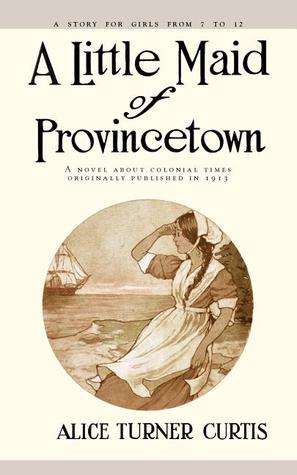
Sunday Salon: Reading Little Maid of Provincetown
A Little Maid Of Provincetown. Alice Turner Curtis. 1913. 192 pages. [Source: Bought]
A Little Maid of Provincetown is a delightful little children's book set around the times of the American Revolution. After her father leaves her, Anne Nelson seeks shelter with the Stoddards, a happy-but-childless family. She soon adjusts to her new life, though she is unhappy that some of the other children in Provincetown tease her. There are children who say that her father, John Nelson, is a spy and a traitor. There are children who call Anne a beggar-child. But with the assurance of her new family--Enos and Martha Stoddard, she is secure and happy enough. Not that she believes the reports about her father. Not that she stops wanting him to come back to her. But she begins to be content with her new life, to like spending time with Brownie, the cow, and Martha, her wooden doll. She even makes friends with two of the children who teased her: Amanda and Amos Carey. But there are things happening around her that warn of danger: the British soldiers on their ships, etc. Anne knows that war could come sooner or later.
A Little Maid of Provincetown is a book with plenty of adventures. And some of the adventures involve more than hunting a missing cow. Anne is a spunky heroine who can get into mischief if not closely watched. She's brave and resourceful as well.
I liked this story.
© 2013 SukaYuka.com of SukaYuka's Book Reviews
A Little Maid of Provincetown is a delightful little children's book set around the times of the American Revolution. After her father leaves her, Anne Nelson seeks shelter with the Stoddards, a happy-but-childless family. She soon adjusts to her new life, though she is unhappy that some of the other children in Provincetown tease her. There are children who say that her father, John Nelson, is a spy and a traitor. There are children who call Anne a beggar-child. But with the assurance of her new family--Enos and Martha Stoddard, she is secure and happy enough. Not that she believes the reports about her father. Not that she stops wanting him to come back to her. But she begins to be content with her new life, to like spending time with Brownie, the cow, and Martha, her wooden doll. She even makes friends with two of the children who teased her: Amanda and Amos Carey. But there are things happening around her that warn of danger: the British soldiers on their ships, etc. Anne knows that war could come sooner or later.
A Little Maid of Provincetown is a book with plenty of adventures. And some of the adventures involve more than hunting a missing cow. Anne is a spunky heroine who can get into mischief if not closely watched. She's brave and resourceful as well.
I liked this story.
© 2013 SukaYuka.com of SukaYuka's Book Reviews
Sunday, September 15, 2013
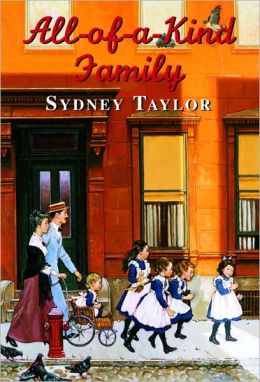
Sunday Salon: Reading All-of-a-Kind-Family (1951)
All-of-a-Kind-Family. Sydney Taylor. 1951. 190 pages. [Source: Bought]
I enjoyed rereading All-of-a-Kind Family by Sydney Taylor. This historical fiction novel is set in New York City around 1912. When the novel opens, there are five sisters: Ella, Henrietta (Henny), Sarah, Charlotte, and Gertie. They are a "steps-and-stairs" family according to the oh-so-friendly librarian Miss Allen. (Yes, the librarian plays a good role in this one!) The chapters are episodic, occurring over the course of a year. The chapters detail what life was like in a Jewish household during the early years of the new century. Some chapters are about everyday things like shopping, cleaning, going to the library, eating in bed, picky-eating at the table, etc. Other chapters are about holidays or vacations: Purim, Passover, 4th of July, visiting Coney Island, etc. My least favorite chapter remains the same: the hiding of buttons to motivate the sisters into cleaning.
I liked this one. I like it because it is old-fashioned and simple and just good. I like it because it captures a special time and place in American history.
Have you read this one? What did you think?
© 2013 SukaYuka.com of SukaYuka's Book Reviews
I enjoyed rereading All-of-a-Kind Family by Sydney Taylor. This historical fiction novel is set in New York City around 1912. When the novel opens, there are five sisters: Ella, Henrietta (Henny), Sarah, Charlotte, and Gertie. They are a "steps-and-stairs" family according to the oh-so-friendly librarian Miss Allen. (Yes, the librarian plays a good role in this one!) The chapters are episodic, occurring over the course of a year. The chapters detail what life was like in a Jewish household during the early years of the new century. Some chapters are about everyday things like shopping, cleaning, going to the library, eating in bed, picky-eating at the table, etc. Other chapters are about holidays or vacations: Purim, Passover, 4th of July, visiting Coney Island, etc. My least favorite chapter remains the same: the hiding of buttons to motivate the sisters into cleaning.
I liked this one. I like it because it is old-fashioned and simple and just good. I like it because it captures a special time and place in American history.
Have you read this one? What did you think?
© 2013 SukaYuka.com of SukaYuka's Book Reviews
Sunday, September 8, 2013
Sunday Salon: Pat of Silver Bush
Pat of Silver Bush. L.M. Montgomery. 1933. 288 pages. [Source: Bought]
Not sure if it's my mood or if Pat just isn't as interesting as Anne, Emily, the Story Girl, or Marigold. It is not that I expect every Montgomery heroine to be just like Anne. I like that Montgomery's heroines tend to be different from one another. But other than the fact that Pat eventually started liking boys, Pat doesn't really grow or change or transform. The highlights of this one: Pat meets Jingle (Hilary) a poor young boy with an unfortunate name and no mother. From the start, readers suspect that he will be the love interest if not in this one then in book two. Pat also meets a young girl named Bets. The two are good friends. I never felt a connection with Pat really, so it was hard to find a connection with Pat and her best friend. Still, I thought it sad that the only really big thing that happens in the novel (unless you count the oh-so-tense episode with the missing dog) is Bets' death. If readers find Judy interesting--her storytelling fun--then perhaps there is enough to make this one worth reading. I didn't like this one much.
I read Pat of Silver Bush because it is my goal to read all of L.M. Montgomery's novels in just one year, and to read them chronologically in order of publication. I've only got four novels left:
Mistress Pat (1935)
Anne of Windy Poplars (1936)
Jane of Lantern Hill (1937)
Anne of Ingleside (1939)
© 2013 SukaYuka.com of SukaYuka's Book Reviews
Not sure if it's my mood or if Pat just isn't as interesting as Anne, Emily, the Story Girl, or Marigold. It is not that I expect every Montgomery heroine to be just like Anne. I like that Montgomery's heroines tend to be different from one another. But other than the fact that Pat eventually started liking boys, Pat doesn't really grow or change or transform. The highlights of this one: Pat meets Jingle (Hilary) a poor young boy with an unfortunate name and no mother. From the start, readers suspect that he will be the love interest if not in this one then in book two. Pat also meets a young girl named Bets. The two are good friends. I never felt a connection with Pat really, so it was hard to find a connection with Pat and her best friend. Still, I thought it sad that the only really big thing that happens in the novel (unless you count the oh-so-tense episode with the missing dog) is Bets' death. If readers find Judy interesting--her storytelling fun--then perhaps there is enough to make this one worth reading. I didn't like this one much.
I read Pat of Silver Bush because it is my goal to read all of L.M. Montgomery's novels in just one year, and to read them chronologically in order of publication. I've only got four novels left:
Mistress Pat (1935)
Anne of Windy Poplars (1936)
Jane of Lantern Hill (1937)
Anne of Ingleside (1939)
© 2013 SukaYuka.com of SukaYuka's Book Reviews
Sunday, September 1, 2013
Sunday Salon: Reading The Phantom Tollbooth (1961)
The Phantom Tollbooth. Norton Juster. Illustrated by Jules Feiffer. 1961/2011. Random House. 272 pages. [Source: Review copy]
There was once a boy named Milo who didn't know what to do with himself--not just sometimes, but always.
I loved, loved, loved this one! It is easily one of those books I could read over and over and over again. I didn't discover it as a child, but, I'm very glad I've discovered it now!
Milo, our hero, is about to have an "impossible" adventure. His day starts out very ordinary, however, by the end of the day Milo will be quite transformed!
It starts with a mysterious gift-box. It holds a tollbooth for him to construct, also included are instructions, rule books, and a map. He randomly chooses to go to Dictionopolis. But though that is his original destination, Milo finds that travels--magical or not--take some thought and intention.
The writing is AMAZING. It is clever, rich in meaning and symbolism. And it is oh so quotable! One of those rare books where you could almost open up the book to any page and find a gem worth quoting!
Loved the writing, loved the creativity, loved the characters!
Favorite quotes:
There was once a boy named Milo who didn't know what to do with himself--not just sometimes, but always.
I loved, loved, loved this one! It is easily one of those books I could read over and over and over again. I didn't discover it as a child, but, I'm very glad I've discovered it now!
Milo, our hero, is about to have an "impossible" adventure. His day starts out very ordinary, however, by the end of the day Milo will be quite transformed!
It starts with a mysterious gift-box. It holds a tollbooth for him to construct, also included are instructions, rule books, and a map. He randomly chooses to go to Dictionopolis. But though that is his original destination, Milo finds that travels--magical or not--take some thought and intention.
The writing is AMAZING. It is clever, rich in meaning and symbolism. And it is oh so quotable! One of those rare books where you could almost open up the book to any page and find a gem worth quoting!
Loved the writing, loved the creativity, loved the characters!
Favorite quotes:
“Expect everything, I always say, and the unexpected never happens.”
“You may not see it now," said the Princess of Pure Reason, looking knowingly at Milo's puzzled face, "but whatever we learn has a purpose and whatever we do affects everything and everyone else, if even in the tiniest way. Why, when a housefly flaps his wings, a breeze goes round the world; when a speck of dust falls to the ground, the entire planet weighs a little more; and when you stamp your foot, the earth moves slightly off its course. Whenever you laugh, gladness spreads like the ripples in the pond; and whenever you're sad, no one anywhere can be really happy. And it's much the same thing with knowledge, for whenever you learn something new, the whole world becomes that much richer.”
“So many things are possible just as long as you don't know they're impossible.”
“Everybody is so terribly sensitive about the things they know best.”
“And remember, also," added the Princess of Sweet Rhyme, "that many places you would like to see are just off the map and many things you want to know are just out of sight or a little beyond your reach. But someday you'll reach them all, for what you learn today, for no reason at all, will help you discover all the wonderful secrets of tomorrow.”
“In this box are all the words I know…Most of them you will never need, some you will use constantly, but with them you may ask all the questions which have never been answered and answer all the questions which have never been asked. All the great books of the past and all the ones yet to come are made with these words. With them there is no obstacle you cannot overcome. All you must learn to do is to use them well and in the right places.”© 2013 SukaYuka.com of SukaYuka's Book Reviews
Sunday, August 25, 2013
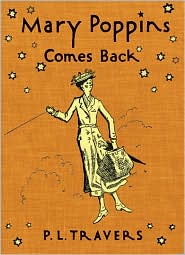
Sunday Salon: Reading Mary Poppins Comes Back (1935)
Mary Poppins Comes Back. P.L. Travers. 1935. Harcourt. 315 pages. [Source: Library]
It was one of those mornings when everything looks very neat and bright and shiny, as though the world had been tidied up overnight.
I definitely enjoyed rereading Mary Poppins Comes Back. There are a few chapters in this sequel that I just LOVE. (For example, "The Kite," "Miss Andrew's Lark," and "The New One.") I didn't love the stories--or the chapters--equally, however.
In this sequel, Mary Poppins returns to the Banks family. The four children have definitely missed her. So have Mr. and Mrs. Banks; they are so relieved that she's returned. In this sequel, a new baby joins the family. But Mary Poppins, of course, still manages to make everything run smoothly.
My favorite quotes:
© 2013 SukaYuka.com of SukaYuka's Book Reviews
It was one of those mornings when everything looks very neat and bright and shiny, as though the world had been tidied up overnight.
I definitely enjoyed rereading Mary Poppins Comes Back. There are a few chapters in this sequel that I just LOVE. (For example, "The Kite," "Miss Andrew's Lark," and "The New One.") I didn't love the stories--or the chapters--equally, however.
In this sequel, Mary Poppins returns to the Banks family. The four children have definitely missed her. So have Mr. and Mrs. Banks; they are so relieved that she's returned. In this sequel, a new baby joins the family. But Mary Poppins, of course, still manages to make everything run smoothly.
My favorite quotes:
"I want to know how you've been behaving since I went away," remarked Mary Poppins sternly. Then she took out the Thermometer and held it up to the light.
"Careless, thoughtless, and untidy," she read out. Jane stared.
"Humph!" said Mary Poppins, and thrust the Thermometer into Michael's mouth. He kept his lips tightly pressed upon it until she plucked it out and read.
"A very noisy mischievous, troublesome little boy."
"I'm not," he said angrily.
For answer she thrust the Thermometer under his nose and he spelt out the large red letters.
"A-V-E-R-Y-N-O-I-S---"
"You see?" said Mary Poppins looking at him triumphantly. She opened John's mouth and popped in the Thermometer.
"Peevish and Excitable." That was John's temperature.And when Barbara's was taken Mary Poppins read out the two words "Thoroughly spoilt."
"Humph!" she snorted. "It's about time I came back!"
Then she popped it quickly in her own mouth, left it there for a moment, and took it out. "A very excellent and worthy person, thoroughly reliable in every particular." (22)
"She was called Miss Andrew and she was a Holy Terror!"
"Hush!" said Mrs. Banks, reproachfully.
"I mean--" Mr. Banks corrected himself, "she was--er--very strict. And always right. And she loved putting everybody else in the wrong and making them feel like a worm. That's what Miss Andrew was like!" (32)
"Well?" she said gruffly smiling a thin smile. "I don't suppose you know who I am?"
"Oh, yes we do!" said Michael. He spoke in his friendliest voice for he was very glad to meet Miss Andrew. "You're the Holy Terror!" (39)
"Doing nothing takes a great deal of time! All the time, in fact!" (156)
© 2013 SukaYuka.com of SukaYuka's Book Reviews
Sunday, August 18, 2013
Sunday Salon: Reading Now We Are Six (1927)
Now We Are Six. A.A. Milne. 1927. 101 pages. [Source: Library]
While I don't absolutely love, love, love Milne's two poetry collections as much as I love his two Pooh novels, I do appreciate them. My favorite poems from Now We Are Six include:
- Busy
- Binker
- Us Two
- The Engineer
- The End
I think I am a Muffin Man. I haven't got a bell.From Binker
I haven't got the muffin things that muffin people sell.
Perhaps I am a Postman. No, I think I am a Tram.
I'm feeling rather funny and I don't know what I am--
BUT
Round about
And round about
And round about I go--
All around the table,
The table in the nursery--
Round about
And round about
And round about I go;
I think I am a Traveller escaping from a Bear;
I think I am an Elephant,
Behind another Elephant
Behind another Elephant who isn't really there...
Binker--what I call him--is a secret of my own,From Us Two
And Binker is the reason why I never feel alone.
Playing in the nursery, sitting on the stair,
Whatever I am busy at, Binker will be there.
Oh, Daddy is clever, he's a clever sort of man,
And Mummy is the best since the world began,
And Nanny is Nanny, and I call her Nan--
But they can't
See
Binker.
Wherever I am, there's always Pooh,© 2013 SukaYuka.com of SukaYuka's Book Reviews
There's always Pooh and Me.
Whatever I do, he wants to do,
"Where are you going today?" says Pooh:
"Well, that's very odd, 'cos I was too.
Let's go together," says Pooh, says he.
"Let's go together," says Pooh.
Sunday, August 11, 2013
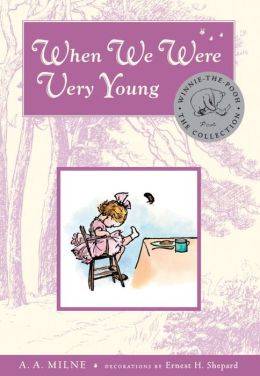
Sunday Salon: Reading When We Were Very Young (1924)
When We Were Very Young. A.A. Milne. 1924. 100 pages. [Source: Library]
If I loved poetry more, I think I would appreciate When We Were Very Young more than I do. I found the introduction charming. It does contain plenty of poems that I like, love, or even adore. Poems that are easier perhaps to adore if you were lucky enough to have heard them sung. (Winnie the Pooh: 17 Songs from the Pooh Song Book: Starring Jack Gilford. The album features: "Sing Ho! For the Life of A Bear," "Cottleston Pie," "Lines Written By A Bear of Very Little Brain," "Oh! The Butterflies are Flying," "I Lay On My Chest," "3 Cheers for Pooh," "They All Went Off To Discover the Pole," "Christopher Robin is Going," "Missing," "In the Fashion," "Halfway Down," Buckingham Palace," "Politeness," "The Christening," "Brownie," "Lines and Squares," and "Vespers."). My favorite poems from When We Were Very Young are:
Buckingham Palace
Lines and Squares
Politeness
Missing
Halfway Down
Teddy Bear
From Teddy Bear
© 2013 SukaYuka.com of SukaYuka's Book Reviews
If I loved poetry more, I think I would appreciate When We Were Very Young more than I do. I found the introduction charming. It does contain plenty of poems that I like, love, or even adore. Poems that are easier perhaps to adore if you were lucky enough to have heard them sung. (Winnie the Pooh: 17 Songs from the Pooh Song Book: Starring Jack Gilford. The album features: "Sing Ho! For the Life of A Bear," "Cottleston Pie," "Lines Written By A Bear of Very Little Brain," "Oh! The Butterflies are Flying," "I Lay On My Chest," "3 Cheers for Pooh," "They All Went Off To Discover the Pole," "Christopher Robin is Going," "Missing," "In the Fashion," "Halfway Down," Buckingham Palace," "Politeness," "The Christening," "Brownie," "Lines and Squares," and "Vespers."). My favorite poems from When We Were Very Young are:
Buckingham Palace
Lines and Squares
Politeness
Missing
Halfway Down
Teddy Bear
From Teddy Bear
A bear, however hard he tries,From Missing
Grows tubby without exercise.
Our Teddy Bear is short and fat
Which is not to be wondered at;
He gets what exercise he can
By falling off the ottoman,
But generally seems to lack
The energy to clamber back.
Has anybody seen my mouse?From Buckingham Palace
I opened his box for half a minute,
Just to make sure he was really in it,
And while I was looking, he jumped outside!
I tried to catch him, I tried, I tried...
I think he's somewhere about the house.
Has anyone seen my mouse?
They're changing guard at Buckingham Palace--Do you have a favorite Milne poem?
Christopher Robin went down with Alice.
Alice is marrying one of the guard.
"A soldier's life is terrible hard,"
Says Alice.
© 2013 SukaYuka.com of SukaYuka's Book Reviews
Sunday, August 4, 2013
Sunday Salon: Reading The Road to Oz (1909)
The Road to Oz. L. Frank Baum. 1909. 272 pages. [Source: Bought]
I've enjoyed reading L. Frank Baum's Oz series. At least I was enjoying it until I came to The Road to Oz. Dorothy and Toto find themselves a bit lost, they're traveling along a road, but they don't know where the road leads. Readers, of course, do. No matter how many countries we encounter on the journey--strange countries with strange citizens with strange rulers and stranger rules--the road will lead inevitably to Oz. Dorothy has several companions in addition to Toto. There's the "shaggy man" with his "love magnet," Button Bright (perhaps the most annoying?), and Polychrome (the Rainbow's Daughter). Many they encounter want to be invited to Ozma's spectacular birthday party. Each chapter leads us closer to Oz, and closer to the big birthday event.
Have you read The Wizard of Oz and its sequels? Do you have a favorite? a least favorite?
© 2013 SukaYuka.com of SukaYuka's Book Reviews
I've enjoyed reading L. Frank Baum's Oz series. At least I was enjoying it until I came to The Road to Oz. Dorothy and Toto find themselves a bit lost, they're traveling along a road, but they don't know where the road leads. Readers, of course, do. No matter how many countries we encounter on the journey--strange countries with strange citizens with strange rulers and stranger rules--the road will lead inevitably to Oz. Dorothy has several companions in addition to Toto. There's the "shaggy man" with his "love magnet," Button Bright (perhaps the most annoying?), and Polychrome (the Rainbow's Daughter). Many they encounter want to be invited to Ozma's spectacular birthday party. Each chapter leads us closer to Oz, and closer to the big birthday event.
Have you read The Wizard of Oz and its sequels? Do you have a favorite? a least favorite?
© 2013 SukaYuka.com of SukaYuka's Book Reviews
Sunday, July 28, 2013
Sunday Salon: Reading The Magic Pudding (1918)
The Magic Pudding. Norman Lindsay. 1918. 144 pages. [Source: Bought]
This is a frontways view of Bunyip Bluegum and his Uncle Wattleberry. At a glance you can see what a fine, round, splendid fellow Bunyip Bluegum is, without me telling you. At a second glance you can see that the Uncle is more square than round, and that his face has whiskers on it. Looked at sideways you can still see what a splendid fellow Bunyip is, though you can only see one of his Uncle's whiskers. Observed from behind, however, you completely lose sight of the whiskers, and so fail to realize how immensely important they are. In fact, these very whiskers were the chief cause of Bunyip's leaving home to see the world, for as he often said to himself--
'Whiskers alone are bad enough
Attached to faces coarse and rough;
But how much greater their offence is
When stuck on Uncles' countenances.'
Thus begins the ever-delightful fantasy, The Magic Pudding. It is very important to read The Magic Pudding WITH illustrations. Without the illustrations, the book wouldn't be as charming, as perfect.
Bunyip Bluegum, our hero, is a koala who's about to have a great adventure. Soon after leaving home, he meets Bill Barnacle (a sailor) and Sam Sawnoff (a penguin). He also meets (and eats) Albert, a pudding--THE MAGIC PUDDING of the title. This is a fortunate meeting because he had forgotten to pack any food for his journey.
In this adventure, it's a fierce battle between the three professional puddin' owners and the two professional puddin' thieves. In all four slices, Bill, Sam, and Bunyip face off against the horrid thieves--a Wombat and a Possum. It's a delightful blend of prose and poetry.
I definitely recommend this Australian classic.
The Puddin' Owners' Anthem:
This is a frontways view of Bunyip Bluegum and his Uncle Wattleberry. At a glance you can see what a fine, round, splendid fellow Bunyip Bluegum is, without me telling you. At a second glance you can see that the Uncle is more square than round, and that his face has whiskers on it. Looked at sideways you can still see what a splendid fellow Bunyip is, though you can only see one of his Uncle's whiskers. Observed from behind, however, you completely lose sight of the whiskers, and so fail to realize how immensely important they are. In fact, these very whiskers were the chief cause of Bunyip's leaving home to see the world, for as he often said to himself--
'Whiskers alone are bad enough
Attached to faces coarse and rough;
But how much greater their offence is
When stuck on Uncles' countenances.'
Thus begins the ever-delightful fantasy, The Magic Pudding. It is very important to read The Magic Pudding WITH illustrations. Without the illustrations, the book wouldn't be as charming, as perfect.
Bunyip Bluegum, our hero, is a koala who's about to have a great adventure. Soon after leaving home, he meets Bill Barnacle (a sailor) and Sam Sawnoff (a penguin). He also meets (and eats) Albert, a pudding--THE MAGIC PUDDING of the title. This is a fortunate meeting because he had forgotten to pack any food for his journey.
'Dear me,' he said, 'I feel quite faint. I had no idea that one's stomach was so important. I have everything that I require, except food; but without food everything is rather less than nothing.It is the Pudding who invites Bunyip to lunch.
I've got a stick to walk with.
I've got a mind to think with.
I've got a voice to talk with.
I've got an eye to wink with.
I've lots of teeth to eat with,
A brand new hat to bow with,
A pair of fists to beat with,
A rage to have a row with.
No joy it brings
To have indeed
A lot of things
One does not need.
Observe my doleful plight.
For here I am without a crumb
To satisfy a raging tum--
O what an oversight!'
'There you are,' said Bill. 'There's nothing this Puddin' enjoys more than offering slices of himself to strangers.'It is during their meal that he learns of the pudding's magic: it is a "cut-an'-come-again Puddin'"
'How very polite of him,' said Bunyip, but the Puddin' replied loudly--
'Politeness be sugared, politeness be hanged,
Politeness be jumbled and tumbled and banged.
It's simply a matter of putting on pace,
Politeness has nothing to do with the case.'
In this adventure, it's a fierce battle between the three professional puddin' owners and the two professional puddin' thieves. In all four slices, Bill, Sam, and Bunyip face off against the horrid thieves--a Wombat and a Possum. It's a delightful blend of prose and poetry.
I definitely recommend this Australian classic.
The Puddin' Owners' Anthem:
The solemn word is plighted,© 2013 SukaYuka.com of SukaYuka's Book Reviews
The solemn tale is told,
We swear to stand united,
Three puddin'-owners bold.
When we with rage assemble,
Let puddin'-snatches groan;
Let puddin'-burglars tremble,
They'll never our puddin' own.
Hurrah for puddin-owning,
Hurrah for Friendship's hand,
The pudding'-thieves are groaning
To see our noble band.
Hurrah, we'll stick together,
And always bear in mind
To eat our puddin' gallantly,
Whenever we're inclined.
Sunday, July 21, 2013
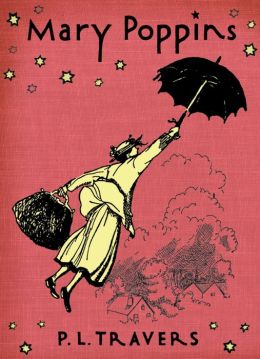
Sunday Salon: Reading Mary Poppins (1934)
Mary Poppins. P.L. Travers. Illustrated by Mary Shepard. 1934/2006. Houghton Mifflin Harcourt. 224 pages. [Source: Library]
If you want to find Cherry-Tree Lane all you have to do is ask the Policeman at the cross-roads. He will push his helmet slightly to one side, scratch his head thoughtfully, and then he will point his huge white-gloved finger and say: "First to your right, second to your left, sharp right again, and you're there. Good-morning."
I've read Mary Poppins three times now. I think I love it more each time. I find it funnier. There are twelve chapters; each chapter is a story or episode: "East Wind," "The Day Out," "Laughing Gas," "Miss Lark's Andrew," "The Dancing Cow," "Bad Tuesday," "The Bird Woman," "Mrs. Corry," "John and Barbara's Story," "Full Moon," "Christmas Shopping," and "West Wind." These stories tell of Mary Poppins and the four children in her charge: Jane, Michael, and the twins Barbara and John. My least favorite story is probably "The Bird Woman." My most favorite story is probably "John and Barbara's Story."
Favorite quotes:
© 2013 SukaYuka.com of SukaYuka's Book Reviews
If you want to find Cherry-Tree Lane all you have to do is ask the Policeman at the cross-roads. He will push his helmet slightly to one side, scratch his head thoughtfully, and then he will point his huge white-gloved finger and say: "First to your right, second to your left, sharp right again, and you're there. Good-morning."
I've read Mary Poppins three times now. I think I love it more each time. I find it funnier. There are twelve chapters; each chapter is a story or episode: "East Wind," "The Day Out," "Laughing Gas," "Miss Lark's Andrew," "The Dancing Cow," "Bad Tuesday," "The Bird Woman," "Mrs. Corry," "John and Barbara's Story," "Full Moon," "Christmas Shopping," and "West Wind." These stories tell of Mary Poppins and the four children in her charge: Jane, Michael, and the twins Barbara and John. My least favorite story is probably "The Bird Woman." My most favorite story is probably "John and Barbara's Story."
Favorite quotes:
Mary Poppins took out a large bottle labelled "One Tea-Spoon to be Taken at Bed-Time."
A spoon was attached to the neck of the bottle, and into this Mary Poppins poured a dark crimson fluid. "Is that your medicine?" enquired Michael, looking very interested.
"No, yours," said Mary Poppins, holding out the spoon to him. Michael stared. He wrinkled up his nose. He began to protest.
"I don't want it. I don't need it. I won't!"
But Mary Poppins's eyes were fixed upon him, and Michael suddenly discovered that you could not look at Mary Poppins and disobey her. There was something strange and extraordinary about her--something that was frightening and at the same time most exciting. The spoon came nearer. He held his breath, shut his eyes and gulped. A delicious taste ran round his mouth. He turned his tongue in it. He swallowed, and a happy smile ran round his face.
"Strawberry ice," he said ecstatically. "More, more, more!" (10)
So Mary Poppins put on her white gloves and tucked her umbrella under her arm--not because it was raining but because it had such a beautiful handle that she couldn't possibly leave it at home. How could you leave your umbrella behind if it had a parrot's head for a handle? Besides, Mary Poppins was very vain and liked to look her best. Indeed, she was quite sure that she never looked anything else. (13)
"Where have you been?" they asked her.
"In Fairyland," said Mary Poppins.
"Did you see Cinderella?" said Jane.
"Huh, Cinderella? Not me," said Mary Poppins contemptuously. "Cinderella, indeed!"
"Or Robinson Crusoe?" asked Michael.
"Robinson Crusoe--pooh!" said Mary Poppins rudely.
"Then how could you have been there? It couldn't have been our Fairyland!"
Mary Poppins gave a superior sniff.
"Don't you know," she said pityingly, "that everybody's got a Fairyland of their own?" (21)
"Are you quite sure he will be at home?" said Jane, as they got off the Bus, she and Michael and Mary Poppins.
"Would my Uncle ask me to bring you to tea if he intended to go out, I'd like to know?" said Mary Poppins, who was evidently very offended by the question. She was wearing her blue coat with the silver buttons and the blue hat to match, and on the days when she wore these it was the easiest thing in the world to offend her. (22)
Upstairs in the Nursery Mary Poppins was airing the clothes by the fire, and the sunlight poured in at the window, flickering on the white walls, dancing over the cots where the babies were lying.
"I say, move over! You're right in my eyes," said John in a loud voice.
"Sorry!" said the sunlight. "But I can't help it. I've got to get across this room somehow. Orders is orders. I must move from East to West in a day and my way lies through this Nursery. Sorry! Shut your eyes and you won't notice me."
The gold shaft of sunlight lengthened across the room. It was obviously moving as quickly as it could in order to oblige John.
"How soft, how sweet you are! I love you," said Barbara, holding out her hands to its shining warmth.
"Good girl," said the sunlight approvingly and moved up over her cheeks and into her hair with a light, caressing movement. "Do you like the feel of me?" it said, as though it loved being praised.
"Dee-licious!" said Barbara, with a happy sigh. (93)
The room was very quiet.
John, drowsing in the sunlight, put the toes of his right foot into his mouth and ran them along the place where his teeth were just beginning to come through.
"Why do you bother to do that?" said Barbara, in her soft, amused voice that seemed always to be full of laughter. "There's nobody to see you."
"I know," said John, playing a tune on his toes. "But I like to keep in practice. It does so amuse the Grown-ups. Did you notice that Aunt Flossie nearly went mad with delight when I did it yesterday? 'The Darling, the Clever, the Marvel, the Creature!' -- didn't you hear her saying all that?" And John threw his foot from him and roared with laughter as he thought of Aunt Flossie.
"She liked my trick, too," said Barbara complacently. "I took off both my socks and she said I was so sweet she would like to eat me. Isn't it funny--when I say I'd like to eat something I really mean it...But Grown-ups never mean what they say, it seems to me. She couldn't have really wanted to eat me, could she?" (95)
"That will do nicely for Daddy," said Michael, selecting a clockwork train with special signals. "I will take care of it for him when he goes to the City."
"I think I will get this for Mother," said Jane, pushing a small doll's perambulator which, she felt sure, her Mother had always wanted. "Perhaps she will lend it to me sometimes."
After that, Michael chose a packet of hairpins for each of the Twins and a Meccano set for his Mother, a mechanical beetle for Robertson Ay, a pair of spectacles for Ellen whose eyesight was perfectly good, and some bootlaces for Mrs. Brill who always wore slippers.
Jane, after some hesitation, eventually decided that a white dickey would be just the thing for Mr. Banks, and she bought Robinson Crusoe for the Twins to read when they grew up.
"Until they are old enough, I can read it myself," she said. "I am sure they will lend it to me." (124)
© 2013 SukaYuka.com of SukaYuka's Book Reviews
Subscribe to:
Posts (Atom)


