The Road to Yesterday. L.M. Montgomery 1974. McGraw-Hill Ryerson Limited. 252 pages.
The Road To Yesterday is a collection of short stories by L.M. Montgomery set on Prince Edward Island. All of the stories mention the Blythes. The stories cover several decades. In one story, for example, Jem and Walter might be described as young boys. In another story, you might read of Rilla's loving Ken Ford. By the end of the collection, however, World War II has begun or nearly begun. So, yes, this one covers a wide span of years. One hears in passing, almost by chance, of news of the Blythe family, of Susan Baker. But the stories have their own main characters.
The stories include:
An Afternoon with Mr. Jenkins
Retribution
The Twins Pretend
Fancy's Fool
A Dream Come True
Penelope Struts Her Theories
The Reconciliation
The Cheated Child
Fool's Errand
The Pot and the Kettle
Here Comes the Bride
Brother Beware
The Road to Yesterday
A Commonplace Woman
Some stories can be sweet and predictable with a cozy, just-right feel. Other stories are darker and perhaps creepier. And a few are just FUNNY. I love, for example, Penelope Struts Her Theories. A "child expert" who has studied and written books on how to raise children finally gets a chance to put her theories into practice when she decides to adopt a child. Needless to say, she learns a thing or two!
I definitely recommend this one. All of these stories are included in The Blythes Are Quoted.
© 2014 SukaYuka.com of SukaYuka's Book Reviews
Showing posts with label classics. Show all posts
Thursday, January 16, 2014
Sunday, January 12, 2014
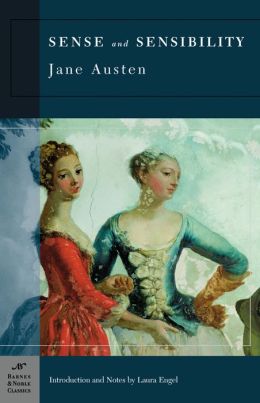
My Year With Jane: Sense and Sensibility
Sense and Sensibility. Jane Austen. 1811. 352 pages. [Source: Book I Bought]
Some Jane Austen novels, in my opinion, have to be read multiple times in order to fully love and appreciate them. I think that is the case with Sense and Sensibility. At least, I have found it to be so. I think I have "loved" it more each time I've read it. And, I believe, this is the third time I've read it. I do know it is the third time I'll be reviewing it for the blog.
Review #1 from 2008
Review #2 from 2011
Sense and Sensibility was Jane Austen's first published novel. The original readers would not have had Pride and Prejudice to compare it with, which may work in the books favor. They wouldn't have known Jane and Elizabeth, so there wouldn't be the temptation to compare these two sisters (Marianne and Elinor) with the angelic Jane and feisty Elizabeth. And I think there is the temptation to compare. I found myself constantly looking for traces and hints of Jane and Elizabeth. Is Elinor more like Jane or Elizabeth? Is Marianne more like Elizabeth or Lydia or a bit of both? And it isn't just the sisters. Lucy Steele versus Caroline Bingley. Wickham versus Willoughby. (Amanda Grange has written Wickham's Diary, but will she ever write Willoughby's diary?! I'd love to read it!!!)
I do love Jane Austen. I love spending time in her character-rich novels. I love getting to know her characters. Not just her main characters. But the minor ones as well. So many memorable characters. Even if they're memorable only because they're despicable. I love the pacing. I love the dialogue. I love how each rereading shows me something different about a character. Little things that just take a little time perhaps to fully realize a character. When you're reading for plot and plot alone, little things pass you by.
Favorite quotes:
© 2014 SukaYuka.com of SukaYuka's Book Reviews
Some Jane Austen novels, in my opinion, have to be read multiple times in order to fully love and appreciate them. I think that is the case with Sense and Sensibility. At least, I have found it to be so. I think I have "loved" it more each time I've read it. And, I believe, this is the third time I've read it. I do know it is the third time I'll be reviewing it for the blog.
Review #1 from 2008
Review #2 from 2011
Sense and Sensibility was Jane Austen's first published novel. The original readers would not have had Pride and Prejudice to compare it with, which may work in the books favor. They wouldn't have known Jane and Elizabeth, so there wouldn't be the temptation to compare these two sisters (Marianne and Elinor) with the angelic Jane and feisty Elizabeth. And I think there is the temptation to compare. I found myself constantly looking for traces and hints of Jane and Elizabeth. Is Elinor more like Jane or Elizabeth? Is Marianne more like Elizabeth or Lydia or a bit of both? And it isn't just the sisters. Lucy Steele versus Caroline Bingley. Wickham versus Willoughby. (Amanda Grange has written Wickham's Diary, but will she ever write Willoughby's diary?! I'd love to read it!!!)
I do love Jane Austen. I love spending time in her character-rich novels. I love getting to know her characters. Not just her main characters. But the minor ones as well. So many memorable characters. Even if they're memorable only because they're despicable. I love the pacing. I love the dialogue. I love how each rereading shows me something different about a character. Little things that just take a little time perhaps to fully realize a character. When you're reading for plot and plot alone, little things pass you by.
Favorite quotes:
She [Elinor] believed the regard to be mutual; but she required greater certainty of it to make Marianne’s conviction of their attachment agreeable to her. She knew that what Marianne and her mother conjectured one moment, they believed the next — that with them, to wish was to hope, and to hope was to expect. She tried to explain the real state of the case to her sister.
Men are very safe with us, let them be ever so rich.
Willoughby was a young man of good abilities, quick imagination, lively spirits, and open, affectionate manners. He was exactly formed to engage Marianne’s heart, for with all this, he joined not only a captivating person, but a natural ardour of mind which was now roused and increased by the example of her own, and which recommended him to her affection beyond every thing else. His society became gradually her most exquisite enjoyment. They read, they talked, they sang together; his musical talents were considerable; and he read with all the sensibility and spirit which Edward had unfortunately wanted.
When he was present she had no eyes for any one else. Every thing he did, was right. Every thing he said, was clever. If their evenings at the park were concluded with cards, he cheated himself and all the rest of the party to get her a good hand. If dancing formed the amusement of the night, they were partners for half the time; and when obliged to separate for a couple of dances, were careful to stand together and scarcely spoke a word to any body else. Such conduct made them of course most exceedingly laughed at; but ridicule could not shame, and seemed hardly to provoke them.
“Brandon is just the kind of man,” said Willoughby one day, when they were talking of him together, “whom every body speaks well of, and nobody cares about; whom all are delighted to see, and nobody remembers to talk to.”
“Does your sister make no distinction in her objections against a second attachment? or is it equally criminal in every body? Are those who have been disappointed in their first choice, whether from the inconstancy of its object, or the perverseness of circumstances, to be equally indifferent during the rest of their lives?” “Upon my word, I am not acquainted with the minutiæ of her principles. I only know that I never yet heard her admit any instance of a second attachment’s being pardonable.”
“You are mistaken, Elinor,” said she warmly, “in supposing I know very little of Willoughby. I have not known him long indeed, but I am much better acquainted with him, than I am with any other creature in the world, except yourself and mama. It is not time or opportunity that is to determine intimacy; it is disposition alone. Seven years would be insufficient to make some people acquainted with each other, and seven days are more than enough for others. I should hold myself guilty of greater impropriety in accepting a horse from my brother, than from Willoughby. Of John I know very little, though we have lived together for years; but of Willoughby my judgment has long been formed.”
Elinor then heard Willoughby say, in a low voice to Marianne, “There are some people who cannot bear a party of pleasure. Brandon is one of them. He was afraid of catching cold I dare say, and invented this trick for getting out of it. I would lay fifty guineas the letter was of his own writing.” “I have no doubt of it,” replied Marianne.
“I am afraid,” replied Elinor, “that the pleasantness of an employment does not always evince its propriety.”
“On the contrary, nothing can be a stronger proof of it, Elinor; for if there had been any real impropriety in what I did, I should have been sensible of it at the time, for we always know when we are acting wrong, and with such a conviction I could have had no pleasure.”
Oh, Elinor, how incomprehensible are your feelings! You had rather take evil upon credit than good. You had rather look out for misery for Marianne, and guilt for poor Willoughby, than an apology for the latter. You are resolved to think him blamable, because he took leave of us with less affection than his usual behaviour has shown. And is no allowance to be made for inadvertence, or for spirits depressed by recent disappointment? Are no probabilities to be accepted, merely because they are not certainties? Is nothing due to the man whom we have all such reason to love, and no reason in the world to think ill of? — to the possibility of motives unanswerable in themselves, though unavoidably secret for a while? And, after all, what is it you suspect him of?”
Secrecy may be advisable; but still I cannot help wondering at its being practiced by him.
“I have not wanted syllables where actions have spoken so plainly. Has not his behaviour to Marianne and to all of us, for at least the last fortnight, declared that he loved and considered her as his future wife, and that he felt for us the attachment of the nearest relation? Have we not perfectly understood each other? Has not my consent been daily asked by his looks, his manner, his attentive and affectionate respect? My Elinor, is it possible to doubt their engagement? How could such a thought occur to you? How is it to be supposed that Willoughby, persuaded as he must be of your sister’s love, should leave her, and leave her perhaps for months, without telling her of his affection, — that they should part without a mutual exchange of confidence?”
“You have no ambition, I well know. Your wishes are all moderate.” “As moderate as those of the rest of the world, I believe. I wish as well as every body else to be perfectly happy; but, like every body else it must be in my own way. Greatness will not make me so.” “Strange that it would!” cried Marianne. “What have wealth or grandeur to do with happiness?” “Grandeur has but little,” said Elinor, “but wealth has much to do with it.” “Elinor, for shame!” said Marianne, “money can only give happiness where there is nothing else to give it. Beyond a competence, it can afford no real satisfaction, as far as mere self is concerned.” “Perhaps,” said Elinor, smiling, “we may come to the same point. Your competence and my wealth are very much alike, I dare say; and without them, as the world goes now, we shall both agree that every kind of external comfort must be wanting. Your ideas are only more noble than mine. Come, what is your competence?” “About eighteen hundred or two thousand a year; not more than that.” Elinor laughed. “Two thousand a year! One is my wealth! I guessed how it would end.”
“I should hardly call her a lively girl — she is very earnest, very eager in all she does — sometimes talks a great deal and always with animation — but she is not often really merry.”
“I have frequently detected myself in such kind of mistakes,” said Elinor, “in a total misapprehension of character in some point or other: fancying people so much more gay or grave, or ingenious or stupid than they really are, and I can hardly tell why or in what the deception originated. Sometimes one is guided by what they say of themselves, and very frequently by what other people say of them, without giving oneself time to deliberate and judge.”
“Shyness is only the effect of a sense of inferiority in some way or other. If I could persuade myself that my manners were perfectly easy and graceful, I should not be shy.”
“But you would still be reserved,” said Marianne, “and that is worse.” Edward started. “Reserved! Am I reserved, Marianne?” “Yes, very.” “I do not understand you,” replied he, colouring. “Reserved! — how, in what manner? What am I to tell you? What can you suppose?” Elinor looked surprised at his emotion; but trying to laugh off the subject, she said to him, “Do not you know my sister well enough to understand what she means? Do not you know she calls every one reserved who does not talk as fast, and admire what she admires as rapturously as herself?”
“Mr. Palmer does not hear me,” said she, laughing; “he never does sometimes. It is so ridiculous!”
This was quite a new idea to Mrs. Dashwood; she had never been used to find wit in the inattention of any one, and could not help looking with surprise at them both.
But to appear happy when I am so miserable — Oh! who can require it?
“The unkindness of your own relations has made you astonished to find friendship any where.”
Marianne’s lips quivered, and she repeated the word “Selfish?” in a tone that implied, “do you really think him selfish?” “The whole of his behaviour,” replied Elinor, “from the beginning to the end of the affair, has been grounded on selfishness. It was selfishness which first made him sport with your affections; which afterwards, when his own were engaged, made him delay the confession of it, and which finally carried him from Barton. His own enjoyment, or his own ease, was, in every particular, his ruling principle.” “It is very true. My happiness never was his object.” “At present,” continued Elinor, “he regrets what he has done. And why does he regret it? — Because he finds it has not answered towards himself. It has not made him happy. But does it follow that had he married you, he would have been happy? — The inconveniences would have been different. He would then have suffered under the pecuniary distresses which, because they are removed, he now reckons as nothing. He would have had a wife of whose temper he could make no complaint, but he would have been always necessitous — always poor; and probably would soon have learned to rank the innumerable comforts of a clear estate and good income as of far more importance, even to domestic happiness, than the mere temper of a wife.”
I will be calm, I will be mistress of myself.
Mrs. Jennings’s prophecies, though rather jumbled together, were chiefly fulfilled; for she was able to visit Edward and his wife in their Parsonage by Michaelmas, and she found in Elinor and her husband, as she really believed, one of the happiest couples in the world. They had in fact nothing to wish for, but the marriage of Colonel Brandon and Marianne, and rather better pasturage for their cows.
Marianne Dashwood was born to an extraordinary fate. She was born to discover the falsehood of her own opinions, and to counteract, by her conduct, her most favourite maxims. She was born to overcome an affection formed so late in life as at seventeen, and with no sentiment superior to strong esteem and lively friendship, voluntarily to give her hand to another! — and that other, a man who had suffered no less than herself under the event of a former attachment, whom, two years before, she had considered too old to be married, — and who still sought the constitutional safeguard of a flannel waistcoat! But so it was.
© 2014 SukaYuka.com of SukaYuka's Book Reviews
Friday, January 10, 2014
Reread #2 The Time Machine
The Time Machine. H.G. Wells. 1895. Penguin. 128 pages. [Source: Book I Bought]
I first read and reviewed The Time Machine in June 2007. I really loved it. It was my introduction to H.G. Wells, and, to classic science fiction. I absolutely loved, loved, loved it then.
I decided to reread The Time Machine for Carl's Sci-Fi Experience this January. It was very fun to revisit this one. I still enjoy time travel novels very much. I may not be quite as passionate about the novel upon second reading; however, I am still glad I took the time to read it again. And I would definitely still recommend it!
The plot: A group of men are gathered together to discuss life. One of them, the one called "The Time Traveller" reveals to his friends and/or associates that he is working on an invention--a time machine. He intends to prove that it is possible to travel back and forth in the fourth dimension--time. A week later, at another party or gathering, he is then able to tell his tale. He tells of his travels to the year 802,701. The good. The bad. The ugly. Life on earth has changed quite a bit, as the Time Traveller witnesses. And as he journeys even to the very end of time, he learns some important truths about mankind past, present, and future. The storytelling element of the story is great.
Favorite quotes:
© 2014 SukaYuka.com of SukaYuka's Book Reviews
I first read and reviewed The Time Machine in June 2007. I really loved it. It was my introduction to H.G. Wells, and, to classic science fiction. I absolutely loved, loved, loved it then.
I decided to reread The Time Machine for Carl's Sci-Fi Experience this January. It was very fun to revisit this one. I still enjoy time travel novels very much. I may not be quite as passionate about the novel upon second reading; however, I am still glad I took the time to read it again. And I would definitely still recommend it!
The plot: A group of men are gathered together to discuss life. One of them, the one called "The Time Traveller" reveals to his friends and/or associates that he is working on an invention--a time machine. He intends to prove that it is possible to travel back and forth in the fourth dimension--time. A week later, at another party or gathering, he is then able to tell his tale. He tells of his travels to the year 802,701. The good. The bad. The ugly. Life on earth has changed quite a bit, as the Time Traveller witnesses. And as he journeys even to the very end of time, he learns some important truths about mankind past, present, and future. The storytelling element of the story is great.
Favorite quotes:
I think that at that time none of us quite believed in the Time Machine. The fact is, the Time Traveller was one of those men who are too clever to be believed: you never felt that you saw all round him; you always suspected some subtle reserve, some ingenuity in ambush, behind his lucid frankness.
I will,' he went on, 'tell you the story of what has happened to me, if you like, but you must refrain from interruptions. I want to tell it. Badly. Most of it will sound like lying. So be it! It's true—every word of it, all the same. I was in my laboratory at four o'clock, and since then … I've lived eight days … such days as no human being ever lived before! I'm nearly worn out, but I shan't sleep till I've told this thing over to you. Then I shall go to bed. But no interruptions! And with that the Time Traveller began his story as I have set it forth. He sat back in his chair at first, and spoke like a weary man. Afterwards he got more animated. In writing it down I feel with only too much keenness the inadequacy of pen and ink—and, above all, my own inadequacy—to express its quality. You read, I will suppose, attentively enough; but you cannot see the speaker's white, sincere face in the bright circle of the little lamp, nor hear the intonation of his voice. You cannot know how his expression followed the turns of his story! Most of us hearers were in shadow, for the candles in the smoking-room had not been lighted, and only the face of the Journalist and the legs of the Silent Man from the knees downward were illuminated.
The two species that had resulted from the evolution of man were sliding down towards, or had already arrived at, an altogether new relationship. The Eloi, like the Carolingian kings, had decayed to a mere beautiful futility. They still possessed the earth on sufferance: since the Morlocks, subterranean for innumerable generations, had come at last to find the daylit surface intolerable. And the Morlocks made their garments, I inferred, and maintained them in their habitual needs, perhaps through the survival of an old habit of service. They did it as a standing horse paws with his foot, or as a man enjoys killing animals in sport: because ancient and departed necessities had impressed it on the organism. But, clearly, the old order was already in part reversed. The Nemesis of the delicate ones was creeping on apace. Ages ago, thousands of generations ago, man had thrust his brother man out of the ease and the sunshine. And now that brother was coming back changed! Already the Eloi had begun to learn one old lesson anew. They were becoming reacquainted with Fear. And suddenly there came into my head the memory of the meat I had seen in the Under-world. It seemed odd how it floated into my mind: not stirred up as it were by the current of my meditations, but coming in almost like a question from outside. I tried to recall the form of it. I had a vague sense of something familiar, but I could not tell what it was at the time.
I understood now what all the beauty of the Over-world people covered. Very pleasant was their day, as pleasant as the day of the cattle in the field. Like the cattle, they knew of no enemies and provided against no needs. And their end was the same. 'I grieved to think how brief the dream of the human intellect had been. It had committed suicide. It had set itself steadfastly towards comfort and ease, a balanced society with security and permanency as its watchword, it had attained its hopes—to come to this at last. Once, life and property must have reached almost absolute safety. The rich had been assured of his wealth and comfort, the toiler assured of his life and work. No doubt in that perfect world there had been no unemployed problem, no social question left unsolved. And a great quiet had followed. 'It is a law of nature we overlook, that intellectual versatility is the compensation for change, danger, and trouble. An animal perfectly in harmony with its environment is a perfect mechanism. Nature never appeals to intelligence until habit and instinct are useless. There is no intelligence where there is no change and no need of change. Only those animals partake of intelligence that have to meet a huge variety of needs and dangers. 'So, as I see it, the Upper-world man had drifted towards his feeble prettiness, and the Under-world to mere mechanical industry. But that perfect state had lacked one thing even for mechanical perfection—absolute permanency.
© 2014 SukaYuka.com of SukaYuka's Book Reviews
Thursday, December 26, 2013
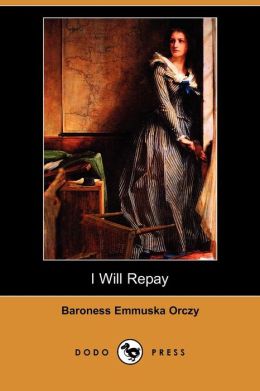
I Will Repay (1906)
I Will Repay. Baroness Orczy. 1906. 220 pages. [Source: Book I Bought]
As much as I love, love, love The Scarlet Pimpernel movie adaptations, I didn't quite love the novel. I wasn't quite sure if I wanted to read the sequels. I procrastinated a very long time. But once I decided to actually read I Will Repay, it was a quick read: two days!
What you should know: First, the Scarlet Pimpernel does make an appearance, but, you have to be really, really patient because he is a long time in coming. Second, it is a romantic adventure set during the French Revolution, emphasis on the romance. If you HATE romance, if you hate the drama and dialogue found in romance novels, then this one might not be for you. But. If you do, you're in for a real treat!
The prologue starts ten years or so before the French Revolution. It begins with a "fair" duel between two men. The hero, Paul Déroulède, is a reluctant participant. But the other guy, Vicomte de Marny is not backing down at all, is determined to make the fight to the death, if you will. He dies. His father makes his young daughter promise to get revenge on her brother's murderer. Her name is Juliette de Marny.
© 2013 SukaYuka.com of SukaYuka's Book Reviews
As much as I love, love, love The Scarlet Pimpernel movie adaptations, I didn't quite love the novel. I wasn't quite sure if I wanted to read the sequels. I procrastinated a very long time. But once I decided to actually read I Will Repay, it was a quick read: two days!
What you should know: First, the Scarlet Pimpernel does make an appearance, but, you have to be really, really patient because he is a long time in coming. Second, it is a romantic adventure set during the French Revolution, emphasis on the romance. If you HATE romance, if you hate the drama and dialogue found in romance novels, then this one might not be for you. But. If you do, you're in for a real treat!
The prologue starts ten years or so before the French Revolution. It begins with a "fair" duel between two men. The hero, Paul Déroulède, is a reluctant participant. But the other guy, Vicomte de Marny is not backing down at all, is determined to make the fight to the death, if you will. He dies. His father makes his young daughter promise to get revenge on her brother's murderer. Her name is Juliette de Marny.
"Repeat the words after me, my child." "Yes, father." "Before the face of Almighty God, who sees and hears me ..." "Before the face of Almighty God, who sees and hears me," repeated Juliette firmly. "I swear that I will seek out Paul Déroulède." "I swear that I will seek out Paul Déroulède." "And in any manner which God may dictate to me encompass his death, his ruin or dishonour, in revenge for my brother's death." "And in any manner which God may dictate to me encompass his death, his ruin or dishonour, in revenge for my brother's death," said Juliette solemnly. "May my brother's soul remain in torment until the final Judgment Day if I should break my oath, but may it rest in eternal peace the day on which his death is fitly avenged." "May my brother's soul remain in torment until the final Judgment Day if I should break my oath, but may it rest in eternal peace the day on which his death is fitly avenged."Ten years later, Juliette has finally found him, found a way to get close to him. He "saves" her from an angry mob, invites her into his home, introduces her to his family. She remains with him, getting close, for a bit. She begins to develop her plan. Meanwhile, of course, he is falling madly in love with her...
"Gratitude? What have I done?" "You committed a foolish, thoughtless act outside my door, and gave me the chance of easing my conscience of a heavy load." "In what way?" "I had never hoped that the Fates would be so kind as to allow me to render a member of your family a slight service."Not everyone is charmed by this young woman. And the Scarlet Pimpernel has some advice for our hero...
"I always meant to tell you," he continued somewhat hurriedly; "for it almost seemed to me that I have been cheating you, these last few days. I don't suppose that you can quite realise what it means to me to tell you this just now; but I owe it to you, I think. In later years you might find out, and then regret the days you spent under my roof. I called you childish a moment ago, you must forgive me; I know that you are a woman, and hope therefore that you will understand me. I killed your brother in fair fight. He provoked me as no man was ever provoked before ..."
"You are a mad idealist, my dear Déroulède!" "How can I help it? I have lived under the same roof with her for three weeks now. I have begun to understand what a saint is like." "And 'twill be when you understand that your idol has feet of clay that you'll learn the real lesson of love," said Blakeney earnestly. "Is it love to worship a saint in heaven, whom you dare not touch, who hovers above you like a cloud, which floats away from you even as you gaze? To love is to feel one being in the world at one with us, our equal in sin as well as in virtue. To love, for us men, is to clasp one woman with our arms, feeling that she lives and breathes just as we do, suffers as we do, thinks with us, loves with us, and, above all, sins with us. Your mock saint who stands in a niche is not a woman if she have not suffered, still less a woman if she have not sinned. Fall at the feet of your idol an you wish, but drag her down to your level after that—the only level she should ever reach, that of your heart."I will admit there is drama. But. I enjoyed every moment of it.
Love, the great, the strong, the conquering god—Love that subdues a world, and rides roughshod over principle, virtue, tradition, over home, kindred, and religion—what cares he for the easy conquest of the pathetic being, who appeals to his sympathy? Love means equality—the same height of heroism or of sin. When Love stoops to pity, he has ceased to soar in the boundless space, that rarefied atmosphere wherein man feels himself made at last truly in the image of God.
She would have stilled, an she could, the beating of her heart, which went out to him at last with all the passionate intensity of her great, pent-up love. Every word he spoke had its echo within her very soul, and she tried not to hear his tender appeal, not to see his dark head bending in worship before her. She tried to forget his presence, not to know that he was there—he, the man whom she had betrayed to serve her own miserable vengeance, whom in her mad, exalted rage she had thought that she hated, but whom she now knew that she loved better than her life, better than her soul, her traditions, or her oath. Now, at this moment, she made every effort to conjure up the vision of her brother brought home dead upon a stretcher, of her father's declining years, rendered hideous by the mind unhinged through the great sorrow.
They were all alone these two in the mad and beautiful world, which man has created for himself—the world of romance—that world more wonderful than any heaven, where only those may enter who have learned the sweet lesson of love.
The god of love may be blind, tradition has so decreed it, but the demon of jealousy has a hundred eyes, more keen than those of the lynx.
What neither fear nor remorse, sorrow nor joy, could do, that the great and mighty Shadow accomplished in a trice. Juliette, looking death bravely in the face, held out her hand, and sought that of the man she loved. There was not one word spoken between them, not even a murmur. Déroulède, with the unerring instinct of his own unselfish passion, understood all that the tiny hand wished to convey to him. In a moment everything was forgotten save the joy of this touch. Death, or the fear of death, had ceased to exist. Life was beautiful, and in the soul of these two human creatures there was perfect peace, almost perfect happiness.I loved this one. I did. It was a perfectly satisfying read.
© 2013 SukaYuka.com of SukaYuka's Book Reviews
Sunday, November 24, 2013
Sunday Salon: Reading Anne of Windy Poplars
Anne of Windy Poplars. L.M. Montgomery. 1936. 288 pages. [Source: Bought]
Anne of Windy Poplars is such a lovely little epistolary novel. Readers are privileged to share in some of Anne's letters to her beloved Gilbert. In these letters there are hundreds (if not thousands) of character sketches sharing details about Anne's life and new experiences as she teaches at a high school in Summerside, Prince Edward Island. (Highlights include Rebecca Dew, "Little Elizabeth" (Grayson), Katherine Brooke, Aunt Chatty and Aunt Kate, Jen Pringle, Mrs. Gibson, Lewis Allen, Teddy Armstrong (Little Fellow), Gerald and Geraldine (the twins she babysits...once), Jarvis Morrow, Dovie Westcott, Miss Minerva Tomgallon, etc.) Some people just get a brief sentence or two, but oh what Montgomery can do with just a few sentences or even a few words! Montgomery, at her very best, can bring more life and humanity to a character than a good many contemporary writers do in an entire novel. Other characters have whole episodes about them. For example, readers really get to spend some time with Katherine Brooke! One of my favorite episodes--if episode is the right word--is Anne and Lewis out canvassing for subscriptions to the drama club. They meet a "little fellow" named Teddy Armstrong. That story just gets me every single time! Montgomery can bring me to near tears and yet not feel manipulative. How does she do that?!
Have you read Anne of Windy Poplars? How do you think it fits in with the rest of the series? Do you have a favorite character?
Favorite quotes:
© 2013 SukaYuka.com of SukaYuka's Book Reviews
Anne of Windy Poplars is such a lovely little epistolary novel. Readers are privileged to share in some of Anne's letters to her beloved Gilbert. In these letters there are hundreds (if not thousands) of character sketches sharing details about Anne's life and new experiences as she teaches at a high school in Summerside, Prince Edward Island. (Highlights include Rebecca Dew, "Little Elizabeth" (Grayson), Katherine Brooke, Aunt Chatty and Aunt Kate, Jen Pringle, Mrs. Gibson, Lewis Allen, Teddy Armstrong (Little Fellow), Gerald and Geraldine (the twins she babysits...once), Jarvis Morrow, Dovie Westcott, Miss Minerva Tomgallon, etc.) Some people just get a brief sentence or two, but oh what Montgomery can do with just a few sentences or even a few words! Montgomery, at her very best, can bring more life and humanity to a character than a good many contemporary writers do in an entire novel. Other characters have whole episodes about them. For example, readers really get to spend some time with Katherine Brooke! One of my favorite episodes--if episode is the right word--is Anne and Lewis out canvassing for subscriptions to the drama club. They meet a "little fellow" named Teddy Armstrong. That story just gets me every single time! Montgomery can bring me to near tears and yet not feel manipulative. How does she do that?!
Have you read Anne of Windy Poplars? How do you think it fits in with the rest of the series? Do you have a favorite character?
Favorite quotes:
I have a scratchy pen and I can't write love-letters with a scratchy pen...or a sharp pen...or a stub pen. So you'll only get that kind of letter from me when I have exactly the right kind of pen.
You know I've always been one to whom adventures come unsought. I just seem to attract them, as it were.
School begins tomorrow. I shall have to teach geometry! Surely that can't be any worse than learning it.
Isn't it queer that the things we writhe over at night are seldom wicked things? Just humiliating ones.
I don't like reading about martyrs because they always make me feel petty and ashamed...ashamed to admit I hate to get out of bed on frosty mornings and shrink from a visit to the dentist!
Nobody is ever too old to dream. And dreams never grow old.
I said drenched and I mean drenched.
Oh, no, babies are never common," said Anne, bringing a bowl of water for Mrs. Gibson's roses. "Every one is a miracle."
It seems so strange to read over the stories of those old wars...things that can never happen again. I don't suppose any of us will ever have more than an academic interest in 'battles long ago.' It's impossible to think of Canada ever being at war again. I am so thankful that phase of history is over.
Nobody is ever too old to wear just what she wants to wear. You wouldn't want to wear it if you were too old.
© 2013 SukaYuka.com of SukaYuka's Book Reviews
Friday, November 15, 2013
Shakespeare's Cymbeline
Cymbeline. William Shakespeare. circa 1611. [Source: Bought]
This was my first time to read Cymbeline. Overall, I liked it. I was able to follow the story, something that is always a bit of concern when exploring Shakespeare on my own. I enjoyed the setting--ancient Britain in the days of conflict with the Roman empire.
Imogen, the daughter of King Cymbeline, is secretly married to Posthumus Leonatus, a Roman soldier. Their marital happiness faces many threats. One unnecessary threat is from one of Leonatus' boasting friends, a certain Iachimo, who boasts he can get Imogen into his bed. It's a wager between the two to see if his wife will be faithful or not. If Iachimo was an honest gentleman to begin with, he wouldn't be boasting or making bets about a woman's virtue and reputation. So you can guarantee Iachimo is NOT honest and won't play fair. In other words, he'll say what he wants even if it is lies through and through. Iachimo brings back his "evidence" and Leonatus drastically orders one of his men to kill his wife. Fortunately, Pisanio, is a good man. He helps Imogen instead of harming her.
Here is where the play gets very messy and oh-so-complicated. I will not try to summarize everything! But Shakespeare presents a tangled affair only to untangle it rather nicely. There are villains--obvious and not so obvious. There is an invading army and a few action-packed battles. Mistaken identities, secrets, and disguises abound. There is even a fake death...
I liked this one. I would have to reread it again to see how it works as a whole. The first time through I was too concerned with what would happen next to think about the mechanics of it.
Quotes:
This was my first time to read Cymbeline. Overall, I liked it. I was able to follow the story, something that is always a bit of concern when exploring Shakespeare on my own. I enjoyed the setting--ancient Britain in the days of conflict with the Roman empire.
Imogen, the daughter of King Cymbeline, is secretly married to Posthumus Leonatus, a Roman soldier. Their marital happiness faces many threats. One unnecessary threat is from one of Leonatus' boasting friends, a certain Iachimo, who boasts he can get Imogen into his bed. It's a wager between the two to see if his wife will be faithful or not. If Iachimo was an honest gentleman to begin with, he wouldn't be boasting or making bets about a woman's virtue and reputation. So you can guarantee Iachimo is NOT honest and won't play fair. In other words, he'll say what he wants even if it is lies through and through. Iachimo brings back his "evidence" and Leonatus drastically orders one of his men to kill his wife. Fortunately, Pisanio, is a good man. He helps Imogen instead of harming her.
Here is where the play gets very messy and oh-so-complicated. I will not try to summarize everything! But Shakespeare presents a tangled affair only to untangle it rather nicely. There are villains--obvious and not so obvious. There is an invading army and a few action-packed battles. Mistaken identities, secrets, and disguises abound. There is even a fake death...
I liked this one. I would have to reread it again to see how it works as a whole. The first time through I was too concerned with what would happen next to think about the mechanics of it.
Quotes:
"Thither write, my queen, and with mine eyes I'll drink the words you send, though ink be made of gall." (Posthumus to his wife, Imogen)
Cloten: Britain is a world by itself, and we will nothing pay for wearing our own noses.
Belarius: The gates of monarchs are arch'd so high that giants may jet through and keep their impious turbans on without good morrow to the sun.
Pisanio: The paper hath cut her throat already. No, 'tis slander, whose edge is sharper than the sword, whose tongue outvenoms all the worms of Nile, whose breath rides on the posting winds and doth belie all corners of the world.
Imogen: Men's vows are women's traitors!
Imogen: Society is no comfort to one not sociable.
Imogen: Our very eyes are sometimes, like our judgments, blind.
Imogen: The dream's here still. Even when I wake it is without me, as within me; not imagin'd felt.
Jupiter: Whom best I love I cross; to make my gift, the more delay'd, delighted.© 2013 SukaYuka.com of SukaYuka's Book Reviews
Wednesday, October 30, 2013
Rereading Antony and Cleopatra
Antony and Cleopatra. William Shakespeare. 1608. [Source: Bought]
The Tragedy of Antony and Cleopatra isn't among my favorite Shakespeare plays--not even close. Still, I thought it would be worth rereading at least once. I find this a messy read simply because it is so complex. Not the "tragic romance" of Antony and Cleopatra, but the constant changing of scenes and the extremely large cast. The play covers several years at least and it is all over the place in terms of setting. Here is my first review.
Antony and Cleopatra are madly in love with each other. So they say. But actions sometimes speak louder than words. I found Antony to be flawed--greatly flawed in some ways. Cleopatra was equally flawed. I'm not sure there is a "better" person in the relationship. She was manipulative and cruel and prone to nagging. Antony was at the very least selfish and inconsiderate. These two enjoyed fighting and making up again. They may have even loved all the drama.
Lines from the play:
The Tragedy of Antony and Cleopatra isn't among my favorite Shakespeare plays--not even close. Still, I thought it would be worth rereading at least once. I find this a messy read simply because it is so complex. Not the "tragic romance" of Antony and Cleopatra, but the constant changing of scenes and the extremely large cast. The play covers several years at least and it is all over the place in terms of setting. Here is my first review.
Antony and Cleopatra are madly in love with each other. So they say. But actions sometimes speak louder than words. I found Antony to be flawed--greatly flawed in some ways. Cleopatra was equally flawed. I'm not sure there is a "better" person in the relationship. She was manipulative and cruel and prone to nagging. Antony was at the very least selfish and inconsiderate. These two enjoyed fighting and making up again. They may have even loved all the drama.
Lines from the play:
Antony: She is cunning past man's thought.
Enobarbus: Alack, sir, no: her passions are made of nothing but the finest part of pure love: we cannot call her winds and waters, sighs and tears; they are greater storms and tempests than almanacs can report: this cannot be cunning in her; if it be, she makes a shower of rain as well as Jove.
Antony: Would I had never seen her!
Cleopatra: Eternity was in our lips and eyes,
Cleopatra: My salad days, When I was green in judgment:--cold in blood, to say as I said then!
Enobarbus: That truth should be silent I had almost forgot.
Enobarbus: Age cannot wither her, nor custom stale Her infinite variety: other women cloy The appetites they feed; but she makes hungry where most she satisfies
Cleopatra: Give me some music,--music, moody food of us that trade in love.
Antony: If I lose mine honour, I lose myself
Antony: Come, let's have one other gaudy night: call to me all my sad captains;
Antony: Thou art the armourer of my heart.
Agrippa: And strange it is that nature must compel us to lament our most persisted deeds.
Agrippa: A rarer spirit never did steer humanity. But you, gods, will give us some faults to make us men.
Iras: The bright day is done, and we are for the dark.© 2013 SukaYuka.com of SukaYuka's Book Reviews
Friday, October 25, 2013
All's Well That Ends Well
All's Well That Ends Well. William Shakespeare. 1605. [Source: Bought]
I first read All's Well That Ends Well in the summer of 2009. It was, I believe, one of the first Shakespeare plays I read on my own without being in a class and having structured discussions and analysis. It was an interesting read. And an interesting reread for that matter. For Helena, our heroine, is a puzzlement. Is her undeniable love for Bertram her greatest strength or her biggest weakness? Is being willing to go to such great lengths to be with the one you LOVE especially when considered with the obvious fact that he clearly despises you ever a good thing? a healthy thing? And yet, Helena, is resourceful, bold, clever, determined. She has plenty of supporters, people who love and respect her. But Bertram, the man she's OBSESSED with, clearly does not like her--let alone love her. He does not want to be anywhere near her. He is repulsed by her even. Readers know that Bertram is so not worthy of Helena. He doesn't deserve a woman that good. Bertram is clearly a JERK. He's bad news through and through. (I don't know what Helena sees in him! Seriously. It's one thing for his mother to put up with him. But why would any woman choose to look past Bertram's obvious immaturity and jerkiness?!)
Quotes:
What does a girl have to do to catch a husband? Apparently a lot if you're a young maiden named Helena. In All's Well That Ends Well, the readers meet a young woman, Helena, who is madly in love with a young man, Bertram. Bertram is, in my opinion, an ass. He is stupid and lusty, and lusty and stupid. And he hangs out with with a truly annoying guy named Parolles. What is keeping these two apart? I mean, besides the fact that Bertram has no interest in her? Well, Helena, though well-beloved by her guardian, The Countess of Rousillon, is not noble by birth. She's the daughter of a very good (but now dead) doctor. And she can't reasonably hope to marry well--let alone marry her dream guy, Bertram, who is a Count (the son of the (above) Countess). So what's a girl to do, I say?!
Well, if you're Helena, you'll think up a couple of schemes. Scheme #1 being that you will head off to the King of France, who is conveniently dying, cure him with your father's wonderful secret remedies, and earn his devotion, respect, and favor. Once you've been granted the hand of ANY man in the kingdom, then you can go about nonchalantly (or maybe not so much) choosing the man you've loved all along, which in Helena's case is Bertram. Is Bertram extra-stupid, or is he just a typical guy in need of a couple years maturity? I'll leave that up to others to decide. Meanwhile, his response to Helena--and to the King--is to throw a temper tantrum, sulk and pout, and stomp off stealthily (again, not so much) to a whole other country--but not before he says, "I do."

Having won her husband in name only, Helena returns to the Countess who is pleased to see her but annoyed with her son for being the way he is. (He probably needed more spankings, perhaps?) After receiving a letter from him that he will not be her true husband until she has his ring on her finger and his child in her womb, she runs away to plot more schemes. The Countess is upset to see her go, but not too distressed since she has a full-time Clown to entertain her and make bawdy jokes night and day.
Bertram and his companions are in Florence, in the army, and when they're not off, you know, fighting, he is busy trying to have his way with various women. One woman that he is wooing is named Diana, she is the daughter of a widow woman. This widow-woman just happens to meet up with Helena--Helena has followed her husband secretly to Florence--and oh the plotting that these two do!
Can Helena (with some help, of course) win her husband's heart?
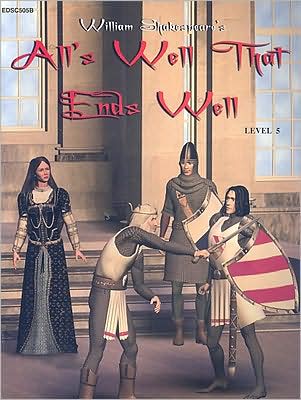
My thoughts on All's Well That Ends Well:
This is my first time with this play. I was a little nervous tackling it all on my own. But it was surprisingly easy to follow. At least surprisingly easy to follow....for being Shakespeare. I think the fact that it is a comedy, and that the jokes still translate (at least relatively so) as funny all these centuries later just shows you how some things never change. Is Helena stupid for loving a man who doesn't love her back? Should the Countess--or the King, or the Widow--have just told her that 'he's just not that into you'? Does Helena's loving Bertram make her weak by today's standards? Shouldn't Bertram have some say in who he marries? After all, it is his life. And couldn't Helena's persistent devotion be seen as proof of how stubborn she is? And if she's stubborn about this, she could very well turn out to be stubborn in everything else. I'm not saying Helena's wrong, not really, every single character--almost every single character anyway--seems to praise Helena as being the essence of a good woman, a great woman, an amazingly wonderful woman. But does the reader have enough proof that this is so? She does save the King's life, and that is something, and while her motives may be double in nature--wanting the king's favor to grant her Bertram--she probably does want to see him live for his own sake. And she does save the king by her own skill, her own smarts, so that says something: she is smart in some things at least. Why does she love Bertram? Why is he 'the one' for her? What makes him so wonderful in Helena's eyes? (Fortunately, Shakespeare was no Stephenie Meyer else all Helena's speeches would talk about his eyes.) Do we as readers need to know? It's always nice if we're shown why a hero and heroine belong together. (I think that is why I heart Much Ado About Nothing so much!!!) If the reader comes to feel what the heroine feels, then we have a connection with both hero and heroine. It makes for a more satisfying story. And that is something that is definitely lacking in All's Well That Ends Well. Helena loves him. End of story. Throw a party.
(mini-)
S
P
O
I
L
E
R
With a title like "All's Well That Ends Well," I feel it's not much of a surprise that things end well. For me to be convinced that things were really well, I'd need to feel that Bertram grew up...at least grew up a little. What has Bertram done to prove to readers that he is good-husband-material? Nothing. At all. Sure, he says he'll be a good and true husband to her. But really, what else can he say with all his boasting of how he came to care for her only after Helena's "death"? He could talk big to his mother and to his king when he thought his wife was dead. Yes, I repented of not loving her. Yes, I'm a fool. But having come to love her though too late, I'm a better man now. Can I get married to this other chick, now? I'm suspicious of Bertram still. Why? Because he's not honest. That and he's stupid. He's stupid for thinking he can get away with telling lie after lie. (I wouldn't have been surprised to hear him say emphatically and imploringly, I did not have sex with that woman.) Bertram's also insulting. Not only does he insult Helena (a few times to her face, but mostly by letter), he's insulting to Diana as well. When Diana is before the king, confessing all, he uses the old sure-but-she's-just-a-whore excuse. Of course, Diana wasn't a whore. She's a maiden still, as the reader well knows. (I personally would have written in a few face slaps. You know how Jack Sparrow is always getting his face slapped by women he's done wrong, well, Bertram needs a comeuppance.) Can Helena change Bertram? Really? Truly? Is a happily ever after likely here?
Have you read All's Well That Ends Well? Did you like it? What do you think are the chances for these two being happy together? Have you seen a good production of this play? I'd love to hear about it if you have! If you've not read the play (or even if you have, I suppose), what is it about Shakespeare that you love or hate most?
© 2013 SukaYuka.com of SukaYuka's Book Reviews
I first read All's Well That Ends Well in the summer of 2009. It was, I believe, one of the first Shakespeare plays I read on my own without being in a class and having structured discussions and analysis. It was an interesting read. And an interesting reread for that matter. For Helena, our heroine, is a puzzlement. Is her undeniable love for Bertram her greatest strength or her biggest weakness? Is being willing to go to such great lengths to be with the one you LOVE especially when considered with the obvious fact that he clearly despises you ever a good thing? a healthy thing? And yet, Helena, is resourceful, bold, clever, determined. She has plenty of supporters, people who love and respect her. But Bertram, the man she's OBSESSED with, clearly does not like her--let alone love her. He does not want to be anywhere near her. He is repulsed by her even. Readers know that Bertram is so not worthy of Helena. He doesn't deserve a woman that good. Bertram is clearly a JERK. He's bad news through and through. (I don't know what Helena sees in him! Seriously. It's one thing for his mother to put up with him. But why would any woman choose to look past Bertram's obvious immaturity and jerkiness?!)
Quotes:
Love all, trust a few,
Do wrong to none: be able for thine enemy
Rather in power than use; and keep thy friend
Under thy own life's key: be check'd for silence,
But never tax'd for speech.
Countess,
'I have sent you a daughter-in-law; she hath recovered the king and undone me. I have wedded her, not bedded her; and sworn to make the "not" eternal. You shall here I am run away: know it before the report come. If there be breadth enough in the world, I will hold a long distance. My duty to you. Your unfortunate son, Bertram
Look on this letter, madam; here's my passport. 'When thou canst get the ring upon my finger, which never shall come off, and show me a child begotten of thy body that I am father to, then call me husband; but in such a "then" I write a "never."
'Tis not the many oaths that makes the truth,
But the plain single vow that is vow'd true.
The web of our life is of a mingled yarn, good and ill together: our virtues would be proud if our faults whipped them not; and our crimes would despair if they were not cherished by our virtues.
Who knows himself a braggart,My first review:
Let him fear this; for it will come to pass
That every braggart shall be found an ass.
What does a girl have to do to catch a husband? Apparently a lot if you're a young maiden named Helena. In All's Well That Ends Well, the readers meet a young woman, Helena, who is madly in love with a young man, Bertram. Bertram is, in my opinion, an ass. He is stupid and lusty, and lusty and stupid. And he hangs out with with a truly annoying guy named Parolles. What is keeping these two apart? I mean, besides the fact that Bertram has no interest in her? Well, Helena, though well-beloved by her guardian, The Countess of Rousillon, is not noble by birth. She's the daughter of a very good (but now dead) doctor. And she can't reasonably hope to marry well--let alone marry her dream guy, Bertram, who is a Count (the son of the (above) Countess). So what's a girl to do, I say?!
Well, if you're Helena, you'll think up a couple of schemes. Scheme #1 being that you will head off to the King of France, who is conveniently dying, cure him with your father's wonderful secret remedies, and earn his devotion, respect, and favor. Once you've been granted the hand of ANY man in the kingdom, then you can go about nonchalantly (or maybe not so much) choosing the man you've loved all along, which in Helena's case is Bertram. Is Bertram extra-stupid, or is he just a typical guy in need of a couple years maturity? I'll leave that up to others to decide. Meanwhile, his response to Helena--and to the King--is to throw a temper tantrum, sulk and pout, and stomp off stealthily (again, not so much) to a whole other country--but not before he says, "I do."
Bertram and his companions are in Florence, in the army, and when they're not off, you know, fighting, he is busy trying to have his way with various women. One woman that he is wooing is named Diana, she is the daughter of a widow woman. This widow-woman just happens to meet up with Helena--Helena has followed her husband secretly to Florence--and oh the plotting that these two do!
Can Helena (with some help, of course) win her husband's heart?
This is my first time with this play. I was a little nervous tackling it all on my own. But it was surprisingly easy to follow. At least surprisingly easy to follow....for being Shakespeare. I think the fact that it is a comedy, and that the jokes still translate (at least relatively so) as funny all these centuries later just shows you how some things never change. Is Helena stupid for loving a man who doesn't love her back? Should the Countess--or the King, or the Widow--have just told her that 'he's just not that into you'? Does Helena's loving Bertram make her weak by today's standards? Shouldn't Bertram have some say in who he marries? After all, it is his life. And couldn't Helena's persistent devotion be seen as proof of how stubborn she is? And if she's stubborn about this, she could very well turn out to be stubborn in everything else. I'm not saying Helena's wrong, not really, every single character--almost every single character anyway--seems to praise Helena as being the essence of a good woman, a great woman, an amazingly wonderful woman. But does the reader have enough proof that this is so? She does save the King's life, and that is something, and while her motives may be double in nature--wanting the king's favor to grant her Bertram--she probably does want to see him live for his own sake. And she does save the king by her own skill, her own smarts, so that says something: she is smart in some things at least. Why does she love Bertram? Why is he 'the one' for her? What makes him so wonderful in Helena's eyes? (Fortunately, Shakespeare was no Stephenie Meyer else all Helena's speeches would talk about his eyes.) Do we as readers need to know? It's always nice if we're shown why a hero and heroine belong together. (I think that is why I heart Much Ado About Nothing so much!!!) If the reader comes to feel what the heroine feels, then we have a connection with both hero and heroine. It makes for a more satisfying story. And that is something that is definitely lacking in All's Well That Ends Well. Helena loves him. End of story. Throw a party.
(mini-)
S
P
O
I
L
E
R
With a title like "All's Well That Ends Well," I feel it's not much of a surprise that things end well. For me to be convinced that things were really well, I'd need to feel that Bertram grew up...at least grew up a little. What has Bertram done to prove to readers that he is good-husband-material? Nothing. At all. Sure, he says he'll be a good and true husband to her. But really, what else can he say with all his boasting of how he came to care for her only after Helena's "death"? He could talk big to his mother and to his king when he thought his wife was dead. Yes, I repented of not loving her. Yes, I'm a fool. But having come to love her though too late, I'm a better man now. Can I get married to this other chick, now? I'm suspicious of Bertram still. Why? Because he's not honest. That and he's stupid. He's stupid for thinking he can get away with telling lie after lie. (I wouldn't have been surprised to hear him say emphatically and imploringly, I did not have sex with that woman.) Bertram's also insulting. Not only does he insult Helena (a few times to her face, but mostly by letter), he's insulting to Diana as well. When Diana is before the king, confessing all, he uses the old sure-but-she's-just-a-whore excuse. Of course, Diana wasn't a whore. She's a maiden still, as the reader well knows. (I personally would have written in a few face slaps. You know how Jack Sparrow is always getting his face slapped by women he's done wrong, well, Bertram needs a comeuppance.) Can Helena change Bertram? Really? Truly? Is a happily ever after likely here?
Have you read All's Well That Ends Well? Did you like it? What do you think are the chances for these two being happy together? Have you seen a good production of this play? I'd love to hear about it if you have! If you've not read the play (or even if you have, I suppose), what is it about Shakespeare that you love or hate most?
© 2013 SukaYuka.com of SukaYuka's Book Reviews
Wednesday, October 23, 2013
Prince of Foxes (1947)
Prince of Foxes. Samuel Shellabarger. 1947. 433 pages. [Source: Library]
I really enjoyed reading Prince of Foxes by Samuel Shellabarger. (Thanks Semicolon for the recommendation!) This historical novel was originally published in 1947. It is set circa 1500 during the Italian Renaissance. It features glimpses of four Borgias: Pope Alexander VI, Cesare, Lucrezia, and Angela--a cousin. The hero is an ambitious but not ruthless young man initially in the service of Cesare Borgia. His name is Andrea Orsini. He's been sent to Ferrara in order to pave the way for Lucrezia's third marriage. (The potential groom--or the potential in-laws--are NOT thrilled or receptive to the idea of this marriage.) But Andrea Orsini is good at what he does. He even compels the assassin who was sent to kill him to switch sides. (His name is Mario Belli). But while he is satisfied to stay in Cesare's service when it suits him, when it gets a little too personal, well, he takes a stand for better or worse.
Prince of Foxes is historical romance at its best. Andrea Orsini is a great little hero. He falls hard for the (married) woman that Cesare Borgia promised him. If or when Cesare conquers that city (kingdom-state), Orsini will receive her as his reward for loyal service. Her name is Lady Camilla. She becomes very friendly with him, even flirty, I suppose. But she is a good wife who never leaves Orsini's company without urging him to do EVERYTHING in his power to protect her husband's life. Because his love for her is so strong, so transformative even, he no longer wants to "win" her as a prize. He knows that this husband's death is practically essential to his ambitions, and more importantly to Cesare's ambitions, and, so the conflict will end with him having to make a big decision.
I really loved this one! It is so well written too!
© 2013 SukaYuka.com of SukaYuka's Book Reviews
I really enjoyed reading Prince of Foxes by Samuel Shellabarger. (Thanks Semicolon for the recommendation!) This historical novel was originally published in 1947. It is set circa 1500 during the Italian Renaissance. It features glimpses of four Borgias: Pope Alexander VI, Cesare, Lucrezia, and Angela--a cousin. The hero is an ambitious but not ruthless young man initially in the service of Cesare Borgia. His name is Andrea Orsini. He's been sent to Ferrara in order to pave the way for Lucrezia's third marriage. (The potential groom--or the potential in-laws--are NOT thrilled or receptive to the idea of this marriage.) But Andrea Orsini is good at what he does. He even compels the assassin who was sent to kill him to switch sides. (His name is Mario Belli). But while he is satisfied to stay in Cesare's service when it suits him, when it gets a little too personal, well, he takes a stand for better or worse.
Prince of Foxes is historical romance at its best. Andrea Orsini is a great little hero. He falls hard for the (married) woman that Cesare Borgia promised him. If or when Cesare conquers that city (kingdom-state), Orsini will receive her as his reward for loyal service. Her name is Lady Camilla. She becomes very friendly with him, even flirty, I suppose. But she is a good wife who never leaves Orsini's company without urging him to do EVERYTHING in his power to protect her husband's life. Because his love for her is so strong, so transformative even, he no longer wants to "win" her as a prize. He knows that this husband's death is practically essential to his ambitions, and more importantly to Cesare's ambitions, and, so the conflict will end with him having to make a big decision.
I really loved this one! It is so well written too!
Orsini did not conceal the twinkle in his eyes. "No doubt. There are few who can match the divine genius of my lord Cesare."
"Of course," Lorenzo agreed. He would have liked to add: "Fratricide! Assassin! Bandit!" but he said merely, "Divine genius is well put."
"And let me tell you," smiled Orsini, "that he is not the monster that you people of Venice make him. Is not gossip the mother of monsters, Maestro? He has great ends and lets nothing distract him. Perhaps merely he's too consistent. Hard, if necessary; selfish, yes (and who isn't?); but able, of great virtue and splendor. A valiant prince...I'd wager you'd love him, Messer Lorenzo, unless you stood in his ways."
"Probably," said Lorenzo, doubting it. "I rejoice to learn about him."
"Look you" -- Orsini leaned forward -- "if he were a painter, he would use rich colors. Life is his canvas." (7)
Decidedly, thought Andrea, the illustrious Duke Valentino played in luck. He did not even have to pursue his victims: they came to him. But what could Orsini do about it? Indeed, what did he wish to do? (85)
© 2013 SukaYuka.com of SukaYuka's Book Reviews

Saturday, October 19, 2013
Strange Case of Dr. Jekyl and Mr. Hyde (1886)
Dr. Jekyl and Mr. Hyde. Robert Louis Stevenson. 1886. 144 pages. [Source: Bought]
I first read this classic in 2007. (I read it for my first R.I.P. challenge.) I enjoyed revisiting it. I remember being surprised that I liked it. I mentioned how it was impossible to read without this Arthur song popping up in my mind!
The story is simple. Dr. Jekyll's lawyer, Mr. Utterson, begins to worry about his client because he names Mr. Hyde in his will. Mr. Hyde, he has just learned, is a strange man that almost everyone has a bad vibe about. He is described as "pure evil" by some. Utterson worries that Hyde must be blackmailing Jekyll into making those provisions in his will. The more worried and anxious he becomes, the more involved he gets in trying to solve the mystery between the two men. He especially becomes worried when Mr. Hyde commits a murder. Will Dr. Jekyll be next? Is there a way to save his friend and put Mr. Hyde away for good?
Quotes:
I first read this classic in 2007. (I read it for my first R.I.P. challenge.) I enjoyed revisiting it. I remember being surprised that I liked it. I mentioned how it was impossible to read without this Arthur song popping up in my mind!
The story is simple. Dr. Jekyll's lawyer, Mr. Utterson, begins to worry about his client because he names Mr. Hyde in his will. Mr. Hyde, he has just learned, is a strange man that almost everyone has a bad vibe about. He is described as "pure evil" by some. Utterson worries that Hyde must be blackmailing Jekyll into making those provisions in his will. The more worried and anxious he becomes, the more involved he gets in trying to solve the mystery between the two men. He especially becomes worried when Mr. Hyde commits a murder. Will Dr. Jekyll be next? Is there a way to save his friend and put Mr. Hyde away for good?
Quotes:
You start a question, and it's like starting a stone. You sit quietly on the top of a hill; and away the stone goes, starting others; and presently some bland old bird (the last you would have thought of) is knocked on the head in his own back garden and the family have to change their name.
"Hm," said Mr. Utterson. "What sort of a man is he to see?" "He is not easy to describe. There is something wrong with his appearance; something displeasing, something down-right detestable. I never saw a man I so disliked, and yet I scarce know why. He must be deformed somewhere; he gives a strong feeling of deformity, although I couldn't specify the point. He's an extraordinary looking man, and yet I really can name nothing out of the way. No, sir; I can make no hand of it; I can't describe him. And it's not want of memory; for I declare I can see him this moment." Mr. Utterson again walked some way in silence and obviously under a weight of consideration. "You are sure he used a key?" he inquired at last. "My dear sir..." began Enfield, surprised out of himself. "Yes, I know," said Utterson; "I know it must seem strange. The fact is, if I do not ask you the name of the other party, it is because I know it already. You see, Richard, your tale has gone home.
It is one thing to mortify curiosity, another to conquer it;© 2013 SukaYuka.com of SukaYuka's Book Reviews
Friday, October 11, 2013
Twelfth Night
Twelfth Night. William Shakespeare. 1601-02. 272 pages. [Source: Bought]
If music be the food of love, play on;
I've always loved that line: "If music be the food of love, play on;" but I have to admit I love it even more after falling in love with this little music video.
This is one of the Shakespeare plays with cross-dressing. I love this Dorothy Sayers' quote in Whose Body: "I'm sure if I'd been a Shakespeare hero, the very minute I saw a slim-legged young page-boy I'd have said: "Odsbodikins! There's that girl again!"
Twelfth Night is one of the Shakespeare comedies that I am quite familiar with. I think this was my fourth time to read it. I don't love it because it's romantic or oh-so-magical. Of the couples that end up together, I'm not sure any of them are truly, deeply in love with each other. I don't doubt for one second that Viola loves the Duke (Orsino). But as for the Duke's oh-so-easy transference of love from Olivia to Viola, whom he has only known as Cesario, I'm not convinced. Same goes with Olivia's transference of her affections from Viola (dressed as Cesario) to Sebastian. Sebastian, well, he gets an instant wife, I'm not sure he's complaining though. The happy endings are rushed and superficial perhaps.
I think the reason I keep reading Twelfth Night is that it's enjoyable, entertaining, fun. It's also one of the few Shakespeare plays that I've seen performed. It's a merry little play with clever little exchanges between characters. I just like it.
Favorite quotes:
If music be the food of love, play on;
I've always loved that line: "If music be the food of love, play on;" but I have to admit I love it even more after falling in love with this little music video.
This is one of the Shakespeare plays with cross-dressing. I love this Dorothy Sayers' quote in Whose Body: "I'm sure if I'd been a Shakespeare hero, the very minute I saw a slim-legged young page-boy I'd have said: "Odsbodikins! There's that girl again!"
Twelfth Night is one of the Shakespeare comedies that I am quite familiar with. I think this was my fourth time to read it. I don't love it because it's romantic or oh-so-magical. Of the couples that end up together, I'm not sure any of them are truly, deeply in love with each other. I don't doubt for one second that Viola loves the Duke (Orsino). But as for the Duke's oh-so-easy transference of love from Olivia to Viola, whom he has only known as Cesario, I'm not convinced. Same goes with Olivia's transference of her affections from Viola (dressed as Cesario) to Sebastian. Sebastian, well, he gets an instant wife, I'm not sure he's complaining though. The happy endings are rushed and superficial perhaps.
I think the reason I keep reading Twelfth Night is that it's enjoyable, entertaining, fun. It's also one of the few Shakespeare plays that I've seen performed. It's a merry little play with clever little exchanges between characters. I just like it.
Favorite quotes:
If music be the food of love, play on;
O spirit of love, how quick and fresh art thou!
If you be not mad, be gone; if you have reason, be brief:
It shall be inventoried; and every particle and utensil labeled to my will: as item, two lips indifferent red; item, two grey eyes with lids to them; item, one neck, one chin, and so forth.
Some are born great, some achieve greatness, and some have greatness thrust upon them.
Them that dally nicely with words may quickly make them wanton.
Words are very rascals.
Words are grown so false I am loath to prove reason with them.
I would you were as I would have you be!
Love sought is good, but given unsought is better.Example of banter:
Duke: I know thee well. How dost thou, my good fellow?© 2013 SukaYuka.com of SukaYuka's Book Reviews
Clown: Truly, sir, the better for my foes and the worse for my friends.
Duke: Just the contrary; the better for thy friends.
Clown: No, sir, the worse.
Duke: How can that be?
Clown: Marry, sir, they praise me and make an ass of me; now my foes tell me plainly I am an ass: so that by my foes, sir, I profit in the knowledge of myself, and by my friends I am abused; so that, conclusions to be as kisses, if your four negatives make your two affirmatives, why then, the worse for my friends and the better for my foes.
Friday, September 27, 2013
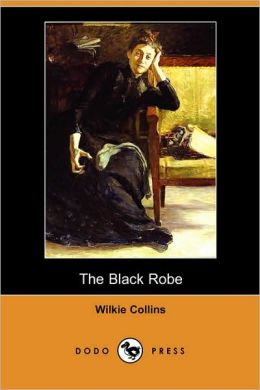
The Black Robe (1881)
The Black Robe. Wilkie Collins. 1881. 320 pages. [Source: Bought]
The Black Robe is slightly similar to Anthony Trollope's He Knew He Was Right (1869) and Kept in the Dark (1882). All three books deal with the hazards and drama of marriage.
Lewis Romayne travels to France with his friend Major Hynd. While in France, Lewis goes gaming. At a card game, he accuses a man of cheating. The man insists on a duel. For whatever reason, the man is unable but his (grown) son insists on taking his place. This son is rumored to be quite good at shooting. Lewis, for better or worse, fires a "lucky" shot. His opponent dies. Now there is unbeknownst to all, a younger brother on the scene who witnesses his older brothers death. He screams out. These screams haunt Lewis. A good percentage of the novel focuses on how haunted and disturbed Lewis is psychologically. His friends fear the worse, they fear he will become insane. One of his friends thinks that marriage is the answer. If Lewis would only find a wife, surely, he will become suddenly sane. Right?! It makes perfect sense. If Lewis is unstable and unbalanced, of course, he needs a wife. And his friends have just the woman in mind. Fortunately, she fell in love with him at first sight. She's drawn to him precisely because he looks so fragile and vulnerable. Not everyone thinks marriage is the answer, however.
Father Benwell is a Jesuit priest with an agenda. (Well, why wouldn't he have an agenda?!) Romayne has inherited property that centuries before (think Henry VIII) had belonged to the Catholic church. Benwell is determined to have that property (Vange Abbey) back. He has a main plan and several back-up plans just in case his original schemes fail. One of his plans involve another Jesuit priest, Arthur Penrose, Penrose is one of the nicest characters in the book. Penrose has been instructed to convert Lewis, to do whatever it takes to turn him Catholic. Penrose's approach doesn't suit Benwell. But his gentleness and sincerity make a lifelong friend out of Lewis.
Lewis marries Stella Eyrecourt. Benwell needs a good plan B. He decides to see if he can dig up a scandal concerning the wife. If he can separate the couple, surely, he will be weakened and even more vulnerable. He would be eager to turn from his wife to the church. He might love the church so much he voluntarily gives Vange Abbey back! But can Benwell find anything scandalous in Stella's past?!
My favorite character was definitely Bernard Winterfield. The last half of the novel is told through his diary entries.
If you have enjoyed Wilkie Collins in the past, chances are you'll enjoy this novel too. While I didn't love it as much as Armadale or Woman in White, I did find it compelling! There are plenty of secrets!
Quotes:
The Black Robe is slightly similar to Anthony Trollope's He Knew He Was Right (1869) and Kept in the Dark (1882). All three books deal with the hazards and drama of marriage.
Lewis Romayne travels to France with his friend Major Hynd. While in France, Lewis goes gaming. At a card game, he accuses a man of cheating. The man insists on a duel. For whatever reason, the man is unable but his (grown) son insists on taking his place. This son is rumored to be quite good at shooting. Lewis, for better or worse, fires a "lucky" shot. His opponent dies. Now there is unbeknownst to all, a younger brother on the scene who witnesses his older brothers death. He screams out. These screams haunt Lewis. A good percentage of the novel focuses on how haunted and disturbed Lewis is psychologically. His friends fear the worse, they fear he will become insane. One of his friends thinks that marriage is the answer. If Lewis would only find a wife, surely, he will become suddenly sane. Right?! It makes perfect sense. If Lewis is unstable and unbalanced, of course, he needs a wife. And his friends have just the woman in mind. Fortunately, she fell in love with him at first sight. She's drawn to him precisely because he looks so fragile and vulnerable. Not everyone thinks marriage is the answer, however.
Father Benwell is a Jesuit priest with an agenda. (Well, why wouldn't he have an agenda?!) Romayne has inherited property that centuries before (think Henry VIII) had belonged to the Catholic church. Benwell is determined to have that property (Vange Abbey) back. He has a main plan and several back-up plans just in case his original schemes fail. One of his plans involve another Jesuit priest, Arthur Penrose, Penrose is one of the nicest characters in the book. Penrose has been instructed to convert Lewis, to do whatever it takes to turn him Catholic. Penrose's approach doesn't suit Benwell. But his gentleness and sincerity make a lifelong friend out of Lewis.
Lewis marries Stella Eyrecourt. Benwell needs a good plan B. He decides to see if he can dig up a scandal concerning the wife. If he can separate the couple, surely, he will be weakened and even more vulnerable. He would be eager to turn from his wife to the church. He might love the church so much he voluntarily gives Vange Abbey back! But can Benwell find anything scandalous in Stella's past?!
My favorite character was definitely Bernard Winterfield. The last half of the novel is told through his diary entries.
If you have enjoyed Wilkie Collins in the past, chances are you'll enjoy this novel too. While I didn't love it as much as Armadale or Woman in White, I did find it compelling! There are plenty of secrets!
Quotes:
Art has its trials as well as its triumphs. It is powerless to assert itself against the sordid interests of everyday life. The greatest book ever written, the finest picture ever painted, appeals in vain to minds preoccupied by selfish and secret cares.
Whether we only express our opinions of pictures or books in the course of conversation or whether we assert them at full length, with all the authority of print, we are really speaking in either case, of what personally pleases or repels us.© 2013 SukaYuka.com of SukaYuka's Book Reviews

Tuesday, September 24, 2013
Iola Leroy (1892)
Iola Leroy. Frances Ellen Watkins Harper. 1892. 256 pages. [Source: Bought]
I've been meaning to read Iola Leroy for several years now. Iola Leroy is one of the first novels written by an African American woman. The novel isn't arranged chronologically. It starts during the Civil War. Readers meet a handful of slaves who are deciding whether or not to leave their plantations and join the Union army or to stay on their plantations and continue to serve. A chapter or two keeps us with the army, following a few soldiers. The character of Iola Leroy is then introduced. She's a young woman who could easily pass as a white woman--if she wanted; one doctor with the army, a Dr. Gresham falls madly in love with Iola Leroy. He knows "the truth" about her ethnicity, her background, and it doesn't make the slightest bit of difference to him. She is THE ONE for him; he knows it. But can he convince her that his love is the real thing?
After briefly meeting Iola Leroy and Dr. Gresham and a handful of others, the novel then takes us back several decades in time. Readers meet Iola's mother, Marie (a slave), and her father, Eugene (a slave-owner). This portion of the novel feels forced, scripted, a bit unnatural. It begins with a conversation between Eugene Leroy and Alfred Lorraine. He is telling Lorraine of his intentions to free Marie, marry her, and bring her back to the plantation as his wife, his hopes to raise his family in the south.
Most of the novel focuses on life AFTER the war is over, AFTER the slaves are freed, during the messy period of Reconstruction. Iola Leroy and her uncle (whom she just happens to meet) are searching desperately for their families. There are plenty of happy reunion moments in between the social commentary. There's also a romance squeezed in for Iola Leroy. (It is NOT Dr. Gresham.)
The narrative falls into two types: dialect and lecture. I found the dialect to be more interesting and more enjoyable. The narrative style in the 'lecture' sections reminded me of A Pilgrim's Progress.
© 2013 SukaYuka.com of SukaYuka's Book Reviews

I've been meaning to read Iola Leroy for several years now. Iola Leroy is one of the first novels written by an African American woman. The novel isn't arranged chronologically. It starts during the Civil War. Readers meet a handful of slaves who are deciding whether or not to leave their plantations and join the Union army or to stay on their plantations and continue to serve. A chapter or two keeps us with the army, following a few soldiers. The character of Iola Leroy is then introduced. She's a young woman who could easily pass as a white woman--if she wanted; one doctor with the army, a Dr. Gresham falls madly in love with Iola Leroy. He knows "the truth" about her ethnicity, her background, and it doesn't make the slightest bit of difference to him. She is THE ONE for him; he knows it. But can he convince her that his love is the real thing?
After briefly meeting Iola Leroy and Dr. Gresham and a handful of others, the novel then takes us back several decades in time. Readers meet Iola's mother, Marie (a slave), and her father, Eugene (a slave-owner). This portion of the novel feels forced, scripted, a bit unnatural. It begins with a conversation between Eugene Leroy and Alfred Lorraine. He is telling Lorraine of his intentions to free Marie, marry her, and bring her back to the plantation as his wife, his hopes to raise his family in the south.
"You never saw Marie?"Eugene does exactly as he plans. Marie is freed; the two are married; they have three children. But his plans are set aside after his death. Alfred Lorraine, his closest white relative, insists that Marie is a slave, and that her three children are slaves too. He gets his way. Iola is tricked into coming home, but her brother is safe at school in the North. (The youngest child dies.)
"No; and I don't want to."
"She is very beautiful. In the North no one would suspect that she has one drop of negro blood in her veins, but here, where I am known, to marry her is to lose caste. I could live with her, and not incur much if any social opprobrium. Society would wink at the transgression, even if after she had become the mother of my children I should cast her off and send her and them to the auction block."
"Men," replied Lorraine, "would merely shrug their shoulders; women would say you had been sowing your wild oats. Your money, like charity, would cover a multitude of faults."
"But if I make her my lawful wife and recognize her children as my legitimate heirs, I subject myself to social ostracism and a senseless persecution. We Americans boast of freedom, and yet here is a woman whom I love as I never loved any other human being, but both law and public opinion debar me from following the inclination of my heart. She is beautiful, faithful, and pure, and yet all that society will tolerate is what I would scorn to do."
"But has not society the right to guard the purity of its blood by the rigid exclusion of an alien race?"
"Excluding it! How?" asked Eugene.
"By debarring it from social intercourse."
"Perhaps it has," continued Eugene, "but should not society have a greater ban for those who, by consorting with an alien race, rob their offspring of a right to their names and to an inheritance in their property, and who fix their social status among an enslaved and outcast race? Don't eye me so curiously; I am not losing my senses."
"I think you have done that already," said Lorraine. "Don't you know that if she is as fair as a lily, beautiful as a houri, and chaste as ice, that still she is a negro?"
"Oh, come now; she isn't much of a negro."
"It doesn't matter, however. One drop of negro blood in her veins curses all the rest."
"I know it," said Eugene, sadly, "but I have weighed the consequences, and am prepared to take them."
"Well, Eugene, your course is so singular! I do wish that you would tell me why you take this unprecedented step?"
Eugene laid aside his cigar, looked thoughtfully at Lorraine, and said, "Well, Alfred, as we are kinsmen and life-long friends, I will not resent your asking my reason for doing that which seems to you the climax of absurdity, and if you will have the patience to listen I will tell you."
"Proceed, I am all attention."
"My father died," said Eugene, "as you know, when I was too young to know his loss or feel his care and, being an only child, I was petted and spoiled. I grew up to be wayward, self-indulgent, proud, and imperious. I went from home and made many friends both at college and in foreign lands. I was well supplied with money and, never having been forced to earn it, was ignorant of its value and careless of its use. My lavish expenditures and liberal benefactions attracted to me a number of parasites, and men older than myself led me into the paths of vice, and taught me how to gather the flowers of sin which blossom around the borders of hell. In a word, I left my home unwarned and unarmed against the seductions of vice. I returned an initiated devotee to debasing pleasures. Years of my life were passed in foreign lands; years in which my soul slumbered and seemed pervaded with a moral paralysis; years, the memory of which fills my soul with sorrow and shame. I went to the capitals of the old world to see life, but in seeing life I became acquainted with death, the death of true manliness and self-respect. You look astonished; but I tell you, Alf, there is many a poor clod-hopper, on whom are the dust and grime of unremitting toil, who feels more self-respect and true manliness than many of us with our family prestige, social position, and proud ancestral halls. After I had lived abroad for years, I returned a broken-down young man, prematurely old, my constitution a perfect wreck. A life of folly and dissipation was telling fearfully upon me. My friends shrank from me in dismay. I was sick nigh unto death, and had it not been for Marie's care I am certain that I should have died. She followed me down to the borders of the grave, and won me back to life and health. I was slow in recovering and, during the time, I had ample space for reflection, and the past unrolled itself before me. I resolved, over the wreck and ruin of my past life, to build a better and brighter future. Marie had a voice of remarkable sweetness, although it lacked culture. Often when I was nervous and restless I would have her sing some of those weird and plaintive melodies which she had learned from the plantation negroes. Sometimes I encouraged her to talk, and I was surprised at the native vigor of her intellect. By degrees I became acquainted with her history. She was all alone in the world. She had no recollection of her father, but remembered being torn from her mother while clinging to her dress. The trader who bought her mother did not wish to buy her. She remembered having a brother, with whom she used to play, but she had been separated from him also, and since then had lost all trace of them. After she was sold from her mother she became the property of an excellent old lady, who seems to have been very careful to imbue her mind with good principles; a woman who loved purity, not only for her own daughters, but also for the defenseless girls in her home. I believe it was the lady's intention to have freed Marie at her death, but she died suddenly, and, the estate being involved, she was sold with it and fell into the hands of my agent. I became deeply interested in her when I heard her story, and began to pity her."
"And I suppose love sprang from pity."
"I not only pitied her, but I learned to respect her. I had met with beautiful women in the halls of wealth and fashion, both at home and abroad, but there was something in her different from all my experience of womanhood."
"I should think so," said Lorraine, with a sneer; "but I should like to know what it was."
"It was something such as I have seen in old cathedrals, lighting up the beauty of a saintly face. A light which the poet tells was never seen on land or sea. I thought of this beautiful and defenseless girl adrift in the power of a reckless man, who, with all the advantages of wealth and education, had trailed his manhood in the dust, and she, with simple, childlike faith in the Unseen, seemed to be so good and pure that she commanded my respect and won my heart. In her presence every base and unholy passion died, subdued by the supremacy of her virtue."
"Why, Eugene, what has come over you? Talking of the virtue of these quadroon girls! You have lived so long in the North and abroad, that you seem to have lost the cue of our Southern life. Don't you know that these beautiful girls have been the curse of our homes? You have no idea of the hearts which are wrung by their presence."
"But, Alfred, suppose it is so. Are they to blame for it? What can any woman do when she is placed in the hands of an irresponsible master; when she knows that resistance is vain? Yes, Alfred, I agree with you, these women are the bane of our Southern civilization; but they are the victims and we are the criminals."
"I think from the airs that some of them put on when they get a chance, that they are very willing victims."
"So much the worse for our institution. If it is cruel to debase a hapless victim, it is an increase of cruelty to make her contented with her degradation. Let me tell you, Alf, you cannot wrong or degrade a woman without wronging or degrading yourself."
"What is the matter with you, Eugene? Are you thinking of taking priest's orders?"
"No, Alf," said Eugene, rising and rapidly pacing the floor, "you may defend the system as much as you please, but you cannot deny that the circumstances it creates, and the temptations it affords, are sapping our strength and undermining our character."
"That may be true," said Lorraine, somewhat irritably, "but you had better be careful how you air your Northern notions in public."
"Why so?"
"Because public opinion is too sensitive to tolerate any such discussions."
"And is not that a proof that we are at fault with respect to our institutions?"
"I don't know. I only know we are living in the midst of a magazine of powder, and it is not safe to enter it with a lighted candle."
Most of the novel focuses on life AFTER the war is over, AFTER the slaves are freed, during the messy period of Reconstruction. Iola Leroy and her uncle (whom she just happens to meet) are searching desperately for their families. There are plenty of happy reunion moments in between the social commentary. There's also a romance squeezed in for Iola Leroy. (It is NOT Dr. Gresham.)
The narrative falls into two types: dialect and lecture. I found the dialect to be more interesting and more enjoyable. The narrative style in the 'lecture' sections reminded me of A Pilgrim's Progress.
© 2013 SukaYuka.com of SukaYuka's Book Reviews
Saturday, September 21, 2013
Three for R.I.P
A Houseboat on the Styx. John Kendrick Bangs. 1895. 194 pages. [Source: Bought]
Earlier this year, I read The Autobiography of Methuselah by John Kendrick Bangs. I enjoyed it very much. I knew he had a series of books set in the underworld that would be PERFECT for R.I.P reading.
Thanks to an amazing college professor (who was a wee bit obsessed with Samuel Johnson and James Boswell) AND Horrible Histories, I LOVED, LOVED, LOVED this collection of short stories. The first story starring Charon sets up the rest. This ferryman is asked to run or manage a houseboat, the other shades use this houseboat as a club. The 'associated shades' are famous historical and/or literary figures: Dr. Johnson, James Boswell, William Shakespeare, Sir Walter Raleigh, Demosthenes, Blackstone, Confucius, Sir Francis Bacon, Nero, Cassius, Diogenes, Mozart, Napoleon, Homer, Ptolemy, Baron Munchausen, Noah, Adam, etc. The book is humorous, full of lighthearted gossip and teasing among ghosts. The book has a surprising cliffhanger ending.
Here is a bit from chapter two. It will give you a taste of what to expect. I can't promise that you'll find it as giddy-making as I did. But I just LOVED, LOVED, LOVED the banter and spirit of it.
The Pursuit of the Houseboat Being Some Further Account of the Divers Doings of the Associated Shades. John Kendrick Bangs. 1897. 108 pages. [Source: Bought]
In the last chapter of the first book, the women sneak aboard an unoccupied houseboat. They'd been wanting to see what this men's club was all about. The idea of having a ladies day had come up and been discussed, but not quite settled yet. While on board, the houseboat is commandeered by pirates, by Captain Kidd to be exact. Part of the story is told by the women, but most of the story is still told by the men. Introduced in this one is Sherlock Holmes. I still enjoyed this one! I'm not sure I loved it quite as much as the first book. But it had some good parts!!!
If you enjoy writers poking fun at Holmes, then this one will delight!
The Enchanted Typewriter. John Kendrick Bangs. 1899. 90 pages. [Source: Bought]
The Enchanted Typewriter is a bit different from the two previous books: it is set in the mortal world. It has a wonderfully creepy beginning.
Here's another quote:
© 2013 SukaYuka.com of SukaYuka's Book Reviews
Earlier this year, I read The Autobiography of Methuselah by John Kendrick Bangs. I enjoyed it very much. I knew he had a series of books set in the underworld that would be PERFECT for R.I.P reading.
Thanks to an amazing college professor (who was a wee bit obsessed with Samuel Johnson and James Boswell) AND Horrible Histories, I LOVED, LOVED, LOVED this collection of short stories. The first story starring Charon sets up the rest. This ferryman is asked to run or manage a houseboat, the other shades use this houseboat as a club. The 'associated shades' are famous historical and/or literary figures: Dr. Johnson, James Boswell, William Shakespeare, Sir Walter Raleigh, Demosthenes, Blackstone, Confucius, Sir Francis Bacon, Nero, Cassius, Diogenes, Mozart, Napoleon, Homer, Ptolemy, Baron Munchausen, Noah, Adam, etc. The book is humorous, full of lighthearted gossip and teasing among ghosts. The book has a surprising cliffhanger ending.
Here is a bit from chapter two. It will give you a taste of what to expect. I can't promise that you'll find it as giddy-making as I did. But I just LOVED, LOVED, LOVED the banter and spirit of it.
How are you, Charon?" said Shakespeare, as the Janitor assisted him on board. "Any one here to-night?"Other quotes:
"Yes, sir," said Charon. "Lord Bacon is up in the library, and Doctor Johnson is down in the billiard-room, playing pool with Nero."
"Ha-ha!" laughed Shakespeare. "Pool, eh? Does Nero play pool?"
"Not as well as he does the fiddle, sir," said the Janitor, with a twinkle in his eye.
Shakespeare entered the house and tossed up an obolus. "Heads-- Bacon; tails--pool with Nero and Johnson," he said.
The coin came down with heads up, and Shakespeare went into the pool- room, just to show the Fates that he didn't care a tuppence for their verdict as registered through the obolus. It was a peculiar custom of Shakespeare's to toss up a coin to decide questions of little consequence, and then do the thing the coin decided he should not do. It showed, in Shakespeare's estimation, his entire independence of those dull persons who supposed that in them was centred the destiny of all mankind. The Fates, however, only smiled at these little acts of rebellion, and it was common gossip in Erebus that one of the trio had told the Furies that they had observed Shakespeare's tendency to kick over the traces, and always acted accordingly. They never let the coin fall so as to decide a question the way they wanted it, so that unwittingly the great dramatist did their will after all. It was a part of their plan that upon this occasion Shakespeare should play pool with Doctor Johnson and the Emperor Nero, and hence it was that the coin bade him repair to the library and chat with Lord Bacon.
"Hullo, William," said the Doctor, pocketing three balls on the break. "How's our little Swanlet of Avon this afternoon?"
"Worn out," Shakespeare replied. "I've been hard at work on a play this morning, and I'm tired."
"All work and no play makes Jack a dull boy," said Nero, grinning broadly.
"You are a bright spirit," said Shakespeare, with a sigh. "I wish I had thought to work you up into a tragedy."
"I've often wondered why you didn't," said Doctor Johnson. "He'd have made a superb tragedy, Nero would. I don't believe there was any kind of a crime he left uncommitted. Was there, Emperor?"
"Yes. I never wrote an English dictionary," returned the Emperor, dryly. "I've murdered everything but English, though."
"I could have made a fine tragedy out of you," said Shakespeare. "Just think what a dreadful climax for a tragedy it would be, Johnson, to have Nero, as the curtain fell, playing a violin solo."
"Pretty good," returned the Doctor. "But what's the use of killing off your audience that way? It's better business to let 'em live, I say. Suppose Nero gave a London audience that little musicale he provided at Queen Elizabeth's Wednesday night. How many purely mortal beings, do you think, would have come out alive?"
"Not one," said Shakespeare. "I was mighty glad that night that we were an immortal band. If it had been possible to kill us we'd have died then and there."
"That's all right," said Nero, with a significant shake of his head. "As my friend Bacon makes Ingo say, 'Beware, my lord, of jealousy.' You never could play a garden hose, much less a fiddle."
"What do you mean my attributing those words to Bacon?" demanded Shakespeare, getting red in the face.
"Oh, come now, William," remonstrated Nero. "It's all right to pull the wool over the eyes of the mortals. That's what they're there for; but as for us--we're all in the secret here. What's the use of putting on nonsense with us?"
"We'll see in a minute what the use is," retorted the Avonian. "We'll have Bacon down here." Here he touched an electric button, and Charon came in answer.
"Charon, bring Doctor Johnson the usual glass of ale. Get some ice for the Emperor, and ask Lord Bacon to step down here a minute."
"I don't want any ice," said Nero.
"Not now," retorted Shakespeare, "but you will in a few minutes. When we have finished with you, you'll want an iceberg. I'm getting tired of this idiotic talk about not having written my own works. There's one thing about Nero's music that I've never said, because I haven't wanted to hurt his feelings, but since he has chosen to cast aspersions upon my honesty I haven't any hesitation in saying it now. I believe it was one of his fiddlings that sent Nature into convulsions and caused the destruction of Pompeii--so there! Put that on your music rack and fiddle it, my little Emperor."
Nero's face grew purple with anger, and if Shakespeare had been anything but a shade he would have fared ill, for the enraged Roman, poising his cue on high as though it were a lance, hurled it at the impertinent dramatist with all his strength, and with such accuracy of aim withal that it pierced the spot beneath which in life the heart of Shakespeare used to beat.
"Good shot," said Doctor Johnson, nonchalantly. "If you had been a mortal, William, it would have been the end of you."
"You can't kill me," said Shakespeare, shrugging his shoulders. "I know seven dozen actors in the United States who are trying to do it, but they can't. I wish they'd try to kill a critic once in a while instead of me, though," he added. "I went over to Boston one night last week, and, unknown to anybody, I waylaid a fellow who was to play Hamlet that night. I drugged him, and went to the theatre and played the part myself. It was the coldest house you ever saw in your life. When the audience did applaud, it sounded like an ice-man chopping up ice with a small pick. Several times I looked up at the galleries to see if there were not icicles growing on them, it was so cold. Well, I did the best could with the part, and next morning watched curiously for the criticisms."
"Favorable?" asked the Doctor.
"They all dismissed me with a line," said the dramatist. "Said my conception of the part was not Shakespearian. And that's criticism!"
"No," said the shade of Emerson, which had strolled in while Shakespeare was talking, "that isn't criticism; that's Boston."
"Who discovered Boston, anyhow?" asked Doctor Johnson. "It wasn't Columbus, was it?"
"Oh no," said Emerson. "Old Governor Winthrop is to blame for that. When he settled at Charlestown he saw the old Indian town of Shawmut across the Charles."
"And Shawmut was the Boston microbe, was it?" asked Johnson.
"Yes," said Emerson.
"Spelt with a P, I suppose?" said Shakespeare. "P-S-H-A-W, Pshaw, M- U-T, mut, Pshawmut, so called because the inhabitants are always muttering pshaw. Eh?"
"Pretty good," said Johnson. "I wish I'd said that."
"Well, tell Boswell," said Shakespeare. "He'll make you say it, and it'll be all the same in a hundred years."
The first guest to arrive was Confucius, and after him came Diogenes, the latter in great excitement over having discovered a comparatively honest man, whose name, however, he had not been able to ascertain, though he was under the impression that it was something like Burpin, or Turpin, he said.
"You ought to be up-stairs in the lecture-room, Boswell," said Shakespeare, as the great biographer took his seat behind his friend the Doctor. "Doesn't the Gossip want a report of the debate?"
"It does," said Boswell; "but the Gossip endeavors always to get the most interesting items of the day, and Doctor Johnson has informed me that he expects to be unusually witty this evening, so I have come here."
"Excuse me for saying it, Boswell," said the Doctor, getting red in the face over this unexpected confession, "but, really, you talk too much."
"That's good," said Cicero. "Stick that down, Boz, and print it. It's the best thing Johnson has said this week."
Boswell smiled weakly, and said: "But, Doctor, you did say that, you know. I can prove it, too, for you told me some of the things you were going to say. Don't you remember, you were going to lead Shakespeare up to making the remark that he thought the English language was the greatest language in creation, whereupon you were going to ask him why he didn't learn it?"
"Get out of here, you idiot!" roared the Doctor. "You're enough to give a man apoplexy."
"Hullo! here's Hamlet."
As the Doctor spoke, in very truth the melancholy Dane appeared in the doorway, more melancholy of aspect than ever.
"What's the matter with you?" asked Cicero, addressing the new-comer. "Haven't you got that poison out of your system yet?"
"Not entirely," said Hamlet, with a sigh; "but it isn't that that's bothering me. It's Fate."
"We'll get out an injunction against Fate if you like," said Blackstone. "Is it persecution, or have you deserved it?"
"I think it's persecution," said Hamlet. "I never wronged Fate in my life, and why she should pursue me like a demon through all eternity is a thing I can't understand."
"Maybe Ophelia is back of it," suggested Doctor Johnson. "These women have a great deal of sympathy for each other, and, candidly, I think you behaved pretty rudely to Ophelia. It's a poor way to show your love for a young woman, running a sword through her father every night for pay, and driving the girl to suicide with equal frequency, just to show theatre-goers what a smart little Dane you can be if you try."
"'Tisn't me does all that," returned Hamlet. "I only did it once, and even then it wasn't as bad as Shakespeare made it out to be."
"I put it down just as it was," said Shakespeare, hotly, "and you can't dispute it."
"Yes, he can," said Yorick. "You made him tell Horatio he knew me well, and he never met me in his life."
"I never told Horatio anything of the sort," said Hamlet. "I never entered the graveyard even, and I can prove an alibi."
"And, what's more, he couldn't have made the remark the way Shakespeare has it, anyhow," said Yorick, "and for a very good reason. I wasn't buried in that graveyard, and Hamlet and I can prove an alibi for the skull, too."
"It was a good play, just the same," said Cicero.
"Very," put in Doctor Johnson. "It cured me of insomnia."
In all the clubs I have known the house committees have invariably taken the ground that the complaint-book was established to guard them against the annoyance of hearing complaints.
An Authors' Club, where none but authors are admitted, is a good thing. The members learn there that there are other authors than themselves. Poets' Clubs are a good thing; they bring poets into contact with each other, and they learn what a bore it is to have to listen to a poet reading his own poem.
The Pursuit of the Houseboat Being Some Further Account of the Divers Doings of the Associated Shades. John Kendrick Bangs. 1897. 108 pages. [Source: Bought]
In the last chapter of the first book, the women sneak aboard an unoccupied houseboat. They'd been wanting to see what this men's club was all about. The idea of having a ladies day had come up and been discussed, but not quite settled yet. While on board, the houseboat is commandeered by pirates, by Captain Kidd to be exact. Part of the story is told by the women, but most of the story is still told by the men. Introduced in this one is Sherlock Holmes. I still enjoyed this one! I'm not sure I loved it quite as much as the first book. But it had some good parts!!!
If you enjoy writers poking fun at Holmes, then this one will delight!
"I have made a hobby of the study of cigar ends," said the stranger, as the Associated Shades settled back to hear his account of himself. "From my earliest youth, when I used surreptitiously to remove the unsmoked ends of my father's cigars and break them up, and, in hiding, smoke them in an old clay pipe which I had presented to me by an ancient sea-captain of my acquaintance, I have been interested in tobacco in all forms, even including these self-same despised unsmoked ends; for they convey to my mind messages, sentiments, farces, comedies, and tragedies which to your minds would never become manifest through their agency."
The company drew closer together and formed themselves in a more compact mass about the speaker. It was evident that they were beginning to feel an unusual interest in this extraordinary person, who had come among them unheralded and unknown. Even Shylock stopped calculating percentages for an instant to listen.
"Do you mean to tell us," demanded Shakespeare, "that the unsmoked stub of a cigar will suggest the story of him who smoked it to your mind?"
"I do," replied the stranger, with a confident smile. "Take this one, for instance, that I have picked up here upon the wharf; it tells me the whole story of the intentions of Captain Kidd at the moment when, in utter disregard of your rights, he stepped aboard your House-boat, and, in his usual piratical fashion, made off with it into unknown seas."
"But how do you know he smoked it?" asked Solomon, who deemed it the part of wisdom to be suspicious of the stranger.
"There are two curious indentations in it which prove that. The marks of two teeth, with a hiatus between, which you will see if you look closely," said the stranger, handing the small bit of tobacco to Sir Walter, "make that point evident beyond peradventure. The Captain lost an eye-tooth in one of his later raids; it was knocked out by a marine-spike which had been hurled at him by one of the crew of the treasure-ship he and his followers had attacked. The adjacent teeth were broken, but not removed. The cigar end bears the marks of those two jagged molars, with the hiatus, which, as I have indicated, is due to the destruction of the eye-tooth between them. It is not likely that there was another man in the pirate's crew with teeth exactly like the commander's, therefore I say there can be no doubt that the cigar end was that of the Captain himself."
"Very interesting indeed," observed Blackstone, removing his wig and fanning himself with it; "but I must confess, Mr. Chairman, that in any properly constituted law court this evidence would long since have been ruled out as irrelevant and absurd. The idea of two or three hundred dignified spirits like ourselves, gathered together to devise a means for the recovery of our property and the rescue of our wives, yielding the floor to the delivering of a lecture by an entire stranger on 'Cigar Ends He Has Met,' strikes me as ridiculous in the extreme. Of what earthly interest is it to us to know that this or that cigar was smoked by Captain Kidd?"
"Merely that it will help us on, your honor, to discover the whereabouts of the said Kidd," interposed the stranger. "It is by trifles, seeming trifles, that the greatest detective work is done. My friends Le Coq, Hawkshaw, and Old Sleuth will bear me out in this, I think, however much in other respects our methods may have differed. They left no stone unturned in the pursuit of a criminal; no detail, however trifling, uncared for. No more should we in the present instance overlook the minutest bit of evidence, however irrelevant and absurd at first blush it may appear to be. The truth of what I say was very effectually proven in the strange case of the Brokedale tiara, in which I figured somewhat conspicuously, but which have never made public, because it involves a secret affecting the integrity of one of the noblest families in the British Empire. I really believe that mystery was solved easily and at once because I happened to remember that the number of my watch was 86507B. How trivial and yet how important it was, to what then transpired, you will realize when I tell you the incident."
The stranger's manner was so impressive that there was a unanimous and simultaneous movement upon the part of all present to get up closer, so as the more readily to hear what he said, as a result of which poor old Boswell was pushed overboard, and fell, with a loud splash into the Styx. Fortunately, however, one of Charon's pleasure-boats was close at hand, and in a short while the dripping, sputtering spirit was drawn into it, wrung out, and sent home to dry. The excitement attending this diversion having subsided, Solomon asked:
"What was the incident of the lost tiara?"
"I am about to tell you," returned the stranger; "and it must be understood that you are told in the strictest confidence, for, as I say, the incident involves a state secret of great magnitude. In life--in the mortal life--gentlemen, I was a detective by profession, and, if I do say it, who perhaps should not, I was one of the most interesting for purely literary purposes that has ever been known. I did not find it necessary to go about saying 'Ha! ha!' as M. Le Coq was accustomed to do to advertise his cleverness; neither did I disguise myself as a drum-major and hide under a kitchen-table for the purpose of solving a mystery involving the abduction of a parlor stove, after the manner of the talented Hawkshaw. By mental concentration alone, without fireworks or orchestral accompaniment of any sort whatsoever, did I go about my business, and for that very reason many of my fellow-sleuths were forced to go out of real detective work into that line of the business with which the stage has familiarized the most of us--a line in which nothing but stupidity, luck, and a yellow wig is required of him who pursues it."
The Enchanted Typewriter. John Kendrick Bangs. 1899. 90 pages. [Source: Bought]
The Enchanted Typewriter is a bit different from the two previous books: it is set in the mortal world. It has a wonderfully creepy beginning.
It is a strange fact, for which I do not expect ever satisfactorily to account, and which will receive little credence even among those who know that I am not given to romancing--it is a strange fact, I say, that the substance of the following pages has evolved itself during a period of six months, more or less, between the hours of midnight and four o'clock in the morning, proceeding directly from a type-writing machine standing in the corner of my library, manipulated by unseen hands. The machine is not of recent make. It is, in fact, a relic of the early seventies, which I discovered one morning when, suffering from a slight attack of the grip, I had remained at home and devoted my time to pottering about in the attic, unearthing old books, bringing to the light long-forgotten correspondences, my boyhood collections of "stuff," and other memory-inducing things. Whence the machine came originally I do not recall. My impression is that it belonged to a stenographer once in the employ of my father, who used frequently to come to our house to take down dictations. However this may be, the machine had lain hidden by dust and the flotsam and jetsam of the house for twenty years, when, as I have said, I came upon it unexpectedly. Old man as I am--I shall soon be thirty--the fascination of a machine has lost none of its potency.The whole premise behind the book being this man owns in his attic, I believe, an old typewriter that types out pages in the middle of the night. The pages reveal the goings on of the underworld.
It was on the morning of the 26th of March last that I discovered the curious condition of affairs concerning which I have essayed to write. My family do not agree with me as to the date. They say that it was on the evening of the 25th of March that the episode had its beginning; but they are not aware, for I have not told them, that it was not evening, but morning, when I reached home after the dinner at the Aldus Club. It was at a quarter of three A.M. precisely that I entered my house and proceeded to remove my hat and coat, in which operation I was interrupted, and in a startling manner, by a click from the dark recesses of the library. A man does not like to hear a click which he cannot comprehend, even before he has dined. After he has dined, however, and feels a satisfaction with life which cannot come to him before dinner, to hear a mysterious click, and from a dark corner, at an hour when the world is at rest, is not pleasing. To say that my heart jumped into my mouth is mild. I believe it jumped out of my mouth and rebounded against the wall opposite back though my system into my boots. All the sins of my past life, and they are many--I once stepped upon a caterpillar, and I have coveted my neighbor both his man-servant and his maid-servant, though not his wife nor his ass, because I don't like his wife and he keeps no live-stock--all my sins, I say, rose up before me, for I expected every moment that a bullet would penetrate my brain, or my heart if perchance the burglar whom I suspected of levelling a clicking revolver at me aimed at my feet.I liked this one, but I didn't love it. Perhaps reading three Bangs novels in two days was a bit too much?! I would definitely recommend this author though!!!
"Who is there?" I cried, making a vocal display of bravery I did not feel, hiding behind our hair sofa.
The only answer was another click.
"This is serious," I whispered softly to myself. "There are two of 'em; I am in the light, unarmed. They are concealed by the darkness and have revolvers. There is only one way out of this, and that is by strategy. I'll pretend I think I've made a mistake." So I addressed myself aloud.
"What an idiot you are," I said, so that my words could be heard by the burglars. "If this is the effect of Aldus Club dinners you'd better give them up. That click wasn't a click at all, but the ticking of our new eight-day clock."
I paused, and from the corner there came a dozen more clicks in quick succession, like the cocking of as many revolvers.
"Great Heavens!" I murmured, under my breath. "It must be Ali Baba with his forty thieves."
As I spoke, the mystery cleared itself, for following close upon a thirteenth click came the gentle ringing of a bell, and I knew then that the type-writing machine was in action; but this was by no means a reassuring discovery. Who or what could it be that was engaged upon the type-writer at that unholy hour, 3 A.M.? If a mortal being, why was my coming no interruption? If a supernatural being, what infernal complication might not the immediate future have in store for me?
My first impulse was to flee the house, to go out into the night and pace the fields--possibly to rush out to the golf links and play a few holes in the dark in order to cool my brow, which was rapidly becoming fevered. Fortunately, however, I am not a man of impulse. I never yield to a mere nerve suggestion, and so, instead of going out into the storm and certainly contracting pneumonia, I walked boldly into the library to investigate the causes of the very extraordinary incident. You may rest well assured, however, that I took care to go armed, fortifying myself with a stout stick, with a long, ugly steel blade concealed within it--a cowardly weapon, by-the-way, which I permit to rest in my house merely because it forms a part of a collection of weapons acquired through the failure of a comic paper to which I had contributed several articles. The editor, when the crash came, sent me the collection as part payment of what was owed me, which I think was very good of him, because a great many people said that it was my stuff that killed the paper. But to return to the story. Fortifying myself with the sword-cane, I walked boldly into the library, and, touching the electric button, soon had every gas-jet in the room giving forth a brilliant flame; but these, brilliant as they were, disclosed nothing in the chair before the machine. The latter, apparently oblivious of my presence, went clicking merrily and as rapidly along as though some expert young woman were in charge. Imagine the situation if you can. A type-writing machine of ancient make, its letters clear, but out of accord with the keys, confronted by an empty chair, three hours after midnight, rattling off page after page of something which might or might not be readable, I could not at the moment determine. For two or three minutes I gazed in open-mouthed wonder. I was not frightened, but I did experience a sensation which comes from contact with the uncanny.
Here's another quote:
I don't know how far you are acquainted with home life, but I do know that there is no greater homesickness in the world than that of the man who is sick of home.
© 2013 SukaYuka.com of SukaYuka's Book Reviews
Subscribe to:
Posts (Atom)


.jpg)