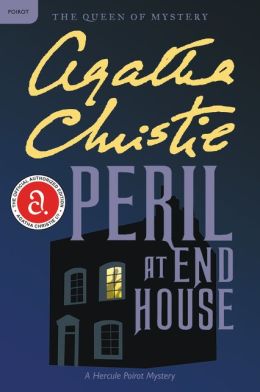
And Be A Villain. (Nero Wolfe). Rex Stout. 1948. 256 pages. [Source: Book I Bought]
And Be A Villain is the first, but probably not the last, Nero Wolfe mystery I'll be reading this year. Rex Stout has created two very enjoyable, very unforgettable characters in Nero Wolfe and Archie Goodwin. In this mystery, they are almost actually working with the police to solve a high profile murder. Wolfe has been hired by a radio personality. One of her guests was murdered--poisoned--while on her show. Awkward indeed. The radio show is sponsored by a beverage company, and the guest's drink was poisoned. There are only a handful of people in the room, at the station, that would have had access to the drink and/or the glasses. It is up to Goodwin and Wolfe, of course, to figure out which one of these unlikely suspects is a murderer; and these suspects have been questioned again and again and again by the police. But this detective team is the best, and they spot clues missed by the police...but will it be enough? Will the answer come too late?
I enjoyed And Be A Villain. Do you have a favorite Nero Wolfe mystery? Have you seen the television adaptations?
© 2014 SukaYuka.com of SukaYuka's Book Reviews
Showing posts with label mystery. Show all posts
Sunday, January 26, 2014
Tuesday, August 20, 2013
The Black Dudley Murder (1929)
The Black Dudley Murder. Margery Allingham. 1929. 224 pages. [Source: Bought]
I'm so glad that The Black Dudley Murder was not my first introduction to Margery Allingham or Albert Campion. (The Case of the Late Pig was a fantastic introduction.)
George Abbershaw, our narrator, is a house-guest at a weekend party in a country house. (The "country house" is quite gothic in nature.) He accepted the invitation because he's madly in love with a young woman, Margaret Oliphant, and he'd heard that she was to be in attendance. A whole weekend with her, he might even work up the nerve to propose! Other than Wyatt Petrie, he knows no other guests at all. His narration reveals his first impressions, and some of these first impressions at least are quite correct.
Typically when one goes to a party, one expects to be able to leave when one wants. Even if the host dies of a "heart attack." But that is not the case in The Black Dudley Murder. The guests find themselves held hostage. They have no contact with the world, no way to alert anyone--neighbors, police, etc. of the dangerous situation. (Even if they could manage to get to the garage and their cars without being shot or caught and bound, the cars have all been drained of gasoline.)
Albert Campion is a minor character in this one. He is not the hero of the day--or the hour--and he doesn't exactly steal the scenes he's in. I had a hard time enjoying any of the characters in this one. Or perhaps it's better to say I had a hard time getting to know any of the characters. Perhaps reading Agatha Christie, Georgette Heyer, and Dorothy Sayers has spoiled me.
I'm so glad that The Black Dudley Murder was not my first introduction to Margery Allingham or Albert Campion. (The Case of the Late Pig was a fantastic introduction.)
George Abbershaw, our narrator, is a house-guest at a weekend party in a country house. (The "country house" is quite gothic in nature.) He accepted the invitation because he's madly in love with a young woman, Margaret Oliphant, and he'd heard that she was to be in attendance. A whole weekend with her, he might even work up the nerve to propose! Other than Wyatt Petrie, he knows no other guests at all. His narration reveals his first impressions, and some of these first impressions at least are quite correct.
Typically when one goes to a party, one expects to be able to leave when one wants. Even if the host dies of a "heart attack." But that is not the case in The Black Dudley Murder. The guests find themselves held hostage. They have no contact with the world, no way to alert anyone--neighbors, police, etc. of the dangerous situation. (Even if they could manage to get to the garage and their cars without being shot or caught and bound, the cars have all been drained of gasoline.)
Albert Campion is a minor character in this one. He is not the hero of the day--or the hour--and he doesn't exactly steal the scenes he's in. I had a hard time enjoying any of the characters in this one. Or perhaps it's better to say I had a hard time getting to know any of the characters. Perhaps reading Agatha Christie, Georgette Heyer, and Dorothy Sayers has spoiled me.
English detectives are a race apart. They are evident at the first glance. (87)© 2013 SukaYuka.com of SukaYuka's Book Reviews
Thursday, July 18, 2013
Death in the Clouds (1935)
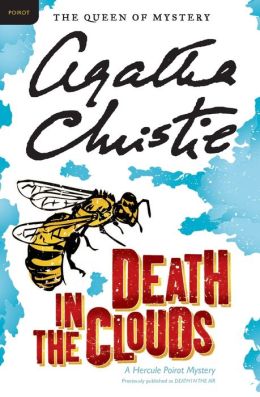
Death in the Clouds (Death in the Air). Agatha Christie. 1935. 253 pages [Source: Library]
I really enjoyed this Hercule Poirot novel. In this mystery, Poirot is traveling from France to England via airplane. On his trip, one of the passengers dies. For a few seconds at least, it is suspected that a wasp sting is to blame for Madame Giselle's death. But only for a few seconds. A dart is found, a poisoned dart, no doubt. The question is which passenger is a murderer? Poirot has quite a mystery to solve.
I definitely enjoyed this one! Readers get to know many of the passengers. In particular readers get to know a certain young lady, a hair dresser named Jane Grey. This mystery will take Poirot (and others) back and forth between the two countries. Some clues can only be found in France, for example. Can Poirot solve the crime before the police?
The more I read of Hercule Poirot, the more forgiving I am of his arrogance. Poirot can brag and boast; I'm not sure there is any of his mysteries where he doesn't have a big ego. But Poirot is impressive, and his reputation is well-earned.
Do you have a favorite Hercule Poirot novel?
© 2013 SukaYuka.com of SukaYuka's Book Reviews
I really enjoyed this Hercule Poirot novel. In this mystery, Poirot is traveling from France to England via airplane. On his trip, one of the passengers dies. For a few seconds at least, it is suspected that a wasp sting is to blame for Madame Giselle's death. But only for a few seconds. A dart is found, a poisoned dart, no doubt. The question is which passenger is a murderer? Poirot has quite a mystery to solve.
I definitely enjoyed this one! Readers get to know many of the passengers. In particular readers get to know a certain young lady, a hair dresser named Jane Grey. This mystery will take Poirot (and others) back and forth between the two countries. Some clues can only be found in France, for example. Can Poirot solve the crime before the police?
The more I read of Hercule Poirot, the more forgiving I am of his arrogance. Poirot can brag and boast; I'm not sure there is any of his mysteries where he doesn't have a big ego. But Poirot is impressive, and his reputation is well-earned.
Do you have a favorite Hercule Poirot novel?
© 2013 SukaYuka.com of SukaYuka's Book Reviews
Wednesday, July 10, 2013
The Case of the Cautious Coquette (1949)
The Case of the Cautious Coquette (Perry Mason #34). Erle Stanley Gardner. 1949. 230 pages. [Source: Bought]
I loved, loved, loved this Perry Mason mystery! Paul Drake has placed an ad in several newspapers. He's looking for information about a hit-and-run accident. He receives a letter with a key in it; the anonymous writer assures him that he will find the license plate number for the car in the accident in the desk in the apartment mentioned. The letter even tells him when the apartment will be empty. Drake is extremely suspicious as you might imagine! So, of course, he takes it to Perry Mason. Mason is curious and skeptical. Who sent the letter and the key? Being wise, he goes to see the woman in question, Lucille Barton. Almost from the moment he meets her, he feels that it's a trap, but it will take some time to know WHO set the trap and WHY. Barton knows nothing about any accident, but, she could use a lawyer in a dispute with her ex-husband. Mason declines, but he can't really escape the mess he's in. Not really. If you're familiar with Perry Mason...at all...you know that sooner or later every case turns to murder!
Perry Mason is GREAT in this one. In one situation after another, he just made me SMILE again and again. I especially loved Lt. Tragg in this one!!! There are some WONDERFUL scenes!
This mystery novel is a delight from start to finish!
© 2013 SukaYuka.com of SukaYuka's Book Reviews
I loved, loved, loved this Perry Mason mystery! Paul Drake has placed an ad in several newspapers. He's looking for information about a hit-and-run accident. He receives a letter with a key in it; the anonymous writer assures him that he will find the license plate number for the car in the accident in the desk in the apartment mentioned. The letter even tells him when the apartment will be empty. Drake is extremely suspicious as you might imagine! So, of course, he takes it to Perry Mason. Mason is curious and skeptical. Who sent the letter and the key? Being wise, he goes to see the woman in question, Lucille Barton. Almost from the moment he meets her, he feels that it's a trap, but it will take some time to know WHO set the trap and WHY. Barton knows nothing about any accident, but, she could use a lawyer in a dispute with her ex-husband. Mason declines, but he can't really escape the mess he's in. Not really. If you're familiar with Perry Mason...at all...you know that sooner or later every case turns to murder!
Perry Mason is GREAT in this one. In one situation after another, he just made me SMILE again and again. I especially loved Lt. Tragg in this one!!! There are some WONDERFUL scenes!
This mystery novel is a delight from start to finish!
© 2013 SukaYuka.com of SukaYuka's Book Reviews
Tuesday, July 9, 2013
Death on the Nile (1937)
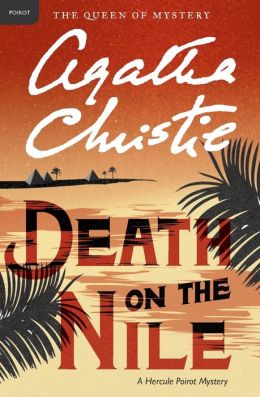
Death on the Nile. Agatha Christie. 1937/2007. Black Dog & Leventhal. 352 pages. [Source: Library]
I LOVED, LOVED, LOVED Agatha Christie's Death on the Nile. It is such a great mystery, very complex! Hercule Poirot and Colonel Race find themselves on board a ship on the Nile, they are in interesting company. Poirot notices the tension between some of his fellow travelers from the very start. And as he takes the time to get to know everyone, to have personal chats with almost every one, his unease only increases. He fears that before the trip is over, murder will have been committed. But who shall the victim be? And who the murderer? Meanwhile, Race is on a mission of his own before a body is even found. He is on the trail of a killer, a radical. He's not sure WHO his man is, just knows that he is almost certainly on board, that is where his clues have led him. When the oh-so-wealthy heiress, Linnet Ridgeway, is murdered on her honeymoon with Simon Doyle, there are plenty of suspects. For not all of the passengers on board are exactly strangers to her....
The first part of this one is set in England, but the rest is all set in Egypt.
This one had me from the start. It was so thrilling! Not only was the plot interesting and surprising and wonderful, the characterization was so well done!!!
My favorite quote:
© 2013 SukaYuka.com of SukaYuka's Book Reviews
I LOVED, LOVED, LOVED Agatha Christie's Death on the Nile. It is such a great mystery, very complex! Hercule Poirot and Colonel Race find themselves on board a ship on the Nile, they are in interesting company. Poirot notices the tension between some of his fellow travelers from the very start. And as he takes the time to get to know everyone, to have personal chats with almost every one, his unease only increases. He fears that before the trip is over, murder will have been committed. But who shall the victim be? And who the murderer? Meanwhile, Race is on a mission of his own before a body is even found. He is on the trail of a killer, a radical. He's not sure WHO his man is, just knows that he is almost certainly on board, that is where his clues have led him. When the oh-so-wealthy heiress, Linnet Ridgeway, is murdered on her honeymoon with Simon Doyle, there are plenty of suspects. For not all of the passengers on board are exactly strangers to her....
The first part of this one is set in England, but the rest is all set in Egypt.
This one had me from the start. It was so thrilling! Not only was the plot interesting and surprising and wonderful, the characterization was so well done!!!
My favorite quote:
"Do people interest you too, Monsieur Poirot? Or do you reserve your interest for potential criminals?"ETA: After reading the book, I wanted to watch the movie adaptation. I really ENJOYED the movie. It stars David Suchet as Hercule Poirot, JJ Feild as Simon Doyle, and Emily Blunt as Linnet Ridgeway, to name just a few. Feild, of course, "is" Henry Tilney. I recognized him right away. And Emily Blunt is equally "Queen Victoria." It was fun to see familiar faces in fascinating roles. If you've read the book recently OR if you remember the characters you'll guess just why. This was my first Poirot adaptation. I've seen plenty of Miss Marple, however.
"Madame--that category would not leave many people outside it." (96)
© 2013 SukaYuka.com of SukaYuka's Book Reviews
Wednesday, June 19, 2013
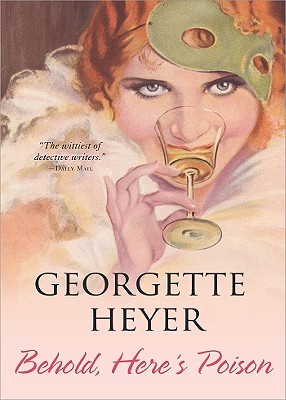
Behold, Here's Poison (1936)
Behold, Here's Poison. Georgette Heyer. 1936/2009. Sourcebooks. 330 pages.
I definitely LOVED this mystery by Georgette Heyer. Gregory Matthews has been poisoned. At first, the family assumed his death was of natural causes, but one insistent aunt sees differently. The aunt's instincts proved correct: he was poisoned by nicotine! Inspector Hannasyde and Inspector Hemingway are assigned the case. I have come to appreciate Inspector Hannasyde very much! (I also LOVED seeing Giles Carrington again!)
The entire family is on the list of suspects. And to be honest, the family is that dysfunctional so it would make sense that the suspect list would be a long one.
I enjoyed this one for the characters. (I loved Stella, and Randall definitely grew on me!!!) I found this one oh-so-satisfying.
© 2013 SukaYuka.com of SukaYuka's Book Reviews
I definitely LOVED this mystery by Georgette Heyer. Gregory Matthews has been poisoned. At first, the family assumed his death was of natural causes, but one insistent aunt sees differently. The aunt's instincts proved correct: he was poisoned by nicotine! Inspector Hannasyde and Inspector Hemingway are assigned the case. I have come to appreciate Inspector Hannasyde very much! (I also LOVED seeing Giles Carrington again!)
The entire family is on the list of suspects. And to be honest, the family is that dysfunctional so it would make sense that the suspect list would be a long one.
I enjoyed this one for the characters. (I loved Stella, and Randall definitely grew on me!!!) I found this one oh-so-satisfying.
© 2013 SukaYuka.com of SukaYuka's Book Reviews
Wednesday, June 5, 2013
Detection Unlimited (1944)
Detection Unlimited. Georgette Heyer. 1944/2010. Sourcebooks. 378 pages.
This is the fourth Georgette Heyer mystery I've read. I really loved the first two I read: Why Shoot a Butler and Envious Casca. I had a few issues with Duplicate Death, though it wasn't awful. I enjoyed Detection Unlimited much more than Duplicate Death. But I still can't say that I loved it as much as Envious Casca and Why Shoot a Butler.
Inspector Hemingway is called to solve a murder case. The victim was VERY unpopular in his neighborhood. And there are plenty of likely suspects from all sorts of backgrounds. The neighborhood has more secrets than one might expect. Each suspect has a theory of who did it. And they're all most cooperative to point out why everyone else has a better motive and/or better opportunity. But the Inspector doesn't need each suspect to play detective as well!
Many scenarios are presented in this one, but the solving of the mystery is so sudden and rushed that I didn't find it satisfying.
© 2013 SukaYuka.com of SukaYuka's Book Reviews
This is the fourth Georgette Heyer mystery I've read. I really loved the first two I read: Why Shoot a Butler and Envious Casca. I had a few issues with Duplicate Death, though it wasn't awful. I enjoyed Detection Unlimited much more than Duplicate Death. But I still can't say that I loved it as much as Envious Casca and Why Shoot a Butler.
Inspector Hemingway is called to solve a murder case. The victim was VERY unpopular in his neighborhood. And there are plenty of likely suspects from all sorts of backgrounds. The neighborhood has more secrets than one might expect. Each suspect has a theory of who did it. And they're all most cooperative to point out why everyone else has a better motive and/or better opportunity. But the Inspector doesn't need each suspect to play detective as well!
Many scenarios are presented in this one, but the solving of the mystery is so sudden and rushed that I didn't find it satisfying.
© 2013 SukaYuka.com of SukaYuka's Book Reviews
Monday, June 3, 2013
Reluctant Widow (1946)
The Reluctant Widow. Georgette Heyer. 1946/2008. Sourcebooks. 316 pages.
I am so glad I'm rereading the Georgette Heyer books this year, and trying to do it in chronological order too! I remembered this one as being really good. But I didn't remember how delightful and different it was! It is not really like any of Heyer's other romance novels! It definitely has a strong mystery element to it.
The heroine, Elinor Rochdale, was quite enjoyable! When we first meet her, she's intending to be a governess. But a case of mistaken identity changes all that! She is waiting to meet someone to take her to her new place of employment. The man who meets her thinks she is the answer to his advertisement! His advertisement is NOT for a governess. She learns this much too late. But she decides to HEAR the offer. This man, this stranger, wants her to marry his cousin. It's delightfully complicated in the retelling. But he is very persuasive...
I shared more details in my first review...
Essentially I loved it just as much as I did the first time I read it. It was one I loved, loved, loved. I would definitely recommend this one!
© 2013 SukaYuka.com of SukaYuka's Book Reviews
I am so glad I'm rereading the Georgette Heyer books this year, and trying to do it in chronological order too! I remembered this one as being really good. But I didn't remember how delightful and different it was! It is not really like any of Heyer's other romance novels! It definitely has a strong mystery element to it.
The heroine, Elinor Rochdale, was quite enjoyable! When we first meet her, she's intending to be a governess. But a case of mistaken identity changes all that! She is waiting to meet someone to take her to her new place of employment. The man who meets her thinks she is the answer to his advertisement! His advertisement is NOT for a governess. She learns this much too late. But she decides to HEAR the offer. This man, this stranger, wants her to marry his cousin. It's delightfully complicated in the retelling. But he is very persuasive...
I shared more details in my first review...
Essentially I loved it just as much as I did the first time I read it. It was one I loved, loved, loved. I would definitely recommend this one!
© 2013 SukaYuka.com of SukaYuka's Book Reviews
Thursday, May 30, 2013
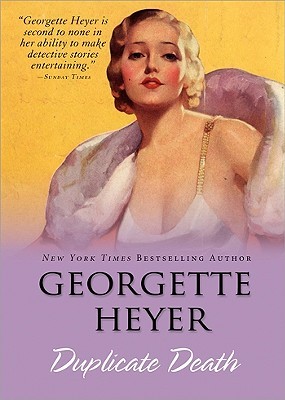
Duplicate Death (1951)
Duplicate Death. Georgette Heyer. 1951/2010. Sourcebooks. 352 pages.
I didn't enjoy Duplicate Death quite as much as Envious Casca. I thought the description on the back of the book was deceptive and confusing. The back of the book mentions a certain "Timothy Kane" and the book itself is clear throughout that it is Mr. Timothy Harte. Since this character is first introduced in chapter two as YOUNG MR. HARTE, it can be confusing until you realize that the book description is off. (The description also asserts that this character is friends with Inspector Hemingway; I found this not quite true. Inspector Hemingway apparently met this person when he was a teenager--14--and they've not seen each other in over a decade. Not exactly how I'd define a friendship. It is true that Inspector Hemingway is on friendly enough terms with Timothy once they're reacquainted on this case, which is something since Mr. Harte is technically one of a handful of suspects that had the opportunity to murder the victim.) I also didn't enjoy the ODD narration of the first and last chapters. While it isn't exactly an unsatisfactory beginning, it definitely didn't work for me as an ending.
The characters we get to know best are Timothy Harte and his girl, Miss Beulah Birtley. Miss Birtley is employed by the oh-so-disagreeable Mrs. Haddington. It is at one of her bridge parties that the first murder occurs.
There are two murders to be solved in this one; there are also additional crimes to be handled. This was one of the first mysteries I've read that deal with drug dealing and drug addiction. I didn't enjoy the characterization in this one as much as in Envious Casca, and some of the dialogue didn't work for me.
© 2013 SukaYuka.com of SukaYuka's Book Reviews
I didn't enjoy Duplicate Death quite as much as Envious Casca. I thought the description on the back of the book was deceptive and confusing. The back of the book mentions a certain "Timothy Kane" and the book itself is clear throughout that it is Mr. Timothy Harte. Since this character is first introduced in chapter two as YOUNG MR. HARTE, it can be confusing until you realize that the book description is off. (The description also asserts that this character is friends with Inspector Hemingway; I found this not quite true. Inspector Hemingway apparently met this person when he was a teenager--14--and they've not seen each other in over a decade. Not exactly how I'd define a friendship. It is true that Inspector Hemingway is on friendly enough terms with Timothy once they're reacquainted on this case, which is something since Mr. Harte is technically one of a handful of suspects that had the opportunity to murder the victim.) I also didn't enjoy the ODD narration of the first and last chapters. While it isn't exactly an unsatisfactory beginning, it definitely didn't work for me as an ending.
The characters we get to know best are Timothy Harte and his girl, Miss Beulah Birtley. Miss Birtley is employed by the oh-so-disagreeable Mrs. Haddington. It is at one of her bridge parties that the first murder occurs.
There are two murders to be solved in this one; there are also additional crimes to be handled. This was one of the first mysteries I've read that deal with drug dealing and drug addiction. I didn't enjoy the characterization in this one as much as in Envious Casca, and some of the dialogue didn't work for me.
© 2013 SukaYuka.com of SukaYuka's Book Reviews
Wednesday, May 29, 2013
Envious Casca (1941)
Envious Casca. Georgette Heyer. 1941/2010. Sourcebooks. 396 pages.
Envious Casca is locked-room murder mystery set during the Christmas holidays! Joseph Herriard has taken it upon himself to invite the whole family to his brother's house for Christmas. His brother, Nathaniel, is quite upset by the party, even before it gets properly started! And many of his guests are just as unenthusiastic as he is! The guests include Nathaniel's longtime business partner (Edgar Mottisfont), Nathaniel's niece (Paula) and her guest--a playwright (Willoughby), Nathaniel's nephew (Stephen) and his fiancee (Valerie), and a distant family cousin (Mathilda). Joseph and his wife, Maud, already live with Joseph at his estate, Lexham Manor. It soon becomes apparent to the reader that few of the guests can tolerate one another. Oh, some are better at pretending they can, but, the truth is all the guests are disgruntled for various reasons. (Most of the group HATE Stephen's girlfriend. Most of the group have little interest in hearing Willoughby read his new play aloud; and most definitely they have NO interest in giving him money to produce it!) It is several hours after this (unpleasant) reading that Nathaniel's body is discovered behind locked doors.
I definitely enjoyed this mystery. I enjoyed Heyer's writing and characterization. There were many little things that made me love this one! (For example, Maud and her library book!!!) This was my first introduction to Inspector Hemingway, and I enjoyed meeting him very much! I definitely want to read more in this series. And a locked room mystery can be quite enjoyable.
© 2013 SukaYuka.com of SukaYuka's Book Reviews
Envious Casca is locked-room murder mystery set during the Christmas holidays! Joseph Herriard has taken it upon himself to invite the whole family to his brother's house for Christmas. His brother, Nathaniel, is quite upset by the party, even before it gets properly started! And many of his guests are just as unenthusiastic as he is! The guests include Nathaniel's longtime business partner (Edgar Mottisfont), Nathaniel's niece (Paula) and her guest--a playwright (Willoughby), Nathaniel's nephew (Stephen) and his fiancee (Valerie), and a distant family cousin (Mathilda). Joseph and his wife, Maud, already live with Joseph at his estate, Lexham Manor. It soon becomes apparent to the reader that few of the guests can tolerate one another. Oh, some are better at pretending they can, but, the truth is all the guests are disgruntled for various reasons. (Most of the group HATE Stephen's girlfriend. Most of the group have little interest in hearing Willoughby read his new play aloud; and most definitely they have NO interest in giving him money to produce it!) It is several hours after this (unpleasant) reading that Nathaniel's body is discovered behind locked doors.
I definitely enjoyed this mystery. I enjoyed Heyer's writing and characterization. There were many little things that made me love this one! (For example, Maud and her library book!!!) This was my first introduction to Inspector Hemingway, and I enjoyed meeting him very much! I definitely want to read more in this series. And a locked room mystery can be quite enjoyable.
© 2013 SukaYuka.com of SukaYuka's Book Reviews
Tuesday, May 28, 2013
The Rubber Band (1936)
I threw down the magazine section of the Sunday Times and yawned. I looked at Nero Wolfe and yawned again.
I was slightly disappointed in my most recent Nero Wolfe read, The League of Frightened Men. But I just LOVED, LOVED, LOVED The Rubber Band. It reminded me of why I enjoy the Nero Wolfe stories so much. It had plenty of Nero Wolfe and Archie Goodwin! It also featured plenty of interaction with Inspector Cramer.
Nero Wolfe has plenty of potential clients in this one because several people have come to him with their problems. But which client will he accept, and why?!
This murder mystery has multiple victims. I could try to summarize the mystery, but why spoil the fun?!
Favorite quotes:
There's just as many honest men here as the other side of the mountain. And just as few. I'm one. I'm so damn honest I often double-cross myself. Nero Wolfe is almost as bad. (19)
It is not always practicable to sneer at mud; there's too much of it. (31)
The avoidance of idiocy should be the primary and constant concern of every intelligent person. It is mine. I am sometimes successful. (44)
Okay. I'll gargle my milk. It'll probably be my last chance for that innocent amusement before they toss us in the hoosegow. I remember you told me once that there is no moment in any man's life too empty to be dramatized. (76)
No guy who knows he's right because he's too conceited to be wrong can be expected to go into conference about it. (167)© 2013 SukaYuka.com of SukaYuka's Book Reviews
Wednesday, May 15, 2013
The Daughter of Time (1951)
The Daughter of Time. (Inspector Grant #5). Josephine Tey. 1955/1995. Touchstone. 206 pages.
I reread books. I do. I can't help myself. If I truly love a book, then I'll reread it again and again. I've now read Josephine Tey's mystery novel, The Daughter of Time, three times. I've wanted to reread it even more than that. But I've shown some restraint.
The Daughter of Time is an unusual mystery novel for the hero, the detector, Inspector Grant, "solves" the case in a hospital bed. He has visitors bringing him books, bringing him copies of portraits, and he has assigned people to do research on his behalf, seeking answers to his questions. But he never leaves the room. What case is he trying to solve? It's not a current case, a contemporary one. It's historical in nature. He's trying to solve the case of WHO murdered the two princes in the tower during the reign of Richard III.
He starts with simple history textbooks, and moves on to look at other sources. He QUESTIONS the material at hand, always curious as to where they got their information, and IF that information would be admissible in a courtroom. Would there be enough real proof to convict the prime suspect Richard III of the crime. What he reasons is that most of the source material that has been taken for granted--to a degree--was all written decades after the crime, during the reign of Henry VII or even Henry VIII. Tudors have tempers! To upset a Tudor king (or queen) is NOT a good idea. So were these books written to please the crown? Perhaps! The historian Grant questions most is Thomas More. More was just a boy--five years old--when Richard III was struggling to keep his kingdom. He may have talked to many who were still alive, who still remembered, but his facts are uneven in their believability. (You might have to read the book to learn the details!) Grant struggles to find genuine closer-to-primary-documents to recreate the events. He looks at ALL the key players, all the men and women, and traces their steps, their whereabouts. He also examines motives. Who has the most to gain and who has the most to lose? Once Grant has all the information he can, he pieces together a case showing that Richard III should not be the primary suspect after all.
I love the subject of this one! I also love the writing!
Alan Grant on popular fiction authors:
© 2013 SukaYuka.com of SukaYuka's Book Reviews
I reread books. I do. I can't help myself. If I truly love a book, then I'll reread it again and again. I've now read Josephine Tey's mystery novel, The Daughter of Time, three times. I've wanted to reread it even more than that. But I've shown some restraint.
The Daughter of Time is an unusual mystery novel for the hero, the detector, Inspector Grant, "solves" the case in a hospital bed. He has visitors bringing him books, bringing him copies of portraits, and he has assigned people to do research on his behalf, seeking answers to his questions. But he never leaves the room. What case is he trying to solve? It's not a current case, a contemporary one. It's historical in nature. He's trying to solve the case of WHO murdered the two princes in the tower during the reign of Richard III.
He starts with simple history textbooks, and moves on to look at other sources. He QUESTIONS the material at hand, always curious as to where they got their information, and IF that information would be admissible in a courtroom. Would there be enough real proof to convict the prime suspect Richard III of the crime. What he reasons is that most of the source material that has been taken for granted--to a degree--was all written decades after the crime, during the reign of Henry VII or even Henry VIII. Tudors have tempers! To upset a Tudor king (or queen) is NOT a good idea. So were these books written to please the crown? Perhaps! The historian Grant questions most is Thomas More. More was just a boy--five years old--when Richard III was struggling to keep his kingdom. He may have talked to many who were still alive, who still remembered, but his facts are uneven in their believability. (You might have to read the book to learn the details!) Grant struggles to find genuine closer-to-primary-documents to recreate the events. He looks at ALL the key players, all the men and women, and traces their steps, their whereabouts. He also examines motives. Who has the most to gain and who has the most to lose? Once Grant has all the information he can, he pieces together a case showing that Richard III should not be the primary suspect after all.
I love the subject of this one! I also love the writing!
Alan Grant on popular fiction authors:
The Sweat and the Furrow was Silas Weekley being earthly and spade-conscious all over seven hundred pages. The situation, to judge from the first paragraph, had not materially changed since Silas's last book: mother lying-in with her eleventh upstairs, father laid-out after his ninth downstairs, eldest son lying to the Government in the cow-shed, eldest daughter lying with her lover in the the hayloft, everyone else lying low in the barn. The rain dripped from the thatch, and the manure steamed in the midden. Silas never omitted the manure. It was not Silas's fault that its steam provided the only uprising element in the picture. If Silas could have discovered a brand of steam that steamed downwards, Silas would have introduced it. (13)
Did no one, any more, no one in all this wide world, change their record now and then? Was everyone nowadays thirled to a formula? Authors today wrote so much to a pattern that their public expected it. The public talked about "a new Silas Weekley" or "a new Lavinia Fitch" exactly as they talked about "a new brick" or a "new hairbrush." They never said "a new book by" whoever it might be. Their interest was not in the book but in its newness. They knew quite well what the book would be like. (14)
The Rose of Raby proved to be fiction, but at least easier to hold than Tanner's Constitutional History of England. It was, moreover, the almost-respectable form of historical fiction which is merely history-with-conversation, so to speak. An imaginative biography rather than an imagined story. Evelyn Payne-Ellis, whoever she might be, had provided portraits and a family tree, and had made no attempt, it seemed, to what he and his cousin Laura used to call in their childhood "write forsoothly." There were no "by our Ladys," no "nathelesses" or "varlets." It was an honest affair according to its lights. And its lights were more illuminating than Mr. Tanner. Much more illuminating. It was Grant's belief that if you could not find out about a man, the next best way to arrive at an estimate of him was to find out about his mother. (59)Alan Grant on Sir Thomas More
He came to the surface an hour later, vaguely puzzled and ill at ease. It was not that the matter surprised him, the facts were very much what he had expected them to be. It was that this was not how he had expected Sir Thomas to write. "He took ill rest at nights, lay long waking and musing; sore wearied with care and watch, he slumbered rather than slept. So was his restless heart continually tossed and tumbled with the tedious impression and stormy remembrance of his most abominable deeds." That was all right. But when he added that "this he had from such as were secret with his chamberers" one was suddenly repelled. An aroma of back-stair gossip and servants' spying came off the page. So that one's sympathy tilted before one was aware of it from the smug commentator to the tortured creature sleeping on his bed. The murderer seemed of greater stature than the man who was writing of him. Which was all wrong. Grant was conscious too of the same unease that filled him when he listened to a witness telling a perfect story that he knew to be flawed somewhere... (71)
He was five. When that dramatic council scene had taken place at the Tower, Thomas More had been five years old. He had been only eight when Richard died at Bosworth. Everything in that history had been hearsay. And if there was one word that a policeman loathed more than another it was hearsay. Especially when applied to evidence. He was so disgusted that he flung the precious book on to the floor before he remembered that it was the property of a Public Library and his only by grace and for fourteen days. More had never known Richard III at all. He had indeed grown up under a Tudor administration. That book was the Bible of the whole historical world on the subject of Richard III--and it was from that account that Holinshed had taken his material, and from that Shakespeare had written his--and except that More believed what he wrote to be true it was of no more value than what the soldier said.... Grant had dealt too long with the human intelligence to accept as truth someone's report of someone's report of what that someone remembered to have seen or been told. (81)Other favorite quotes:
"One would expect boredom to be a great yawning emotion, but it isn't, of course. It's a small niggling thing." (16)
"I'm feeling like a policeman. I'm thinking like a policeman. I'm asking myself the question that every policeman asks in every case of murder: Who benefits? And for the first time it occurs to me that the glib theory that Richard got rid of the boys to make himself safer on the throne is so much nonsense. Supposing that he had got rid of the boys. There were still the boys' five sisters between him and the throne. To say nothing of George's toy: the boy and girl. George's son and daughter were barred by their father's attainder; but I take it that an attainder can be reversed, or annulled, or something. If Richard's claim was shaky, all those lives stood between him and safety."
"And did they all survive him?"
"I don't know. But I shall make it my business to find out. The boys' eldest sister certainly did because she became Queen of England as Henry's wife." (105)
It was brought home to him for the first time not only what a useless thing the murder of the boys would have been, but what a silly thing. And if there was anything that Richard of Gloucester was not, beyond a shadow of a doubt, it was silly. (137)
"Of course I'm only a policeman," Grant said. "Perhaps I never moved in the right circles. It may be that I've met only nice people. Where would one have to go to meet a woman who became matey with the murderer of her two boys?"
"Greece, I should think," Marta said. "Ancient Greece."
"I can't remember a sample even there."
"Or a lunatic asylum, perhaps. Was there any sign of idiocy about Elizabeth Woodville?"
"Not that anyone ever noticed. And she was Queen for twenty years or so."
...
"Yes of course. It's the height of absurdity. It belongs to Ruthless Rhymes, not to sober history. That is why historians surprise me. They seem to have no talent for the likeliness of any situation. They see history like a peepshow; with two-dimensional figures against a distant background."
"Perhaps when you are grubbing about with tattered records you haven't time to learn about people. I don't mean about the people in the records, but just about People. Flesh and blood. And how they react to circumstances." (151)
© 2013 SukaYuka.com of SukaYuka's Book Reviews
Tuesday, May 14, 2013
The League of Frightened Men (1935)
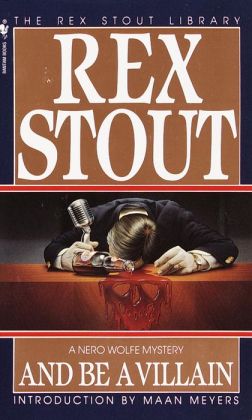
The League of Frightened Men. Rex Stout. 1935. Bantam. 320 pages.
This is the second novel in Rex Stout's Nero Wolfe mystery series. I am not reading the series in order, and I have preferred some of his later books in the series to the first two in the series. In this mystery, Nero Wolfe and Archie Goodwin are trying to satisfy a large number of clients, members of the 'league of atonement.' These men were less than saints in college, and one of their pranks went horribly wrong. The victim was crippled, and lives were impacted. So why is this league 'frightened'? Well, it starts with the death of one or two of its members. After the first death, an anonymous letter--a poem, I believe--was sent to the others. It was a poetic, rambling threat. Another member dies unexpectedly, another letter was delivered. This causes alarm. At first Rex Stout did not take the case seriously, this was when one of the members turns up at his house alone and acting very strange. But weeks later when this man has gone missing, well, Stout decides to invite the other members to his house and take on their case. Many fear it is this 'victim' that has turned dangerous, wild, unpredictable. If Wolfe can alleviate their fears, then he'll be paid.
I found this case to be confusing and a bit strange. But it does star Nero Wolfe and Archie, so even though it was confusing at times, it had its moments of delight. I am so glad I didn't try to read this series in order or I'm not sure I'd have bothered reading on.
I do recommend Rex Stout as a mystery writer. This may not be my favorite Nero Wolfe, but overall his series is great.
© 2013 SukaYuka.com of SukaYuka's Book Reviews
This is the second novel in Rex Stout's Nero Wolfe mystery series. I am not reading the series in order, and I have preferred some of his later books in the series to the first two in the series. In this mystery, Nero Wolfe and Archie Goodwin are trying to satisfy a large number of clients, members of the 'league of atonement.' These men were less than saints in college, and one of their pranks went horribly wrong. The victim was crippled, and lives were impacted. So why is this league 'frightened'? Well, it starts with the death of one or two of its members. After the first death, an anonymous letter--a poem, I believe--was sent to the others. It was a poetic, rambling threat. Another member dies unexpectedly, another letter was delivered. This causes alarm. At first Rex Stout did not take the case seriously, this was when one of the members turns up at his house alone and acting very strange. But weeks later when this man has gone missing, well, Stout decides to invite the other members to his house and take on their case. Many fear it is this 'victim' that has turned dangerous, wild, unpredictable. If Wolfe can alleviate their fears, then he'll be paid.
I found this case to be confusing and a bit strange. But it does star Nero Wolfe and Archie, so even though it was confusing at times, it had its moments of delight. I am so glad I didn't try to read this series in order or I'm not sure I'd have bothered reading on.
I do recommend Rex Stout as a mystery writer. This may not be my favorite Nero Wolfe, but overall his series is great.
© 2013 SukaYuka.com of SukaYuka's Book Reviews
Wednesday, March 13, 2013
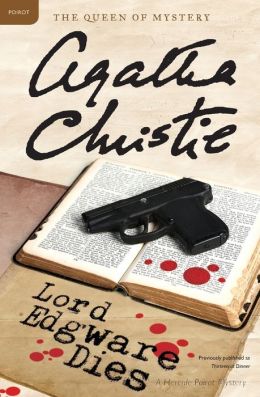
Lord Edgware Dies (1933)
Lord Edgware Dies (OR Thirteen at Dinner). Agatha Christie. 1933. 260 pages.
I absolutely LOVE, LOVE, LOVE this Agatha Christie mystery. It stars both Hercule Poirot and Captain Hastings, a combination I find very hard to resist. The mystery begins with an American celebrity--an actress, Jane Wilkinson--asking Poirot for help. She's not asking him to solve a crime, exactly. She's asking him to go to her husband--whom she hates--and ask him if he'll grant her a divorce. After this consultation, she "carelessly" mentions how she wants her husband to die; at one point she even shares just how she would kill her husband. A few take her seriously pointing out to Poirot that Wilkinson is the type of woman who would kill without thinking it wrong. But Poirot likes to make up his own mind, come to his own conclusions about people's characters and motives.
So when a little time later, Lord Edgware is killed, Poirot becomes interested in the case...
This one was a delightful mystery! I just love Agatha Christie! This may be among my favorite Poirot mysteries!!!
Favorite quotes:
I absolutely LOVE, LOVE, LOVE this Agatha Christie mystery. It stars both Hercule Poirot and Captain Hastings, a combination I find very hard to resist. The mystery begins with an American celebrity--an actress, Jane Wilkinson--asking Poirot for help. She's not asking him to solve a crime, exactly. She's asking him to go to her husband--whom she hates--and ask him if he'll grant her a divorce. After this consultation, she "carelessly" mentions how she wants her husband to die; at one point she even shares just how she would kill her husband. A few take her seriously pointing out to Poirot that Wilkinson is the type of woman who would kill without thinking it wrong. But Poirot likes to make up his own mind, come to his own conclusions about people's characters and motives.
So when a little time later, Lord Edgware is killed, Poirot becomes interested in the case...
This one was a delightful mystery! I just love Agatha Christie! This may be among my favorite Poirot mysteries!!!
Favorite quotes:
"I always find alibis very enjoyable," he remarked. "Whenever I happen to be reading a detective story I sit up and take notice when the alibi comes along." (122)
"Between the deliberate falsehood and the disinterested inaccuracy it is very hard to distinguish sometimes.."
"What do you mean?"
"To deceive deliberately--that is one thing. But to be so sure of your facts, of your ideas and of their essential truth that the details do not matter--that, my friend, is a special characteristic of particularly honest persons." (128)
"The positive witness should always be treated with suspicion, my friend. The uncertain witness who doesn't remember, isn't sure, will think a minute--ah! yes, that's how it was--is infinitely more to be depended upon!"
"Dear me, Poirot," I said. "You upset all my preconceived ideas about witnesses." (129)
"My good friend," he said. "I depend upon you more than you know."
I was confused and delighted by these unexpected words. He had never said anything of the kind to me before. Sometimes, secretly, I had felt slightly hurt. He seemed almost to go out of his way to disparage my mental powers.
Although I did not think his own powers were flagging, I did realize suddenly that perhaps he had come to depend on my aid more than he knew.
"Yes," he said dreamily. "You may not always comprehend just how it is so--but you do often, and often point the way."
I could hardly believe my ears.
"Really, Poirot," I stammered. "I'm awfully glad, I suppose I've learnt a good deal from you one way or another--"
He shook his head.
"Mais non, ce n'est pas ca. You have learnt nothing."
"Oh!" I said, rather taken aback.
"That is as it should be. No human being should learn from another. Each individual should develop his own powers to the uttermost, not try to imitate those of someone else. I do not wish you to be a second and inferior Poirot. I wish you to be the supreme Hastings. In you, Hastings, I find the normal mind almost perfectly illustrated." (133)
"You are like someone who reads the detective story and who starts guessing each of the characters in turn without rhyme or reason." (135)Read Lord Edgware Dies
- If you enjoy murder mysteries with more than one murder
- If you enjoy Agatha Christie
- If you love Hercule Poirot and Captain Hastings
- If you enjoy vintage, British mysteries
Tuesday, March 12, 2013
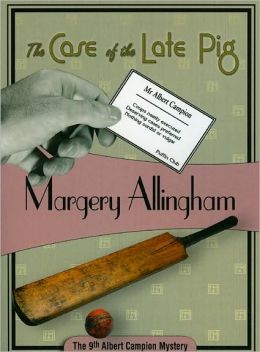
The Case of the Late Pig (1948)
The Case of the Late Pig. Margery Allingham. 1948. 144 pages.
I absolutely LOVED, LOVED, LOVED Margery Allingham's The Case of the Late Pig. This was my first introduction to Albert Campion, and I just have to say that I love him! I do! I love him. This mystery had me hooked from the very beginning. The first sentence reads, "The main thing to remember in autobiography, I have always thought, is not to let any damned modesty creep in to spoil the story. This adventure is mine, Albert Campion's, and I am fairly certain that I was pretty nearly brilliant in it in spite of the fact that I so nearly got myself and old Lugg killed that I hear a harp quintet whenever I consider it. It begins with me eating in bed." Isn't that a WONDERFUL way to start a book, a mystery?! Old Lugg, by the way, is his valet.
The book begins with Lugg reading aloud the deaths in the Times to his master as he's eating in bed. Albert isn't exactly thrilled at this 'new' behavior of his valet which he picked up from keeping company with another valet. Albert is glancing through his own letters as well. Suddenly he makes a connection: one of his old school mates has died. A man with the nickname of Pig Peters. (R.I. Peters is his real name.) Pig Peters was a bit of a bully--almost always a bully. But. Campion did promise himself (and Peters, I believe) that he would attend his funeral. So off to the funeral they go. It's a very strange funeral--little attended. And all would be well, except that Pig Peter's funeral was in January...and his body turns up again in June! And it's obvious to Campion that the death is only a few hours old...
This mystery delights cover to cover. I absolutely LOVED the writing, the dialogue, the characterization. IT was just a joy to read this one!!!
Read The Case of the Late Pig
I absolutely LOVED, LOVED, LOVED Margery Allingham's The Case of the Late Pig. This was my first introduction to Albert Campion, and I just have to say that I love him! I do! I love him. This mystery had me hooked from the very beginning. The first sentence reads, "The main thing to remember in autobiography, I have always thought, is not to let any damned modesty creep in to spoil the story. This adventure is mine, Albert Campion's, and I am fairly certain that I was pretty nearly brilliant in it in spite of the fact that I so nearly got myself and old Lugg killed that I hear a harp quintet whenever I consider it. It begins with me eating in bed." Isn't that a WONDERFUL way to start a book, a mystery?! Old Lugg, by the way, is his valet.
The book begins with Lugg reading aloud the deaths in the Times to his master as he's eating in bed. Albert isn't exactly thrilled at this 'new' behavior of his valet which he picked up from keeping company with another valet. Albert is glancing through his own letters as well. Suddenly he makes a connection: one of his old school mates has died. A man with the nickname of Pig Peters. (R.I. Peters is his real name.) Pig Peters was a bit of a bully--almost always a bully. But. Campion did promise himself (and Peters, I believe) that he would attend his funeral. So off to the funeral they go. It's a very strange funeral--little attended. And all would be well, except that Pig Peter's funeral was in January...and his body turns up again in June! And it's obvious to Campion that the death is only a few hours old...
This mystery delights cover to cover. I absolutely LOVED the writing, the dialogue, the characterization. IT was just a joy to read this one!!!
Read The Case of the Late Pig
- If you want to read a really GREAT mystery
- If you enjoy British mysteries
- If you enjoy vintage mysteries
- If you enjoy Margery Allingham
- If you enjoy cozy mysteries
Monday, March 11, 2013
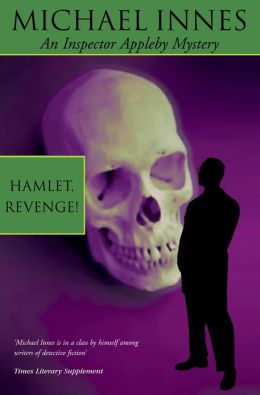
Hamlet, Revenge (1937)
Hamlet, Revenge! Michael Innes. 1937. 312 pages.
Hamlet, Revenge is the first mystery novel I've read by Michael Innes. It was published in 1937 and stars Inspector Appleby. The first half of the novel focuses on Scamnum Court, the family is producing a private showing of Shakespeare's Hamlet. Family, family friends, friendly acquaintances will star in this tragedy. Of course, from the start, readers know that all will not go well. (It is a mystery, after all. But there is plenty of foreshadowing in the introductory chapters.) The second half of the mystery focuses on Inspector Appleby and company as they try to solve the murder(s) that occurred on that tragic weekend.
There are SO MANY suspects in this one. So many characters introduced, and it was almost impossible to remember who was who. The mystery is very detailed, clues abound, and if you've got the attention to give to this one, it would probably be worth your time. It took me a while to get into this novel, but by the end I did care.
Read Hamlet, Revenge
© 2013 SukaYuka.com of SukaYuka's Book Reviews
Hamlet, Revenge is the first mystery novel I've read by Michael Innes. It was published in 1937 and stars Inspector Appleby. The first half of the novel focuses on Scamnum Court, the family is producing a private showing of Shakespeare's Hamlet. Family, family friends, friendly acquaintances will star in this tragedy. Of course, from the start, readers know that all will not go well. (It is a mystery, after all. But there is plenty of foreshadowing in the introductory chapters.) The second half of the mystery focuses on Inspector Appleby and company as they try to solve the murder(s) that occurred on that tragic weekend.
There are SO MANY suspects in this one. So many characters introduced, and it was almost impossible to remember who was who. The mystery is very detailed, clues abound, and if you've got the attention to give to this one, it would probably be worth your time. It took me a while to get into this novel, but by the end I did care.
Read Hamlet, Revenge
- If you enjoy mysteries, British mysteries, vintage mysteries
- If you enjoy mysteries with literature and/or drama and/or academic connection
© 2013 SukaYuka.com of SukaYuka's Book Reviews
Friday, March 8, 2013
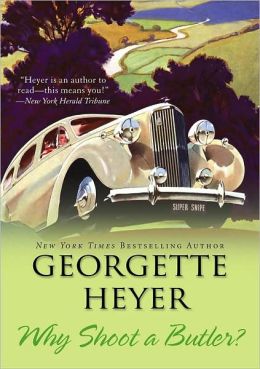
Why Shoot a Butler? (1933)
Why Shoot a Butler? Georgette Heyer. 1933. 352 pages.
While I've read plenty by Georgette Heyer, Why Shoot a Butler (1933) was my first mystery novel by Heyer. I definitely enjoyed it! Mr. Amberley, our detective hero, is on the way to visit his aunt, uncle, and cousin. He's lost his way because he followed his cousin Felicity's directions. While he's trying to find his way, he sees a woman on the side of the road. Upon further investigation, he realizes that this woman is standing by a car...a car with a dead body in it. Amberley is convinced of two things: he does NOT like this strange woman, their conversation was, well, awkward to say the least; but, his instinct is telling him that she is innocent of murder...and that if he were to report her being found by the body that she'd be arrested. The police probably wouldn't look hard for the real murderer then.
His visit with the family goes well. And as the murder investigation gets under way, he stays around and does his own investigation. He learns more and more about this woman, Shirley Brown, and her brother. He is on her side even if she doesn't want him on her side or by her side...
I really loved this one and found it very pleasant.
Read Why Shoot A Butler
While I've read plenty by Georgette Heyer, Why Shoot a Butler (1933) was my first mystery novel by Heyer. I definitely enjoyed it! Mr. Amberley, our detective hero, is on the way to visit his aunt, uncle, and cousin. He's lost his way because he followed his cousin Felicity's directions. While he's trying to find his way, he sees a woman on the side of the road. Upon further investigation, he realizes that this woman is standing by a car...a car with a dead body in it. Amberley is convinced of two things: he does NOT like this strange woman, their conversation was, well, awkward to say the least; but, his instinct is telling him that she is innocent of murder...and that if he were to report her being found by the body that she'd be arrested. The police probably wouldn't look hard for the real murderer then.
His visit with the family goes well. And as the murder investigation gets under way, he stays around and does his own investigation. He learns more and more about this woman, Shirley Brown, and her brother. He is on her side even if she doesn't want him on her side or by her side...
I really loved this one and found it very pleasant.
Read Why Shoot A Butler
- If you enjoy Georgette Heyer
- If you like British mysteries
- If you like vintage mysteries of the 1930s
- If you like mysteries with a touch of romance
Thursday, March 7, 2013
Peril at End House (1932)
Peril at End House. Agatha Christie. 1932. HarperCollins. 287 pages.
It is such a pleasure to read an Agatha Christie mystery. Peril at End House stars Hercule Poirot and Captain Hastings. (I really love it when Hastings is "helping" Poirot solve a case.) This mystery is a hard one for Poirot to solve, though he doesn't realize that until the very, very end! This is a novel that could very easily be spoiled so I won't say much about it except that it was a pure delight to read this one!
I think I LOVED this one so much because it kept me guessing, and it kept Poirot and Hastings guessing as well! While it's not unusual for a mystery--a crime--to keep Hastings guessing, it was satisfying to see Poirot stumble around a bit!
Favorite quotes:
© 2013 SukaYuka.com of SukaYuka's Book Reviews
It is such a pleasure to read an Agatha Christie mystery. Peril at End House stars Hercule Poirot and Captain Hastings. (I really love it when Hastings is "helping" Poirot solve a case.) This mystery is a hard one for Poirot to solve, though he doesn't realize that until the very, very end! This is a novel that could very easily be spoiled so I won't say much about it except that it was a pure delight to read this one!
I think I LOVED this one so much because it kept me guessing, and it kept Poirot and Hastings guessing as well! While it's not unusual for a mystery--a crime--to keep Hastings guessing, it was satisfying to see Poirot stumble around a bit!
Favorite quotes:
“Poirot," I said. "I have been thinking."
"An admirable exercise my friend. Continue it.”
“You have a tendency, Hastings, to prefer the least likely. That, no doubt, is from reading too many detective stories.”
“Evil never goes unpunished, Monsieur. But the punishment is sometimes secret.”Read Peril at End House
- If you like Agatha Christie
- If you like classic or vintage mysteries
- If you like British cozy mysteries
- If you like Captain Hastings and Hercule Poirot
© 2013 SukaYuka.com of SukaYuka's Book Reviews
Tuesday, February 19, 2013
The Unpleasantness at the Bellona Club (1928)
The Unpleasantness at the Bellona Club. Dorothy L. Sayers. 1928/1995. HarperCollins. 256 pages.
I definitely enjoyed The Unpleasantness at the Bellona Club more than Unnatural Death. It's just an enjoyable mystery. If you enjoy spending time with Lord Peter and Inspector Parker, you'll probably enjoy this one as much as I did! In this mystery, Peter has been asked to investigate the death of a club member, General Fentiman, whose body was discovered at the end of the day. No one at the club knows exactly when he died, though most think they know how he died. He was discovered sitting up in his usual chair reading his usual paper. But there is nothing ordinary about this private investigation. Lord Peter knows that his results will change lives. Why? Well. It's complicated. It's a matter of inheritance. For Lady Dormer, the General's sister, died on the same day. If the General died first, then Ann Dorland would inherit most of Lady Dormer's money, Major Robert Fentiman and Captain George Fentiman would receive a little money. If Lady Dormer died first, then the General would have inherited most of his sister's money. And with the General being dead too, well, that leaves his two sons quite a bit wealthier. But who died first? The Lady's death was discovered first. But that doesn't necessarily mean she died first.
So Lord Peter Wimsey is asked to help 'solve' this mystery. And at first, it is just a matter of determining when he died naturally. But some of the clues just don't make sense unless he died by unnatural causes.
Was it murder? Can Lord Peter Wimsey solve this case?
This was my first time to reread The Unpleasantness at the Bellona Club. And I think I appreciated it even more the second time. One of the suspects was a veteran from World War I, and the novel touches on just how much the horrors of war is still effecting him ten years later. It was so easy to care about the characters in this one.
Lord Peter Wimsey to Mr. Murbles:
© 2013 SukaYuka.com of SukaYuka's Book Reviews
I definitely enjoyed The Unpleasantness at the Bellona Club more than Unnatural Death. It's just an enjoyable mystery. If you enjoy spending time with Lord Peter and Inspector Parker, you'll probably enjoy this one as much as I did! In this mystery, Peter has been asked to investigate the death of a club member, General Fentiman, whose body was discovered at the end of the day. No one at the club knows exactly when he died, though most think they know how he died. He was discovered sitting up in his usual chair reading his usual paper. But there is nothing ordinary about this private investigation. Lord Peter knows that his results will change lives. Why? Well. It's complicated. It's a matter of inheritance. For Lady Dormer, the General's sister, died on the same day. If the General died first, then Ann Dorland would inherit most of Lady Dormer's money, Major Robert Fentiman and Captain George Fentiman would receive a little money. If Lady Dormer died first, then the General would have inherited most of his sister's money. And with the General being dead too, well, that leaves his two sons quite a bit wealthier. But who died first? The Lady's death was discovered first. But that doesn't necessarily mean she died first.
So Lord Peter Wimsey is asked to help 'solve' this mystery. And at first, it is just a matter of determining when he died naturally. But some of the clues just don't make sense unless he died by unnatural causes.
Was it murder? Can Lord Peter Wimsey solve this case?
This was my first time to reread The Unpleasantness at the Bellona Club. And I think I appreciated it even more the second time. One of the suspects was a veteran from World War I, and the novel touches on just how much the horrors of war is still effecting him ten years later. It was so easy to care about the characters in this one.
Lord Peter Wimsey to Mr. Murbles:
"Acid man you are," said Wimsey. "No reverence, no simple faith or anything of that kind. Do lawyers ever go to heaven?"Marjorie Phelps to Lord Peter:
"I have no information on that point," said Mr. Murbles dryly. (15)
"Peter Wimsey! You sit there, looking a perfectly well-bred imbecile, and then in the most underhand way you twist people into doing things they ought to blush for. No wonder you detect things. I will not do your worming for you!" (162)
"Moral certainty is not the same thing as proof." (205)
© 2013 SukaYuka.com of SukaYuka's Book Reviews
Monday, February 18, 2013
Unnatural Death (1927)
Unnatural Death. Dorothy L. Sayers. 1927. HarperCollins. 288 pages.
Unnatural Death is probably my least favorite Lord Peter mystery. I still enjoyed Lord Peter, Bunter, Parker, and Miss Climpson. And the writing--when it wasn't being racist--was pleasant enough. But. The mystery didn't thrill me. In this mystery novel, Lord Peter is trying to determine if a crime has actually been committed. The old woman's death was ruled natural. But Agatha Dawson's death was convenient, a little too convenient, in Peter's reckoning. Especially when Lord Peter realizes that Mary Whittaker's right to inherit may have been challenged by a new law which would have gone into effect with the new year. Unnatural Death is a mystery with a lot of technicalities (legal and genealogical) and a lot of additional deaths.
Here are a few of my favorite lines:
© 2013 SukaYuka.com of SukaYuka's Book Reviews
Unnatural Death is probably my least favorite Lord Peter mystery. I still enjoyed Lord Peter, Bunter, Parker, and Miss Climpson. And the writing--when it wasn't being racist--was pleasant enough. But. The mystery didn't thrill me. In this mystery novel, Lord Peter is trying to determine if a crime has actually been committed. The old woman's death was ruled natural. But Agatha Dawson's death was convenient, a little too convenient, in Peter's reckoning. Especially when Lord Peter realizes that Mary Whittaker's right to inherit may have been challenged by a new law which would have gone into effect with the new year. Unnatural Death is a mystery with a lot of technicalities (legal and genealogical) and a lot of additional deaths.
Here are a few of my favorite lines:
"I told you I'd be turnin' up again before long," said Lord Peter cheerfully. "Sherlock is my name and Holmes is my nature. I'm delighted to see you, Dr. Carr. Your little matter is well in hand, and seein' I'm not required any longer I'll make a noise and buzz off." (38)
"Who is Miss Climpson?"
"Miss Climpson," said Lord Peter, "is my ears and tongue," said Lord Peter, dramatically, "and especially my nose. She asks questions which a young man could not put without a blush. She is the angel that rushes in where fools get a clump on the head. She can smell a rat in the dark. In fact, she is the cat's whiskers."
"That's not a bad idea," said Parker.
"Naturally--it is mine, therefore brilliant. Just think. People want questions asked. Whom do they send? A man with large flat feet and a note-book--the sort of man whose private life is conducted in a series of inarticulate grunts. I send a lady with a long, woolly jumper on knitting-needles and jingly things round her neck. Of course she asks questions--everyone expects it. Nobody is surprised. Nobody is alarmed." (28-9)
© 2013 SukaYuka.com of SukaYuka's Book Reviews
Subscribe to:
Posts (Atom)