Saturday, January 11, 2014

Week in Review: January 5-11

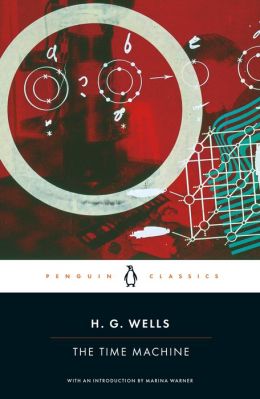
The Time Machine. H.G. Wells. 1895. Penguin. 128 pages. [Source: Book I Bought]
The 100. Kass Morgan. 2013. Little, Brown. 277 pages. [Source: Library] 
The Living. Matt de la Pena. 2013. Random House. 320 pages. [Source: Review copy]
Royal Affair: George III And His Scandalous Siblings. 2006. Random House. 384 pages. [Source: Library]
The Revolt of the Eaglets. Jean Plaidy. 1977. 320 pages. [Source: Bought]
Patti Cake And Her New Doll. Patricia Reilly Giff. Illustrated by Laura J. Bryant. 2014. (Jan) Scholastic. 32 pages. [Source: Review copy]
The Runaway Hug. Nick Bland. Illustrated by Freya Blackwood. 2013 (Dec). Random House. 32 pages. [Source: Review copy]
A Book of Babies. Il Sung Na. 2014. (Jan). Random House. 24 pages. [Source: Review copy] 
Little Frog's Tadpole Trouble. Tatyana Feeney. 2014. (Jan) Random House. 32 pages. [Source: Review copy]
Small Bunny's Blue Blanket. Tatyana Feeney. 2014. Random House. 24 pages. [Source: Review copy]
All Fall Down. Mary Brigid Barrett. Illustrated by LeUyen Pham. 2014. Candlewick Press. 16 pages. [Source: Review copy]
Pat-a-Cake. Mary Brigid Barrett. Illustrated by LeUyen Pham. 2014. Candlewick Press. 16 pages. [Source: Review copy]
Ten Tiny Toes. Caroline Jayne Church. 2014. Scholastic. 22 pages. [Source: Review copy]   
Dear Mr. Knightley. Katherine Reay. 2013. Thomas Nelson. 336 pages. [Source: Book I Bought]
Crazy Busy. Kevin DeYoung. 2013. Crossway. 128 pages. [Source: Review copy]
Bruce and Stan's Pocket Guide To Studying Your Bible: A User-Friendly Approach. Bruce Bickel and Stan Jantz. 2001. Harvest House. 112 pages. [Source: Book I Bought]

This week's favorite:

It was oh-so-easy to choose Dear Mr. Knightley by Katherine Reay. A contemporary retelling of Daddy Long-Legs by Jean Webster. Need I say more?! For those that love that funny and charming romance originally published in 1912, this one is a must! It may also be a must for those who love, love, love classic romances. Samantha Moore, the heroine, LOVES to read. (You've probably guessed that Jane Austen is among her favorites!) It's a very satisfying read.

© 2014 SukaYuka.com of SukaYuka's Book Reviews

Library Loot: Second Trip in January

New Loot:
  • The Teacher's Funeral by Richard Peck
  • Bubble World by Carol Snow
  • The River Between Us by Richard Peck
  • Fair Weather by Richard Peck
  • A Long Way From Chicago by Richard Peck
  • A Year Down Yonder by Richard Peck
  • Beauty by Robin McKinley
  • The Giver by Lois Lowry
Leftover Loot:
  • George Knightley, Esquire: Charity Envieth Not by Barbara Cornthwaite
  • George Knightley, Esquire: Lend Me Leave by Barbara Cornthwaite
  • Mr. Knightley's Diary by Amanda Grange
  • Robert the Bruce by Jack Whyte 
  • Mansfield Park Revisited by Joan Aiken
  • Austensibly Ordinary by Alyssa Goodnight
  • The Long Winter by Laura Ingalls Wilder
  • Jane and the Unpleasantness at Scargrave Manor by Stephanie Barron 

Library Loot is a weekly event co-hosted by Claire from The Captive Reader and Linda from Silly Little Mischief that encourages bloggers to share the books they’ve checked out from the library. If you’d like to participate, just write up your post-feel free to steal the button-and link it using the Mr. Linky any time during the week. And of course check out what other participants are getting from their libraries.

© 2014 SukaYuka.com of SukaYuka's Book Reviews
Friday, January 10, 2014

Reread #2 The Time Machine

The Time Machine. H.G. Wells. 1895. Penguin. 128 pages. [Source: Book I Bought]

I first read and reviewed The Time Machine in June 2007. I really loved it. It was my introduction to H.G. Wells, and, to classic science fiction. I absolutely loved, loved, loved it then.

I decided to reread The Time Machine for Carl's Sci-Fi Experience this January. It was very fun to revisit this one. I still enjoy time travel novels very much. I may not be quite as passionate about the novel upon second reading; however, I am still glad I took the time to read it again. And I would definitely still recommend it!

The plot: A group of men are gathered together to discuss life. One of them, the one called "The Time Traveller" reveals to his friends and/or associates that he is working on an invention--a time machine. He intends to prove that it is possible to travel back and forth in the fourth dimension--time. A week later, at another party or gathering, he is then able to tell his tale. He tells of his travels to the year 802,701. The good. The bad. The ugly. Life on earth has changed quite a bit, as the Time Traveller witnesses. And as he journeys even to the very end of time, he learns some important truths about mankind past, present, and future. The storytelling element of the story is great.

Favorite quotes:
I think that at that time none of us quite believed in the Time Machine. The fact is, the Time Traveller was one of those men who are too clever to be believed: you never felt that you saw all round him; you always suspected some subtle reserve, some ingenuity in ambush, behind his lucid frankness.
I will,' he went on, 'tell you the story of what has happened to me, if you like, but you must refrain from interruptions. I want to tell it. Badly. Most of it will sound like lying. So be it! It's true—every word of it, all the same. I was in my laboratory at four o'clock, and since then … I've lived eight days … such days as no human being ever lived before! I'm nearly worn out, but I shan't sleep till I've told this thing over to you. Then I shall go to bed. But no interruptions! And with that the Time Traveller began his story as I have set it forth. He sat back in his chair at first, and spoke like a weary man. Afterwards he got more animated. In writing it down I feel with only too much keenness the inadequacy of pen and ink—and, above all, my own inadequacy—to express its quality. You read, I will suppose, attentively enough; but you cannot see the speaker's white, sincere face in the bright circle of the little lamp, nor hear the intonation of his voice. You cannot know how his expression followed the turns of his story! Most of us hearers were in shadow, for the candles in the smoking-room had not been lighted, and only the face of the Journalist and the legs of the Silent Man from the knees downward were illuminated.
The two species that had resulted from the evolution of man were sliding down towards, or had already arrived at, an altogether new relationship. The Eloi, like the Carolingian kings, had decayed to a mere beautiful futility. They still possessed the earth on sufferance: since the Morlocks, subterranean for innumerable generations, had come at last to find the daylit surface intolerable. And the Morlocks made their garments, I inferred, and maintained them in their habitual needs, perhaps through the survival of an old habit of service. They did it as a standing horse paws with his foot, or as a man enjoys killing animals in sport: because ancient and departed necessities had impressed it on the organism. But, clearly, the old order was already in part reversed. The Nemesis of the delicate ones was creeping on apace. Ages ago, thousands of generations ago, man had thrust his brother man out of the ease and the sunshine. And now that brother was coming back changed! Already the Eloi had begun to learn one old lesson anew. They were becoming reacquainted with Fear. And suddenly there came into my head the memory of the meat I had seen in the Under-world. It seemed odd how it floated into my mind: not stirred up as it were by the current of my meditations, but coming in almost like a question from outside. I tried to recall the form of it. I had a vague sense of something familiar, but I could not tell what it was at the time.
I understood now what all the beauty of the Over-world people covered. Very pleasant was their day, as pleasant as the day of the cattle in the field. Like the cattle, they knew of no enemies and provided against no needs. And their end was the same. 'I grieved to think how brief the dream of the human intellect had been. It had committed suicide. It had set itself steadfastly towards comfort and ease, a balanced society with security and permanency as its watchword, it had attained its hopes—to come to this at last. Once, life and property must have reached almost absolute safety. The rich had been assured of his wealth and comfort, the toiler assured of his life and work. No doubt in that perfect world there had been no unemployed problem, no social question left unsolved. And a great quiet had followed. 'It is a law of nature we overlook, that intellectual versatility is the compensation for change, danger, and trouble. An animal perfectly in harmony with its environment is a perfect mechanism. Nature never appeals to intelligence until habit and instinct are useless. There is no intelligence where there is no change and no need of change. Only those animals partake of intelligence that have to meet a huge variety of needs and dangers. 'So, as I see it, the Upper-world man had drifted towards his feeble prettiness, and the Under-world to mere mechanical industry. But that perfect state had lacked one thing even for mechanical perfection—absolute permanency.

© 2014 SukaYuka.com of SukaYuka's Book Reviews
Thursday, January 9, 2014

The 100 (2013)

The 100. Kass Morgan. 2013. Little, Brown. 277 pages. [Source: Library]

I read The 100 when I was in a happy and generous mood. I was enjoying the book, for the most part. I was actually liking the multiple points of view. I liked how readers were able to follow the story down on earth AND yet remain to see what happened up on the colony ship as well. I liked how the stories were unfolding. A few plot details I was able to predict. That is not a bad thing, by the way. It can be good OR bad. It can feel satisfying now and then to guess right. It is only when a reader guesses all the plot ahead of time that it becomes too much. Another thing I was mostly enjoying is how flawed all the characters were. Seriously flawed. Big mistakes. Big issues. It was interesting to see the characters relate to one another. To see them come together...or not.

My only hesitation with recommending this one is the ending. The problem I had with this book is that I was enjoying it (perhaps not ABSOLUTELY LOVING it, but still, a good solid enjoy) until I started picking up on Wells mysterious act of "devotion." The ending. Perhaps it fit with the book perfectly. Perhaps there were hundreds of clues indicating the truth. It isn't that I was surprised that Wells did something stupid, it is just that I didn't guess it would be so completely over-the-top ridiculously stupid.

© 2014 SukaYuka.com of SukaYuka's Book Reviews

Wednesday, January 8, 2014

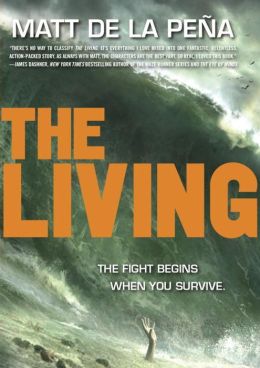
The Living (2013)

The Living. Matt de la Pena. 2013. Random House. 320 pages. [Source: Review copy]

The Living is a fast read. It's an interesting blend of genres: survival fiction (natural disaster), romance, mystery, horror, AND medical thriller (conspiracies, evil corporations, oh my!).

Shy, the book's hero, is working a summer job on a cruise ship. He's gotten close to a couple of guys and one girl in particular, Carmen. He's fallen hard for her. She's engaged to another guy, a law student. Shy is a mostly good guy who is not out to steal someone else's girlfriend. He's not out to get her to cheat on this guy. He just likes talking to her about anything and everything, no topics are off limits, really. She just really understands him in a way like no one else. On his latest trip, he has the feeling that someone is watching him, in a creepy not-normal way. He's right: someone wants to know EVERYTHING about a certain suicide that Shy witnessed on the last voyage.

Survival on the open sea. Something BIG and catastrophic happens. (A chain of somethings.) Shy is on board a small boat (life boat? raft? one of the two.) with only a very injured business man and a very young, very attractive young woman. Their days on the sea, their fight for survival, creates a bond, despite the fact that these two have zero in common with each other--and outside of this specific situation they'd never speak to one another. Will they survive? Will they reach land? Is help on the way? When does life return to normal again?

The Living is bleak, in a way. The novel is very up front about death. The first death (by suicide) opening in the prologue. The body count just increases from there. It's also extremely action-packed with just a few meaning-of-life conversations thrown in.

It is the first book in a series. I would say it doesn't have a proper end, and that it might best be saved for late summer (or early fall) 2014 so that you only have a few weeks to wait for the next book.

© 2014 SukaYuka.com of SukaYuka's Book Reviews
Tuesday, January 7, 2014

The Revolt of the Eaglets (1977)

The Revolt of the Eaglets. Jean Plaidy. 1977. 320 pages. [Source: Bought]

I have not read the first novel in Plaidy's Plantagenet series. The Revolt of the Eaglets is the second in the series. It opens with the King Henry II learning of the murder of Thomas Becket, and it ends with his own death, or, news of his death reaching his prisoner-wife Eleanor. The novel is focused on the strife between Henry and his family. Any "love" once felt for his wife, Eleanor, the mother of all his legitimate children, has vanished now that she's older and past her usefulness. The two live separate lives for a short time, but, he eventually holds her prisoner. HATE isn't too strong a word for how these two feel towards one another! It is also focused on "Young Henry" (the oldest son and heir), Richard, Geoffrey, and John. Henry II had a "brilliant" idea to have his heir crowned king. Having two crowned monarchs is a big, big mess. It does not inspire family harmony. The son has no actual power, authority, dominion, or independence. Richard is another son that comes into the story quite a bit. Oh the plotting and scheming that goes on...as his sons "turn" against their father and fight for what is "theirs" by right. Is it horrible for sons to turn against their fathers and lead armies? Of course. But the truth is it is hard to find good excuses for Henry II's bad behavior. Plaidy is very matter-of-fact about his weaknesses, mistakes, or sins.

What might be hardest for modern readers to understand is Henry's relationship with Alice. Richard and Alice were betrothed to each other as young children. She is a French princess. She leaves France to live in England at a young age. When the king first takes notice of his future daughter-in-law she is eleven or possibly twelve. It is lust pure and simple. The book presents the seduction (without graphic details, but what is there is CREEPY ENOUGH) very matter of fact without judgment or commentary. Alice believes this special but must keep it secret attention is marvelous. She expects to be made Queen one day. Alice and Henry's relationship continues throughout the book.

Readers get a glimpse of British history and French history. It isn't always a cozy, satisfying glimpse. But it was an interesting read with plenty of characters.

© 2014 SukaYuka.com of SukaYuka's Book Reviews

Monday, January 6, 2014

A Royal Affair

Royal Affair: George III And His Scandalous Siblings. 2006. Random House. 384 pages. [Source: Library]

The subject matter of Royal Affair was interesting enough, I suppose, however the chapters were incredibly long! I still enjoyed it overall though.

This nonfiction book examines George III in relationship with his brothers and sisters. Not all are mentioned or given equal attention. The book primarily focuses on Caroline Matilda, his youngest sister, who married Christian VII of Denmark. Prince Edward, Prince William, Prince Henry all get a chapter apiece. Several of his siblings married without permission which was almost unforgivable from George III's perspective. I definitely felt for Maria Walpole who secretly married Prince William, Duke of Gloucester. They kept the marriage secret as long as possible, until she conceived, though in truth George III was unofficially aware of the marriage. As long as it was "secret" he could continue to receive his brother and have him as part of his inner circle. But once it was announced, he had to be harsh because he wouldn't want anyone to get the wrong impression of his authority. The couple would have three children together, but, he fell out of love with her, started talking bad about her, found a new mistress, and made up with his brother. The marriage definitely didn't lead to a happily ever after for her. I struggled with Caroline Matilda. On the one hand, she had little choice in her marriage, and she was definitely married to someone unsuitable in almost every way. Her husband was essentially insane a good deal of the time, and, even when he was sane, he was far from ideal. (He loved prostitutes). On the other hand, falling in love and having a baby with one of the court doctors was scandalous. These sections were rarely boring!

© 2014 SukaYuka.com of SukaYuka's Book Reviews